
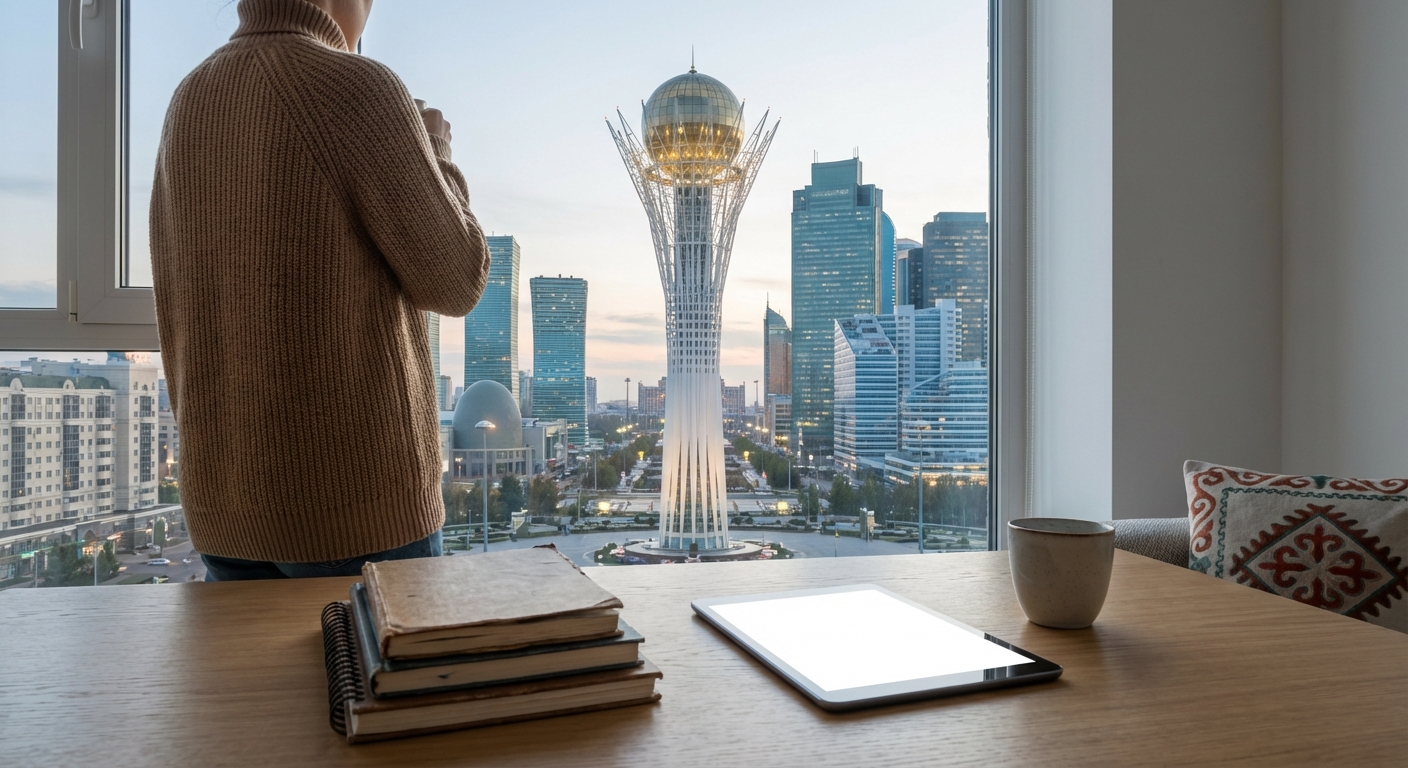
You’ve accepted the job offer. Your flight is booked. Your apartment search has begun. But no amount of research can fully prepare you for the reality of moving to Astana. Kazakhstan’s capital is unlike anywhere else you’ve lived, and the learning curve is steep. The good news? You can skip some of the mistakes I made.
Moving to Astana requires preparation for extreme winters, navigating bureaucracy in Russian, understanding dual language dynamics, budgeting for higher costs than expected, and adapting to a city where modern infrastructure meets post-Soviet systems. Housing, healthcare, and social integration demand patience, but the expat community is supportive and the city offers genuine opportunities for those willing to adapt to its unique challenges.
Winter is not what you think it is
You’ve read that Astana gets cold. You’ve seen the numbers. Minus 40 degrees Celsius sounds abstract until you experience it.
The cold here is different. It’s dry, relentless, and all-consuming. Your first winter will redefine your relationship with clothing, transportation, and even breathing.
Invest in proper winter gear before you arrive. Not the kind you wore in Europe or North America. Real gear. Layered thermal underwear, down-filled parkas rated to minus 50, insulated boots with thick rubber soles, and a balaclava that covers everything but your eyes.
Public transport becomes unreliable when temperatures drop below minus 30. Buses break down. Taxis surge in price. Many expats end up paying 3,000 to 5,000 tenge for rides that normally cost 800.
Your apartment heating will run constantly from October through April. Budget an extra 30,000 to 50,000 tenge per month for utilities during peak winter. Some older buildings have inconsistent heating, so ask about this before signing a lease.
“I thought I was prepared because I’d lived in Moscow. Astana’s winter is a different animal entirely. The wind across the steppe cuts through everything.” – Elena, expat from Russia
The city doesn’t shut down, though. Life continues. People work, socialize, and function normally. You’ll adapt faster than you think, but respect the cold from day one.
The language situation is more complex than Russian or Kazakh
Everyone told me to learn Russian. They were half right.
Astana operates in both Russian and Kazakh, but the balance shifts depending on where you are and who you’re talking to. Government offices increasingly require Kazakh. Most young professionals speak both. Older residents often prefer Russian.
Your daily life will function in Russian. Grocery stores, restaurants, taxis, and casual conversation default to Russian. But official documents, street signs, and government communications are shifting toward Kazakh.
Here’s what works:
- Learn survival Russian first. Greetings, numbers, directions, food vocabulary.
- Pick up basic Kazakh phrases for respect and integration.
- Download a translation app that works offline.
- Hire a local assistant for your first month to handle paperwork.
English works in international hotels, some restaurants in the futuristic left bank district, and with younger professionals. It won’t help you at the bank, post office, or municipal services.
The good news? Kazakhstanis appreciate any attempt to speak their languages. Even butchered Russian gets you further than perfect English.
Housing costs more than the internet suggests
Online listings show apartments for 150,000 to 250,000 tenge per month. Those prices are real, but they don’t tell the full story.
Most landlords want:
- First month’s rent
- Last month’s rent
- Security deposit equal to one month
- Agency fee (if you use a realtor)
You’re looking at 600,000 to 750,000 tenge upfront for a decent two-bedroom apartment. That’s $1,300 to $1,600 USD at current exchange rates.
Furnished apartments cost 30% to 50% more than unfurnished ones. But buying furniture in Astana is expensive and time-consuming. Most expats choose furnished and accept the premium.
Where expats actually live matters more than you think. The Left Bank (new city) offers modern buildings, better insulation, and proximity to international amenities. The Right Bank (old city) is cheaper but often means older Soviet-era buildings with questionable heating and plumbing.
Utilities aren’t included in most leases. Expect to pay:
- Heating: 20,000 to 50,000 tenge (winter)
- Electricity: 5,000 to 10,000 tenge
- Water: 3,000 to 5,000 tenge
- Internet: 5,000 to 8,000 tenge
- Building maintenance: 5,000 to 15,000 tenge
That’s an additional 38,000 to 88,000 tenge monthly, depending on season and apartment size.
Bureaucracy requires patience and local help
Kazakhstan’s bureaucratic systems blend Soviet-era processes with modern digital initiatives. The result is confusing for newcomers.
Your first month will involve:
- Registration with local police within five days of arrival
- Opening a bank account (requires registration proof)
- Getting a local phone number
- Registering for taxes if you’re working
- Applying for a residence permit if staying long-term
Each step requires specific documents, often in Kazakh or Russian, with exact copies and notarized translations. The process isn’t impossible, but doing it alone is frustrating.
Hire a local fixer or relocation service for your first month. It costs 100,000 to 200,000 tenge but saves weeks of confusion. Many companies provide this as part of relocation packages, so ask before you move.
Navigating Kazakhstan’s work permit process is particularly complex. Your employer should handle most of it, but you’ll still need to appear in person for fingerprinting, medical exams, and document submission.
Government offices operate on their own schedule. Arrive early. Bring copies of everything. Expect to return multiple times.
The expat community is smaller but tight-knit
Astana isn’t Prague or Bangkok. The expat population is limited, concentrated in specific industries, and mostly here for work rather than lifestyle.
You’ll find expats working in:
- Oil and gas
- Mining and natural resources
- International organizations
- Education
- Tech and IT services
The community is welcoming but requires effort to access. Making friends in Astana happens through work connections, Facebook groups, and specific venues where expats gather.
Join these groups before you arrive:
- Expats in Astana (Facebook)
- Astana International Community
- InterNations Astana
Regular meetups happen at international restaurants, hotel bars, and cultural events. The community is small enough that you’ll recognize familiar faces within a month.
Local Kazakhstanis are friendly but social circles can be harder to break into without language skills or local connections. Understanding Kazakh hospitality helps navigate social situations once you’re invited.
Food shopping requires adjustment
Western products exist in Astana, but they cost 2x to 3x what you’d pay at home. A jar of peanut butter runs 3,000 tenge. Imported cheese is 5,000 to 8,000 tenge per kilogram.
Local markets offer fresh produce, meat, and dairy at reasonable prices. The quality is good, but selection varies by season. Winter limits fresh vegetables significantly.
Major supermarkets include:
- Ramstore (most Western products)
- Small (good balance of local and imported)
- Magnum (budget-friendly local focus)
You’ll spend 80,000 to 120,000 tenge monthly on groceries for one person if you cook at home and mix local with imported products. How much eating out actually costs varies, but budget restaurants charge 2,000 to 3,000 tenge per meal.
Traditional Kazakh cuisine is meat-heavy. Vegetarians and vegans will find options limited outside international restaurants. Local dishes worth trying include beshbarmak, plov, and various grilled meats, but expect limited vegetable sides.
Healthcare is a two-tier system
Kazakhstan offers public healthcare, but most expats use private clinics. The quality gap is significant.
Public hospitals are free or very cheap, but expect:
- Long wait times
- Limited English-speaking staff
- Basic facilities
- Inconsistent quality
Private clinics cost more but provide:
- English-speaking doctors
- Modern equipment
- Reasonable wait times
- International-standard care
A private clinic visit runs 15,000 to 25,000 tenge. Specialists cost 20,000 to 40,000 tenge. Dental work is surprisingly affordable, with cleanings around 10,000 tenge and fillings 15,000 to 25,000 tenge.
Get comprehensive international health insurance before you move. Local insurance is cheap but often doesn’t cover the private clinics expats prefer. Expect to pay $1,500 to $3,000 annually for good coverage.
Pharmacies are everywhere and well-stocked. Many medications available by prescription only in Western countries are sold over the counter here. Bring a supply of any specialized medications, though, as exact brands may not be available.
Transportation is cheaper than owning a car
Astana’s public transportation includes buses and a limited but growing bike-share system. Buses cost 90 tenge per ride. They’re reliable in good weather but struggle during extreme cold.
Most expats rely on taxis. Yandex Taxi and inDriver dominate the market. Rides across the city cost 600 to 1,500 tenge, depending on distance and time of day.
Owning a car seems appealing until you factor in:
- Purchase price (higher than Western Europe)
- Insurance (10% to 15% of car value annually)
- Winter tires (mandatory, 100,000 to 200,000 tenge)
- Parking (limited in new buildings)
- Maintenance (parts are expensive)
A decent used car costs $10,000 to $15,000 USD. New cars start at $20,000 for basic models. Unless you plan to travel outside the city regularly, taxis are more economical.
Astana is building a light rail system, but completion timelines keep shifting. Don’t factor it into your transportation planning yet.
Social life centers around specific venues
Astana’s nightlife and social scene is concentrated. You’ll find yourself returning to the same 10 to 15 venues.
Popular expat spots include:
- Line Brew (craft beer, Western food)
- Guinness Pub (exactly what it sounds like)
- Various hotel bars in international chains
The city’s illuminated landmarks provide beautiful evening walks, but entertainment options are limited compared to larger cities.
Cafes are huge here. Coffee shops popular with digital nomads double as coworking spaces and social hubs. Expect to spend 1,500 to 2,500 tenge for coffee and a pastry.
Cultural events happen regularly. The Astana Opera offers world-class performances at reasonable prices (3,000 to 15,000 tenge). The city hosts international conferences, exhibitions, and festivals throughout the year.
Winter limits outdoor activities significantly. Summer transforms the city with outdoor cafes, parks, and events. Plan your social calendar around seasons.
The cost of living is higher than you expect
Astana is expensive for Central Asia. It’s cheaper than London or New York but costs more than you’d pay in many European cities.
| Expense Category | Monthly Cost (Tenge) | Monthly Cost (USD) |
|---|---|---|
| Rent (1-bedroom, Left Bank) | 200,000 to 300,000 | $440 to $660 |
| Utilities (including winter heating) | 40,000 to 90,000 | $90 to $200 |
| Groceries (single person) | 80,000 to 120,000 | $175 to $265 |
| Transportation (taxis) | 40,000 to 60,000 | $90 to $130 |
| Dining out (2-3x weekly) | 50,000 to 80,000 | $110 to $175 |
| Entertainment | 30,000 to 50,000 | $65 to $110 |
| Total | 440,000 to 700,000 | $970 to $1,540 |
This doesn’t include:
- International school fees (if you have children)
- Regular flights home
- Import costs for specific items
- Emergency expenses
Salaries for expats typically range from $2,000 to $6,000 monthly, depending on industry and experience. Negotiate hard before accepting an offer. Housing allowances and annual flights home should be standard in your package.
Common mistakes expats make
Underestimating winter preparation
Your first winter will be harder than you think. Buy proper gear before temperatures drop. Waiting until November means limited selection and higher prices.
Skipping language learning
Even basic Russian transforms your experience. Three months of lessons before arrival makes everything easier.
Choosing the wrong neighborhood
Saving money on rent in the Right Bank costs you in commute time, heating bills, and quality of life. Neighborhood rankings by safety and convenience show why location matters.
Not building a support network early
Isolation hits hard in winter. Join expat groups and attend events from day one. Waiting until you feel settled means missing months of connection.
Expecting Western efficiency
Bureaucracy moves slowly. Services take time. Patience isn’t optional; it’s survival.
Ignoring cultural norms
Respect for elders and traditional customs matter here. Learn basic etiquette before you arrive.
What makes it worth it
Astana challenges you in ways other cities don’t. The winters are brutal. The bureaucracy is frustrating. The isolation can be real.
But there’s something compelling about building a life in a city that’s still defining itself. You’re not just another expat in a well-worn trail. You’re part of something newer, stranger, and more interesting.
The professional opportunities are genuine. The cost of living, while higher than expected, still allows for savings. The experience itself becomes a story worth telling.
You’ll learn to appreciate small victories. Successfully navigating a government office. Finding a restaurant that feels like home. Making a local friend. Surviving your first winter.
Finding an apartment gets easier after the first one. Language skills improve faster than you expect. The city starts to make sense.
Give it six months before deciding if you want to stay. The first three months are survival mode. Months four through six show you what life actually looks like here.
Your first month checklist
Start with these priorities:
- Secure temporary housing for at least two weeks
- Register with local police within five days
- Open a bank account
- Get a local SIM card
- Find a relocation assistant or local fixer
- Join expat Facebook groups
- Buy winter clothing if arriving August through March
- Schedule apartment viewings in your target neighborhood
- Set up utilities and internet
- Locate your nearest grocery store, pharmacy, and ATM
Most mistakes happen in the first month. Rush nothing. Ask questions. Accept that confusion is normal.
Your employer should help with work permits and official registration. If they don’t, that’s a red flag about how supported you’ll be long-term.
Making Astana work for you
Moving to Astana isn’t for everyone. It requires flexibility, patience, and genuine curiosity about a place that defies easy categorization.
The city rewards those who engage with it on its own terms. Learn some Russian. Try the local food. Attend cultural events. Make an effort with both expats and locals. Respect the climate and prepare accordingly.
Your experience depends largely on your attitude. Approach it as an adventure rather than an endurance test. The challenges become stories. The frustrations become skills. The isolation becomes appreciation for the community you build.
Astana is still writing its story. Moving here means you get to write part of yours in a place few people understand and even fewer have experienced. That’s worth something.