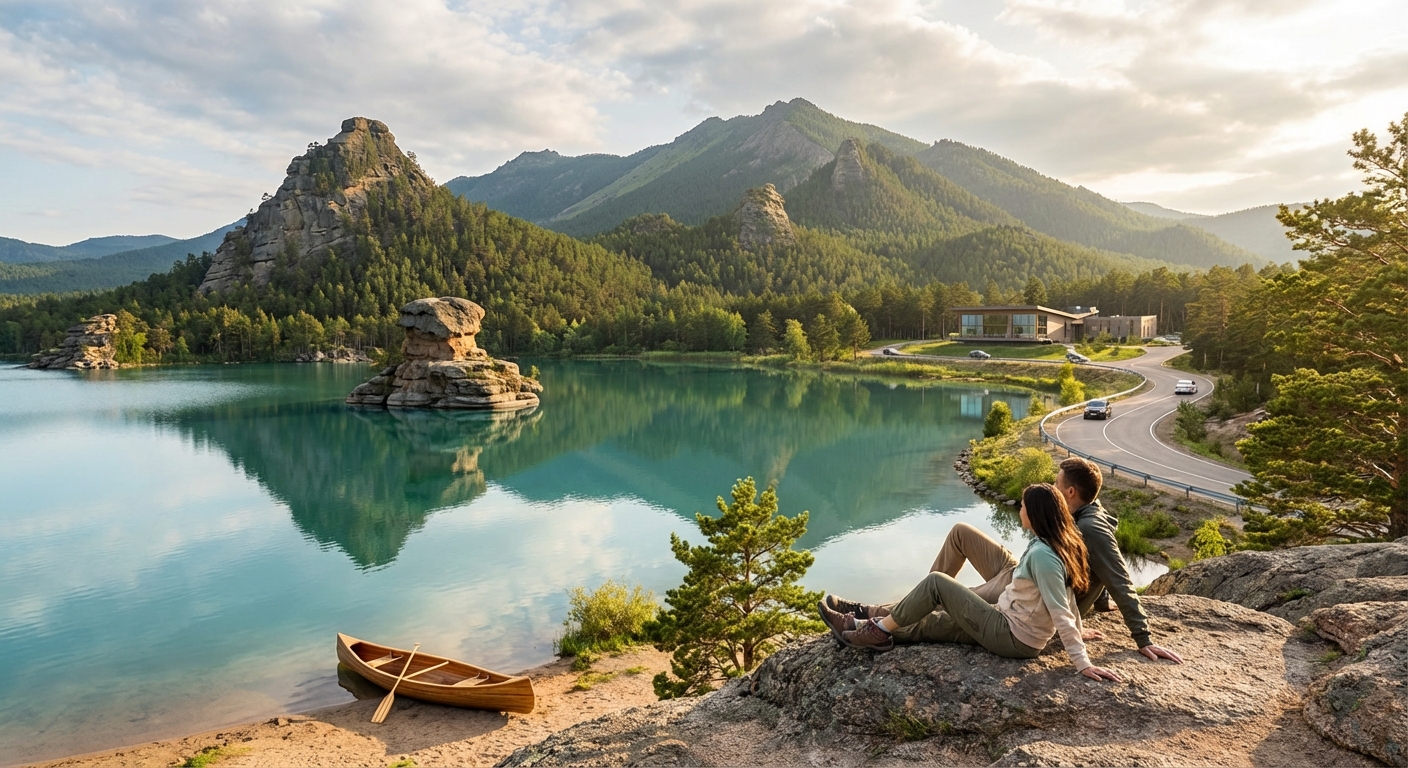
Imagine standing at the edge of a crystal blue lake, surrounded by granite cliffs and pine forests that stretch as far as you can see. That’s Burabay National Park, often called the Switzerland of Kazakhstan. Located just 250 kilometers north of Astana, this natural wonderland offers a refreshing escape from the capital’s futuristic skyline.
Burabay National Park is Kazakhstan’s premier natural retreat, featuring pristine lakes, granite formations, and pine forests. Most visitors spend two to three days here, with June through September offering the best weather. The park sits 250 kilometers from Astana, accessible by bus or car. Budget around $30-50 daily for accommodation and activities, with hiking trails ranging from easy lakeside walks to challenging mountain climbs.
Understanding Burabay National Park
Burabay (also known as Borovoe) covers 129,935 hectares of protected land in northern Kazakhstan. The park features four major lakes: Burabay, Shchuchye, Bolshoye Chebachye, and Maloye Chebachye.
The landscape here differs dramatically from the surrounding steppe. Pine forests dominate the terrain, creating a microclimate that feels nothing like the rest of Kazakhstan. Granite rock formations rise from the lakes, creating dramatic scenery that photographers love.
The park’s name comes from the Kazakh word “bura,” meaning camel. Legend says the rock formations resemble camels resting by the water.
Local wildlife includes deer, wild boar, foxes, and over 300 bird species. You might spot golden eagles soaring above the cliffs during summer months.
When to Visit Burabay
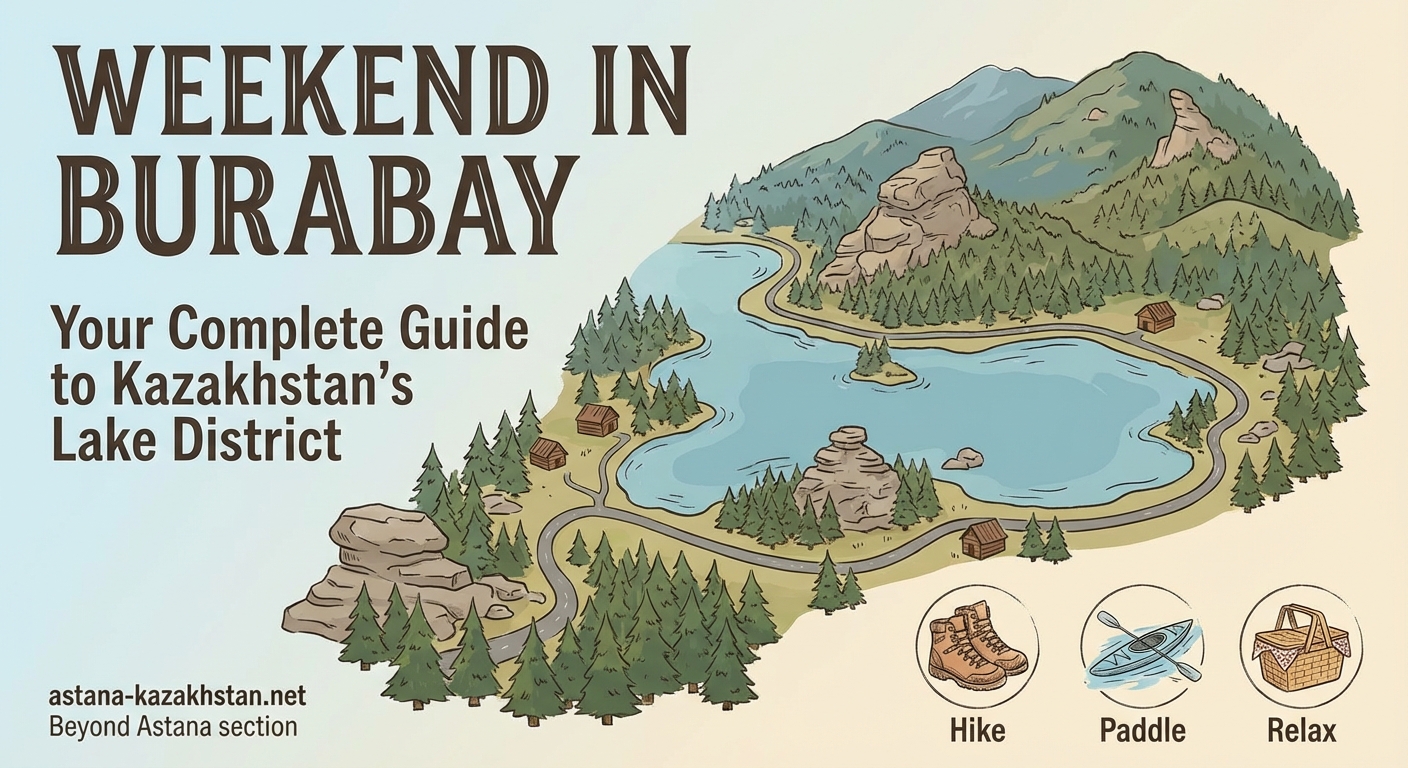
Different seasons bring completely different experiences to the park.
Summer (June to August) draws the biggest crowds. Water temperatures reach 20-22°C, perfect for swimming. Hiking trails stay dry and accessible. Hotel prices peak during July and August.
Fall (September to October) offers spectacular autumn colors. The pine forests mix with deciduous trees that turn golden and red. Temperatures drop to 10-15°C during the day. Crowds thin out significantly after early September.
Winter (November to March) transforms the park into a snow sports destination. Skiing, snowboarding, and ice fishing become the main activities. Temperatures plunge to -20°C or lower. Many hotels offer winter discounts.
Spring (April to May) remains unpredictable. Snow might linger until late April. Roads can become muddy. However, spring flowers bloom beautifully in May, and prices stay low.
The shoulder seasons of late May and early September offer the best balance between good weather, lower prices, and manageable crowds. You’ll have trails mostly to yourself while still enjoying comfortable temperatures.
Getting to Burabay from Astana
Three main transport options connect Astana to Burabay.
By Bus
- Head to Astana’s main bus station (located near the old town)
- Purchase a ticket to Shchuchinsk town (the gateway to Burabay)
- Take a local taxi or marshrutka from Shchuchinsk to your hotel in Burabay village
Buses run multiple times daily. The journey takes about 3.5 hours. Tickets cost around 2,000-3,000 tenge ($4-6). This option works best for budget travelers.
By Shared Taxi
Shared taxis (known locally as “taxi buses”) leave when full from various points in Astana. They cost about 5,000 tenge ($10) per person. The ride takes roughly 2.5 hours. Your hotel can help arrange the return journey.
By Private Car
Renting a car or hiring a private driver offers maximum flexibility. The drive follows the A-13 highway north. Road conditions stay good year-round. Expect to pay 30,000-40,000 tenge ($60-80) for a private driver round trip.
Many visitors combine their Burabay trip with other attractions, making it one of the 7 breathtaking day trips from Astana you can’t miss.
Where to Stay in Burabay
Accommodation ranges from Soviet-era sanatoriums to modern resort hotels.
Burabay village serves as the main hub. Most hotels, restaurants, and services cluster here. You’ll find everything from budget guesthouses to upscale resorts.
Lakeside resorts offer direct water access but cost more. Rixos Borovoe represents the luxury option, with spa facilities and fine dining. Mid-range hotels like Altyn Tau provide comfortable rooms at reasonable prices.
Sanatoriums blend accommodation with health treatments. These Soviet-era facilities offer mineral baths, massage, and medical services alongside basic rooms. Prices stay surprisingly affordable.
Budget travelers should look for guesthouses in Shchuchinsk town, about 15 kilometers from the main park area. Rooms start around $15-20 per night.
Book ahead during July and August. The rest of the year, you can usually find rooms on arrival.
Essential Hiking Trails
The park maintains several marked trails suitable for different fitness levels.
Zhumbaktas Rock Trail
This easy 2-kilometer loop circles the famous sphinx-shaped rock formation. The trail stays flat and paved. Perfect for families with young children. Allow 45 minutes for the full circuit.
Okzhetpes Peak
A moderate 4-kilometer hike climbs to a granite peak overlooking Lake Burabay. The trail gains about 300 meters elevation. Rocky sections require sturdy shoes. The summit views justify the effort. Budget 2-3 hours round trip.
Mount Kokshetau
The park’s most challenging hike reaches 947 meters elevation. The 8-kilometer trail climbs through pine forest before emerging onto rocky slopes. Experienced hikers need 4-5 hours to complete the ascent and descent.
Bolshoye Chebachye Lake Circuit
A gentle 6-kilometer path circles this peaceful lake. The trail passes through forest and meadows. Wildflowers bloom spectacularly in June. Allow 2 hours at a leisurely pace.
All major trailheads have information boards showing routes and distances. Download offline maps before arriving, as cell service becomes spotty in remote areas.
Water Activities and Beach Time
Burabay’s lakes offer more than just scenery.
Swimming remains popular from June through August. Lake Burabay has several designated beach areas with changing facilities. Water quality stays high, though temperatures rarely exceed 22°C.
Boat rentals operate from the main beach. Paddle boats, kayaks, and rowboats cost 2,000-3,000 tenge per hour. Some operators offer guided boat tours around the lake’s rock formations.
Stand-up paddleboarding has gained popularity recently. Several rental shops near the main beach provide equipment and basic instruction.
Fishing requires a permit from park authorities. Lake Shchuchye (literally “Pike Lake”) offers the best catches. Local guides can arrange fishing trips with all equipment included.
Winter brings ice fishing enthusiasts. Locals drill holes through the thick ice and spend hours waiting for bites. Join them for an authentic Kazakh winter experience.
Practical Costs and Budgeting
Understanding expenses helps plan your visit effectively.
| Expense Category | Budget Option | Mid-Range Option | Luxury Option |
|---|---|---|---|
| Accommodation (per night) | $15-25 | $40-70 | $100-200 |
| Meals (per day) | $10-15 | $25-35 | $50+ |
| Transport from Astana | $8-12 | $20-30 | $60-80 |
| Activities (per day) | $5-10 | $15-25 | $40+ |
| Total Daily Cost | $30-50 | $70-120 | $200+ |
Park entrance costs 500 tenge ($1) per person. Some specific attractions charge additional small fees.
Restaurants in Burabay village serve traditional Kazakh cuisine alongside Russian and European dishes. A meal at a mid-range restaurant costs 3,000-5,000 tenge ($6-10).
Bring cash. While larger hotels accept cards, many smaller establishments and activity providers operate cash-only.
Photography Opportunities
Burabay rewards photographers with stunning compositions.
The golden hour transforms the granite cliffs into glowing sculptures. Arrive at Zhumbaktas Rock 30 minutes before sunset for the best light.
Lake reflections work beautifully on calm mornings. Get to the shore before 7 AM when winds stay minimal. The mirror-like water doubles the impact of the surrounding peaks.
Autumn colors peak in late September. The contrast between golden deciduous trees and dark green pines creates natural color harmony.
Winter landscapes shine after fresh snowfall. The snow-covered pines against blue sky deliver classic postcard scenes. Similar techniques used for photographing Astana’s golden towers apply here, particularly regarding light and composition.
Wildlife photography requires patience and long lenses. Early morning offers the best chances for deer sightings near forest edges.
Safety Considerations
Burabay remains generally safe, but wilderness hazards exist.
- Tell someone your hiking plans before heading out
- Carry enough water (at least 2 liters per person for longer hikes)
- Weather changes rapidly in the mountains
- Bears inhabit the park (though attacks are extremely rare)
- Ticks become active from April through October
- Cell phone coverage disappears on remote trails
The park’s rescue service operates year-round. Emergency numbers are posted at all major trailheads.
Swimming in designated areas only. Lake depths change suddenly, and underwater rocks create hazards.
Winter visitors should prepare for extreme cold. Temperatures below -25°C require proper clothing and equipment.
Food and Dining Options
Burabay village hosts about a dozen restaurants and cafes.
Traditional Kazakh dishes dominate menus. Try beshbarmak (boiled meat with pasta), kazy (horse meat sausage), or kurt (dried cheese balls). For authentic recommendations beyond the park, check out where to find the best beshbarmak in Astana.
Russian cuisine appears everywhere. Pelmeni (dumplings), borscht, and blini satisfy hearty appetites after long hikes.
Several cafes serve European-style breakfasts with coffee, eggs, and pastries. These typically open around 8 AM.
Grocery stores sell basics for self-catering. Prices run slightly higher than in Astana due to transport costs.
Pack snacks and water for day hikes. Trail-side facilities don’t exist once you leave the village area.
Cultural Sites and Local Legends
The park holds spiritual significance for Kazakhs.
Zhumbaktas Rock features in numerous local legends. One story claims it’s a petrified giant who protected the land from invaders. Another says it marks the spot where a beautiful maiden turned to stone rather than marry against her will.
Abylay Khan’s residence sits on Lake Burabay’s shore. This 18th-century Kazakh ruler used the area as a summer retreat. The restored building now functions as a small museum.
Several sacred springs dot the landscape. Locals believe the water holds healing properties. You’ll see ribbons tied to nearby trees, representing prayers and wishes.
The park’s name itself carries meaning. According to legend, a camel carrying a holy man’s belongings knelt by the lake and refused to move, indicating the spot’s special nature.
Common Mistakes to Avoid
Learning from others’ errors saves time and frustration.
| Mistake | Why It’s a Problem | Better Approach |
|---|---|---|
| Visiting only in peak summer | Overwhelming crowds, high prices | Choose June or September |
| Underestimating hiking difficulty | Trails are steeper than they appear | Start with easier routes |
| Skipping the smaller lakes | Missing quieter, equally beautiful spots | Visit Shchuchye and Chebachye lakes |
| Not booking accommodation ahead | Limited options during busy periods | Reserve at least a week in advance |
| Bringing only sandals | Rocky trails damage feet | Pack proper hiking shoes |
Many visitors rush through in a single day. This barely scratches the surface. Plan at least two full days to properly experience the park.
Don’t expect Western-style facilities on trails. Bring toilet paper, hand sanitizer, and snacks.
Extending Your Kazakhstan Adventure
Burabay works well as part of a longer Kazakhstan itinerary.
Before or after Burabay, spend time in Astana. The capital’s futuristic architecture contrasts sharply with Burabay’s natural beauty. If you’re short on time, learn what to see in Astana when you only have 24 hours.
Southern Kazakhstan offers completely different landscapes. Charyn Canyon rivals Arizona’s famous gorge. Turkestan’s spiritual sites showcase Islamic architecture and history.
Check Kazakhstan’s visa requirements before planning your trip. Many nationalities enjoy visa-free access for up to 30 days.
Making the Most of Your Burabay Visit
Burabay National Park delivers exactly what tired city dwellers need: fresh air, natural beauty, and a chance to disconnect. The park’s accessibility from Astana makes it perfect for weekend escapes or longer retreats.
Start planning your visit around the season that matches your interests. Summer brings swimming and warm weather. Fall offers spectacular colors and solitude. Winter transforms the landscape into a snowy playground.
Pack layers regardless of season. Mountain weather changes fast. Bring a water bottle, good shoes, and a camera.
Most importantly, slow down. Burabay rewards those who take time to wander forest trails, sit by the lake, and watch the light change on the granite cliffs. This isn’t a destination to rush through. It’s a place to breathe deeply and remember that Kazakhstan offers far more than its modern cities suggest.
The lakes and forests have drawn visitors for centuries. Now it’s your turn to discover why Kazakhs consider this their country’s natural crown jewel.
Leave a Reply