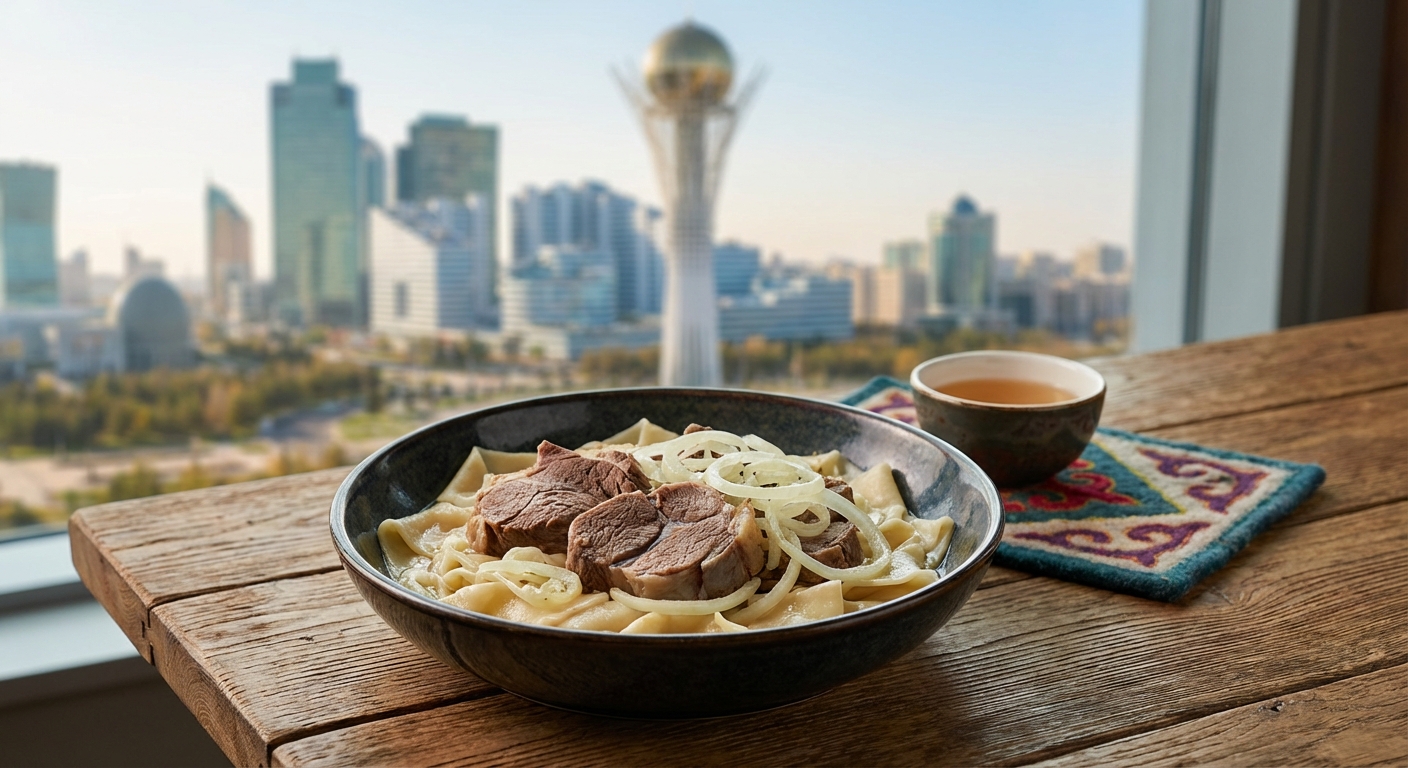
Beshbarmak is more than just a meal in Kazakhstan. It’s a symbol of hospitality, a centerpiece of celebrations, and the dish every visitor needs to try at least once. The name translates to “five fingers” because traditionally, you eat it with your hands. In Astana, you’ll find versions ranging from humble family recipes to modern interpretations that respect tradition while adding contemporary flair. This guide takes you to the spots where locals actually go, not just the tourist traps with English menus and inflated prices.
Astana offers exceptional beshbarmak at restaurants like Qazaq Gourmet for upscale dining, Alasha for traditional atmosphere, and Saksaul for modern takes. The dish features boiled horse or beef with wide noodles and onion sauce. Visit during lunch for the freshest preparations, expect to pay 3,000 to 6,000 tenge per portion, and come hungry because servings are generous. Authentic spots prioritize tender meat and properly seasoned broth over flashy presentation.
What Makes Beshbarmak Worth Seeking Out
Beshbarmak sits at the heart of Kazakh culture. Families serve it at weddings, funerals, and major holidays. The dish consists of three main components: boiled meat (traditionally horse, but beef and lamb are common), wide flat noodles called kespe, and a rich onion sauce made from the cooking broth.
The preparation takes hours. Meat simmers slowly until it falls apart with minimal effort. The broth becomes the foundation for everything else. Cooks roll out dough by hand, cut it into large squares or diamonds, and boil the noodles in the same broth that cooked the meat.
When served properly, beshbarmak arrives on a large communal platter. The noodles form the base. Sliced meat sits on top. The onion sauce, called tuzduk, gets spooned over everything. Some restaurants add small pieces of kazy (horse sausage) or zhaya (smoked horse meat) for extra flavor.
The taste is subtle but deeply savory. It’s not spicy. It won’t challenge you with unusual textures. Instead, it offers comfort through simplicity and quality ingredients.
Top Restaurants for Traditional Beshbarmak
Qazaq Gourmet
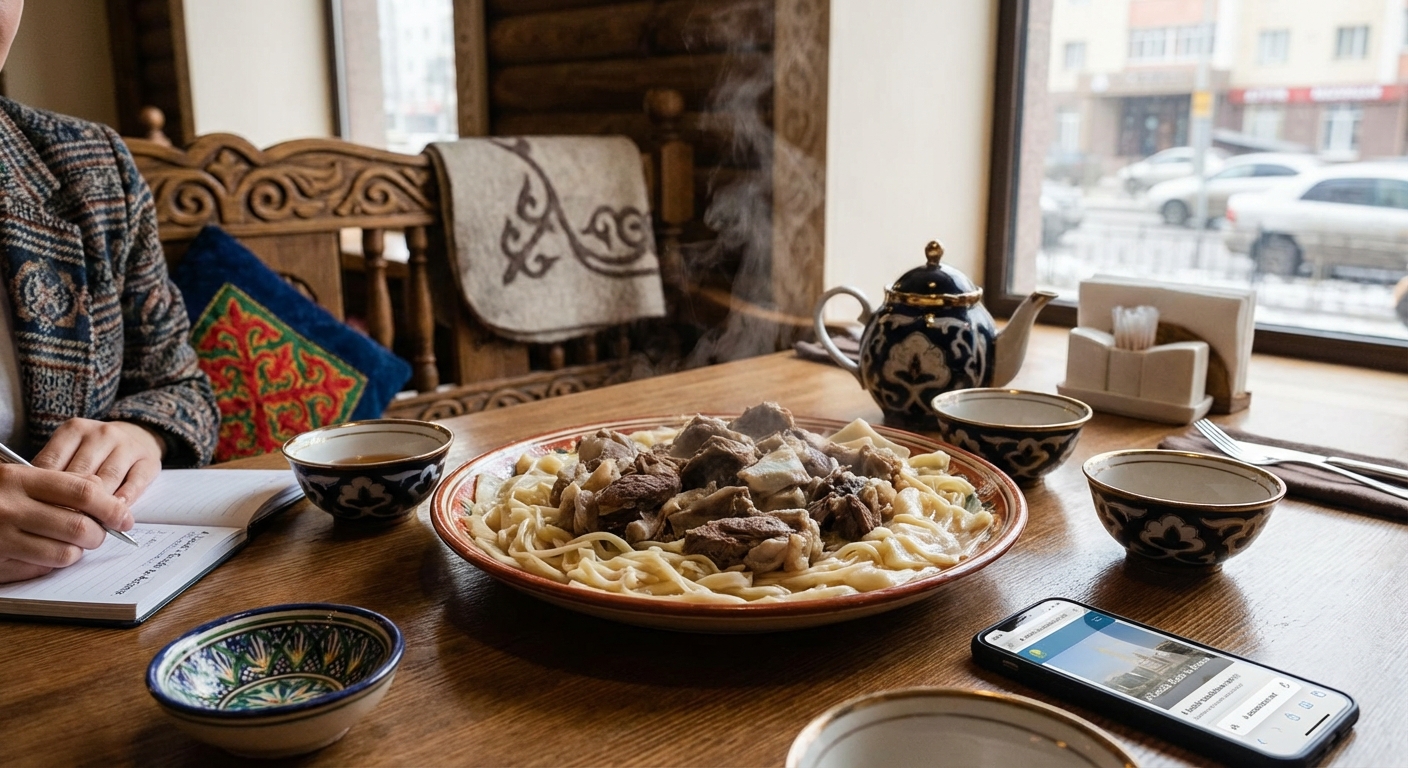
This restaurant earned a spot on The World’s 50 Best Discovery list, and for good reason. Located in the heart of Astana, Qazaq Gourmet takes traditional recipes and presents them with modern plating techniques.
Their beshbarmak uses horse meat sourced from specific regions known for quality livestock. The noodles are hand-rolled daily. The broth has a clarity that comes from careful skimming and slow cooking.
Expect to pay around 5,500 tenge for a generous portion. The atmosphere leans upscale without feeling stuffy. English-speaking staff can explain the dish’s components and cultural significance.
The restaurant also offers a tasting menu that includes beshbarmak alongside other Kazakh specialties. If you want to understand the full spectrum of the cuisine, this is your spot.
Alasha
Alasha focuses on recreating the experience of eating in a traditional Kazakh home. The interior features yurts, traditional textiles, and low seating areas where you can eat cross-legged if you choose.
Their beshbarmak follows family recipes passed down through generations. The meat is tender without being mushy. The noodles have the right amount of chew. The tuzduk balances the richness of the meat with sharp onion flavor.
Portions here are enormous. One serving can easily feed two people if you order appetizers. Prices hover around 4,000 tenge per portion.
The staff often includes older women who have been making beshbarmak for decades. They take pride in their work, and it shows in the consistency.
Saksaul
Saksaul represents the modern approach to Kazakh cuisine. The restaurant maintains respect for traditional methods while experimenting with presentation and minor ingredient variations.
Their standard beshbarmak is excellent, but they also offer a “black beshbarmak” made with squid ink noodles. It sounds gimmicky, but the execution is solid. The ink adds a subtle brininess that complements the meat.
The regular version costs about 4,800 tenge. The black version runs closer to 6,000 tenge.
The dining room has floor-to-ceiling windows with views of Astana’s skyline. If you’re combining your meal with sightseeing, this location works well. After eating, you can walk to several of Astana’s illuminated landmarks within 15 minutes.
Daididau
This restaurant belongs to the family of Dimash Kudaibergen, Kazakhstan’s most famous singer. That celebrity connection could easily result in style over substance, but Daididau delivers authentic food.
The beshbarmak here uses both beef and horse meat, giving you a chance to compare the flavors side by side. Horse meat has a slightly sweeter taste and darker color. Beef offers more familiar richness.
Prices are reasonable at around 3,800 tenge per portion. The restaurant gets busy during dinner service, so lunch visits often provide a more relaxed experience.
The decor blends contemporary design with Kazakh motifs. It feels less touristy than Alasha but more polished than some family-run spots.
How to Order and Eat Beshbarmak Like a Local
Walking into a Kazakh restaurant for the first time can feel intimidating. Here’s how to navigate the experience:
- Check if the restaurant requires reservations. Popular spots like Qazaq Gourmet fill up, especially on weekends.
- Ask if the beshbarmak is made fresh daily or prepared in advance. Fresh preparation means better texture and flavor.
- Specify your meat preference. Most places offer horse (жылқы ет, zhylky et) or beef (сиыр ет, siyr et). Horse is more traditional.
- Request the portion size. A full portion feeds 1-2 people. Half portions exist at some restaurants.
- Order shorpo (the broth) on the side if you want to drink it separately. Some restaurants automatically include a small bowl.
When the dish arrives, you’ll typically receive a large plate with the noodles and meat, plus a small bowl of broth. Traditionally, diners use their hands to tear the meat and mix everything together. Modern restaurants provide forks and knives, and no one will judge you for using them.
“The best beshbarmak has meat so tender you can pull it apart with a fork, but noodles with enough structure that they don’t turn to mush in the broth. That balance is what separates good from great.” — Chef at Qazaq Gourmet
Take your time. Beshbarmak is meant to be eaten slowly, ideally with conversation. Kazakhs often serve it during long gatherings where the meal stretches over hours.
Common Mistakes Visitors Make
| Mistake | Why It Matters | How to Avoid It |
|---|---|---|
| Ordering individual portions for a group | Beshbarmak is traditionally communal | Ask for one large platter to share |
| Expecting spicy flavors | Kazakh cuisine relies on subtle seasoning | Appreciate the natural meat and broth flavors |
| Skipping the broth | Shorpo cleanses your palate between bites | Sip it throughout the meal |
| Visiting only dinner service | Lunch often features fresher preparations | Try restaurants between 12:00 and 14:00 |
| Choosing beef when horse is available | Horse meat is the authentic choice | Try horse at least once to understand the tradition |
Budget Options Without Sacrificing Quality
Not every great beshbarmak experience requires spending 5,000 tenge. Several spots offer authentic versions at lower prices.
Tez Besh operates as a fast-casual concept. The name literally means “fast beshbarmak.” They streamline the service without cutting corners on ingredients. A portion costs around 2,500 tenge.
The atmosphere is minimal. You order at a counter, find a seat, and they bring the food out. It’s perfect for travelers on a tight budget who still want authentic flavors.
Bauyrdaq Qazaq Fastfood takes a similar approach. They focus on speed and affordability while maintaining traditional cooking methods. Prices start at 2,200 tenge.
Both spots get crowded during lunch hours when local office workers flood in. That’s actually a good sign. If you see a line of Kazakhs waiting, you’re in the right place.
What to Pair With Your Beshbarmak
Beshbarmak is rich and filling. The right accompaniments balance the heaviness.
Most restaurants automatically serve:
- Shorpo (meat broth) in a separate bowl
- Pickled vegetables or fresh tomato and cucumber salad
- Baursak (fried dough) for soaking up extra broth
- Kymyz (fermented mare’s milk) or ayran (salted yogurt drink)
The pickled vegetables cut through the fat. The baursak adds textural variety. The drinks provide tanginess that refreshes your palate.
Avoid ordering heavy appetizers. You won’t have room. A simple salad or small portion of samsa (meat pastries) is plenty.
For drinks, tea is traditional but not mandatory. Many locals prefer kymyz with beshbarmak because the fermentation aids digestion. The taste takes getting used to, slightly sour and fizzy, but it’s worth trying.
Timing Your Visit for the Best Experience
Beshbarmak quality varies throughout the day. Understanding restaurant rhythms helps you get the best version.
Lunch service (12:00 to 14:00) is prime time. Restaurants prepare fresh batches knowing they’ll serve high volume. The meat is tender, the noodles are just made, and the broth hasn’t been sitting.
Early dinner (18:00 to 19:00) works well at popular spots. They’ll often prepare a second batch for evening service.
Late dinner (after 21:00) is risky. You might get leftovers from lunch service reheated. The noodles lose their texture. The meat dries out.
Weekends bring different patterns. Families often eat beshbarmak for Sunday lunch, so restaurants prepare extra. Friday and Saturday evenings get busy with celebrations and gatherings.
If you’re visiting during a short stay in Astana, prioritize a lunch visit to a top-tier restaurant over squeezing it into a packed evening schedule.
Regional Variations You Might Encounter
While beshbarmak follows a basic formula, regional differences exist. Astana restaurants sometimes represent these variations.
Southern Kazakhstan style includes more vegetables in the cooking process. Carrots and potatoes might appear alongside the meat.
Western Kazakhstan style uses more lamb and less horse. The noodles are often smaller and thicker.
Eastern Kazakhstan style leans heavily on horse meat and includes more kazy (horse sausage). The tuzduk has extra garlic.
Some restaurants label these variations on their menus. Others prepare a hybrid that pulls from multiple traditions. Ask your server which style the restaurant follows.
The differences are subtle. Don’t stress about finding one specific version. Focus on quality ingredients and proper technique instead.
Understanding Kazakh Dining Etiquette
Eating beshbarmak comes with unwritten rules. Following them shows respect for the culture.
When sharing a communal platter:
- Wait for the eldest person at the table to start eating
- Take meat from the section closest to you
- Don’t pick through the platter looking for the best pieces
- Offer choice cuts to elders or honored guests
- Pace yourself to finish around the same time as others
If someone offers you a specific piece of meat, accept it. Different cuts carry symbolic meaning. The pelvic bone goes to respected elders. The shin bone goes to young women. The shoulder goes to men. Refusing can seem rude.
These traditions matter more in home settings than restaurants, but awareness helps. You’ll notice Kazakh families following these patterns even in casual dining rooms.
Understanding Kazakh hospitality extends beyond just the meal itself and influences how locals interact with visitors throughout their stay.
Questions to Ask Before Ordering
Not all beshbarmak is created equal. A few smart questions help you avoid disappointment.
“Is the beshbarmak made today?” Some restaurants prepare large batches and reheat portions throughout the week. Fresh is always better.
“What type of meat do you use?” Knowing whether it’s horse, beef, or lamb helps set expectations. Horse is traditional but not everyone’s preference.
“Do you make the noodles in-house?” Hand-rolled noodles have better texture than store-bought versions.
“How long does the meat cook?” Proper beshbarmak requires at least 3-4 hours of simmering. Restaurants that rush the process produce tough, flavorless meat.
“Can I see a portion before ordering?” Some places are happy to show you a plated example. This helps gauge size and presentation.
Don’t be shy about asking. Good restaurants appreciate customers who care about quality.
Where Astana’s Beshbarmak Scene Is Heading
The city’s culinary landscape continues to grow. New restaurants open regularly, and established spots refine their offerings.
Recent trends include:
- Smaller, more manageable portion sizes for solo diners
- Fusion versions incorporating international techniques
- Greater transparency about meat sourcing and animal welfare
- Tasting menus that position beshbarmak alongside other Kazakh dishes
- Cooking classes where visitors learn to make the dish themselves
Some purists worry these changes dilute tradition. Others see them as necessary evolution that keeps the cuisine relevant.
The best restaurants balance both perspectives. They maintain core techniques while adapting to modern dining preferences.
Sandyq, for example, offers a traditional beshbarmak but also runs workshops teaching the cooking process. Participants leave with recipes and techniques they can replicate at home.
This educational approach helps visitors appreciate the dish beyond just eating it. You understand the time investment, the skill required, and the cultural significance.
Making the Most of Your Beshbarmak Experience
Beshbarmak represents more than just calories on a plate. It’s a window into Kazakh identity, history, and values.
The communal serving style reflects the nomadic heritage where sharing scarce resources ensured survival. The simple preparation highlights quality ingredients over complex techniques. The generous portions demonstrate hospitality and abundance.
When you sit down to a proper beshbarmak in Astana, you’re participating in a tradition that stretches back centuries. The restaurants listed here understand that responsibility. They don’t just serve food. They preserve culture.
Choose a spot that matches your comfort level and budget. Visit during optimal hours. Ask questions. Take your time eating. Pay attention to the flavors and textures. That’s how you turn a meal into a meaningful experience that stays with you long after you leave Kazakhstan.
Leave a Reply