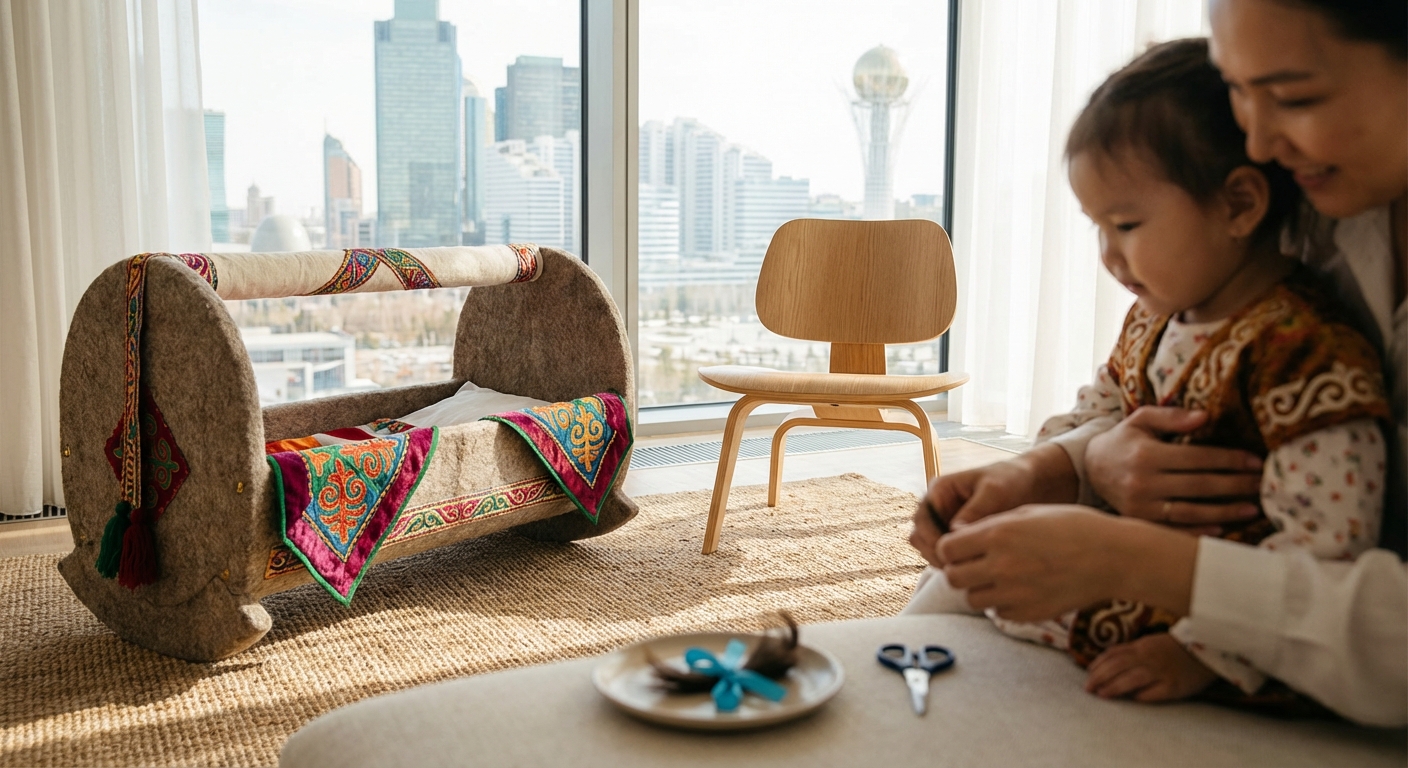
When a baby arrives in a Kazakh family, the celebrations stretch far beyond the hospital room. From the first announcement to the child’s first haircut, each milestone carries deep meaning rooted in nomadic heritage and spiritual protection. These aren’t just parties. They’re carefully timed rituals designed to safeguard the infant, honor ancestors, and weave the newest member into the community fabric.
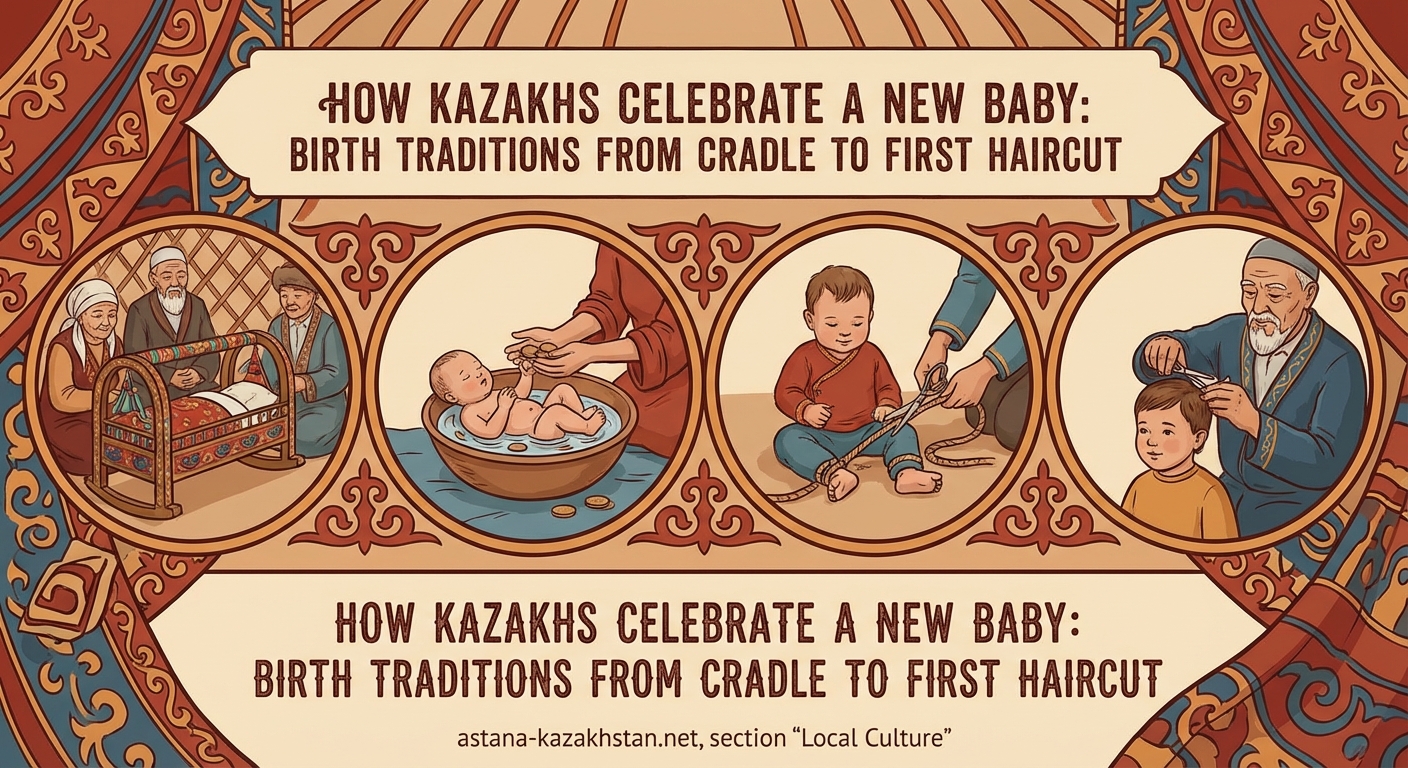
Kazakh birth traditions include shildekhana (birth announcement feast), kyrkynan shygaru (40th day bathing ceremony), at koyu (name giving), besik toi (cradle ceremony), tusau kesu (first steps), and shan alu (first haircut). Each ritual combines spiritual protection, community bonding, and practical wisdom passed through generations, creating a structured pathway from birth to early childhood that remains vibrant in modern Kazakhstan.
Shildekhana marks the joyful announcement
The moment a child is born, the family prepares shildekhana, the birth announcement celebration. Traditionally, the father or grandfather rides through the village sharing the news, inviting neighbors and relatives to feast.
This isn’t a casual drop-in. Families prepare substantial meals, often slaughtering livestock to honor the occasion. Guests bring gifts for the newborn and mother. The celebration typically happens within the first few days after birth.
The ritual serves multiple purposes. It announces the birth formally to the community. It thanks the divine for safe delivery. It establishes the child’s place within the social network from day one.
Modern families in cities like Astana often host shildekhana at restaurants or community halls, but the core elements remain. Food, gratitude, and collective joy.
Kyrkynan shygaru protects the vulnerable newborn
The 40th day after birth holds special significance. Kazakhs believe the first 40 days are the most vulnerable for mother and child. During this period, visitors are limited, and both receive extra protection from negative energy.
On the 40th day, kyrkynan shygaru takes place. This bathing ceremony involves:
- Preparing special water with 40 silver coins or 40 spoons of water from 40 sources
- An elder woman, often a grandmother or respected community member, bathes the baby
- The baby’s nails and hair are trimmed for the first time
- White cloth is used to dry the infant, symbolizing purity
The number 40 appears repeatedly in Turkic and Islamic traditions. It represents completion of a cycle and transition to a new phase.
After the bathing, the baby can be shown more freely to extended family and friends. The mother also regains fuller participation in household activities. The 40 day threshold marks the end of the most delicate postpartum period.
“The kyrkynan shygaru isn’t just about hygiene. It’s the community’s way of saying the baby has survived the most dangerous weeks and is now ready to engage with the wider world. The elder woman performing the ritual passes her strength and wisdom to the child through the ceremony.” – Traditional Kazakh midwife
At koyu gives the child their name
Naming a Kazakh child involves careful consideration. The at koyu ceremony formalizes this choice, often coinciding with or shortly after kyrkynan shygaru.
Traditionally, the eldest respected family member whispers the chosen name into the baby’s ear three times. This person is usually a grandparent or revered elder known for wisdom and good character.
Names carry weight. Many Kazakh names reference:
- Natural elements (Aizhan meaning moon beauty, Arman meaning dream)
- Desired qualities (Batyrkhan meaning brave leader, Zhansaya meaning soul protector)
- Historical figures or ancestors
- Islamic names from Arabic origins
- Wishes for the child’s future
The ceremony includes prayers, blessings, and often a feast. Guests bring gifts and offer their own wishes for the child’s life path.
Some families consult with religious leaders or astrologers to select auspicious names. Others honor deceased relatives by choosing their names, keeping family memory alive through generations.
Besik toi celebrates the cradle
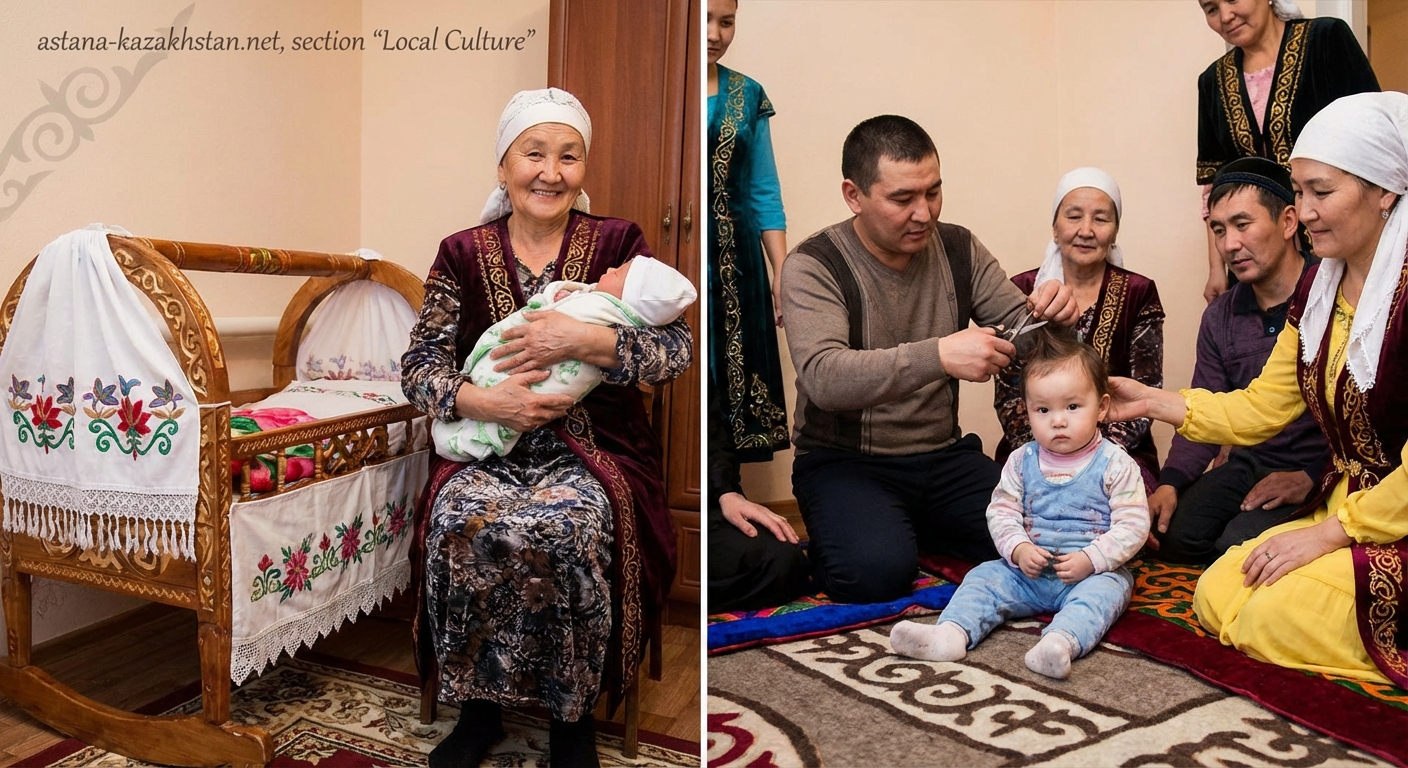
The besik, a traditional wooden cradle, represents more than furniture. It’s a protective vessel that rocks the baby through infancy. The besik toi ceremony celebrates placing the infant in this cradle for the first time.
Families commission or inherit these cradles, often ornately decorated with carvings and painted designs. The cradle includes a hole at the bottom for a chamber pot, making it functional for extended use.
During besik toi:
- Elders place the baby in the cradle with prayers
- Guests tie colorful ribbons and small amulets to ward off evil
- Sweets are distributed to children present
- A feast honors the occasion
The ceremony typically happens between the 40th day and third month. Timing varies by family preference and regional custom.
Modern Kazakh families might use contemporary cribs but still perform a modified besik toi to honor tradition. The symbolic act of placing the child in their sleeping space with community blessing remains meaningful.
Tusau kesu encourages the first steps
When a baby begins showing signs of walking, usually between 9 and 15 months, families prepare for tusau kesu. This ceremony literally means “cutting the rope.”
A rope or ribbon made from black and white threads is tied loosely around the child’s ankles. The contrasting colors represent life’s dualities: good and bad, joy and sorrow, light and dark.
The child is encouraged to take steps while the rope restrains them slightly. Then a respected, successful person cuts the rope, symbolically freeing the child to walk their own path.
Who cuts the rope matters. Families choose someone whose qualities they hope the child will embody. A fast runner for athletic prowess. A successful businessperson for prosperity. A kind elder for wisdom.
After the rope cutting:
- The child is encouraged to race other children or walk toward a goal
- Guests throw sweets and coins, which children scramble to collect
- A feast celebrates this developmental milestone
- The person who cut the rope receives gifts and thanks
This tradition continues robustly across Kazakhstan. You’ll see tusau kesu celebrations in parks, homes, and community centers throughout Astana and other cities.
Sundet toi marks circumcision for boys
For male children, sundet toi celebrates circumcision, typically performed between ages 3 and 7. This Islamic tradition has merged with Kazakh cultural practices to create a significant family event.
The ceremony includes:
- A medical professional or traditional practitioner performing the procedure
- Prayers and blessings for the child’s health
- A large feast with extended family and community
- Gifts for the child, often including money, clothes, and toys
- Entertainment and celebration
Modern families usually have the procedure done in medical facilities with proper hygiene and pain management. The cultural celebration follows at home or a rented venue.
The event marks the boy’s transition toward maturity and fuller participation in religious and cultural life. It’s one of the most elaborate childhood ceremonies, sometimes rivaling wedding celebrations in scale.
Shan alu celebrates the first haircut
Between ages 3 and 7, often aligned with sundet toi for boys, families perform shan alu, the first haircut ceremony. The child’s hair, which has grown since the small trim at kyrkynan shygaru, is now cut more substantially.
Respected elders or successful community members are invited to cut small locks. Each person who cuts hair places money in a bowl, which goes to the child as a gift and blessing.
The amount of hair removed varies. Some families shave the head completely. Others trim symbolically. Regional and family customs differ.
After the haircut, the collected hair is often buried in a meaningful location or kept as a keepsake. The money collected can be substantial, forming the start of savings for the child’s future.
This ceremony marks another developmental threshold. The child is no longer an infant but a young person beginning to engage more independently with the world.
Comparing traditional ceremonies and their timing
| Ceremony | Typical Timing | Primary Purpose | Key Participants |
|---|---|---|---|
| Shildekhana | First few days | Birth announcement and gratitude | Entire community, father announces |
| Kyrkynan shygaru | 40th day | Protection completion, first bath | Elder woman, close family |
| At koyu | Around 40th day | Naming and identity | Respected elder, family |
| Besik toi | 40 days to 3 months | Cradle blessing | Family and guests |
| Tusau kesu | 9 to 15 months | First steps encouragement | Successful person cuts rope, community |
| Sundet toi | 3 to 7 years (boys) | Circumcision and maturity | Medical professional, large gathering |
| Shan alu | 3 to 7 years | First haircut and blessing | Multiple elders, community |
Common mistakes visitors make observing these traditions
Travelers and cultural observers sometimes misunderstand the depth and purpose of Kazakh birth traditions. Here are frequent errors:
Treating ceremonies as mere entertainment. These aren’t performances. They’re sacred family moments with spiritual and social significance. Respectful observation requires understanding the meaning behind the actions.
Photographing without permission. While Kazakhs are generally hospitable, assuming you can photograph intimate family ceremonies without asking is disrespectful. Always request permission, especially during kyrkynan shygaru or sundet toi.
Arriving empty handed. If you’re invited to any of these celebrations, bringing a gift is expected. Money in an envelope, baby clothes, or useful items for the child are appropriate. The gift doesn’t need to be expensive, but the gesture matters.
Ignoring gender customs. Some ceremonies have traditional gender roles. Men and women may celebrate in separate spaces during certain parts of larger events. Follow your host’s guidance.
Comparing to Western practices dismissively. Comments like “we just do a baby shower” miss the point. These traditions evolved over centuries in nomadic culture, addressing specific needs for community bonding, spiritual protection, and practical support.
How modern Kazakhstan adapts ancient practices
Urban Kazakhs face a balancing act. They want to honor traditions while living contemporary lives in cities like Astana or Almaty. The result is creative adaptation.
Many families condense ceremonies. Instead of seven separate major events, they might combine at koyu with kyrkynan shygaru, or besik toi with another milestone. This reduces the burden of hosting multiple large gatherings.
Venues shift from homes to restaurants and event halls. This is practical in apartment living and allows for larger guest lists without space constraints.
Professional services now exist for traditional ceremonies. You can hire specialists to prepare authentic besik cradles, organize tusau kesu events, or cater traditional meals. This helps families who lack the knowledge or time to arrange everything themselves.
Social media plays a growing role. Families share ceremony photos and videos, extending the community beyond physical attendees. This helps diaspora Kazakhs stay connected to traditions even when living abroad.
Yet the core elements persist. The prayers, the community gathering, the symbolic actions, the intergenerational knowledge transfer. The format may modernize, but the meaning endures.
Regional variations across Kazakhstan
Kazakhstan’s vast geography creates regional differences in how these traditions unfold. Western regions near the Caspian Sea incorporate different musical traditions and foods compared to eastern areas near the Altai Mountains.
Southern Kazakhstan, closer to Uzbekistan and Kyrgyzstan, shows more Islamic influence in certain ceremonies. Northern regions, with significant Russian populations, sometimes blend traditions.
The Mangystau region maintains particularly strong ties to nomadic practices. Families there often conduct ceremonies in more traditional settings, sometimes even in yurts rather than modern buildings.
Almaty and Astana, as cosmopolitan centers, display the widest variation. You’ll find everything from ultra-traditional celebrations conducted entirely in Kazakh to heavily modernized versions incorporating international elements.
These regional differences aren’t contradictions. They’re evidence of living culture adapting to local contexts while maintaining shared core values.
Gifts and their symbolic meanings
The gifts exchanged during birth ceremonies carry symbolic weight beyond their material value.
Silver items represent purity and protection. Silver spoons, cups, or jewelry are common gifts, believed to ward off negative energy.
White fabrics symbolize clean beginnings and pure intentions. Blankets, clothes, and wrapping cloths in white are traditional.
Money is practical and allows families to purchase what the child actually needs. It’s given in envelopes during most ceremonies, with amounts varying by the giver’s relationship and means.
Livestock in rural areas remains a traditional gift. A sheep, horse, or cow given to a newborn represents substantial wealth and investment in the child’s future.
Gold jewelry for girls often includes small earrings or bracelets, sometimes inscribed with protective verses or the child’s name.
The act of giving matters as much as the gift itself. It’s a public declaration of support for the child and family, creating reciprocal obligations that strengthen community bonds.
Experiencing these traditions as a visitor
If you’re traveling in Kazakhstan and want to understand these customs more deeply, several approaches work well.
Visit the National Museum in Astana, which includes exhibits on traditional Kazakh life, including birth customs and childhood rituals.
Attend cultural festivals, especially during Nauryz celebrations in March, when traditional ceremonies are often demonstrated publicly.
Stay with a Kazakh family through homestay programs. If a birth or childhood ceremony occurs during your visit, you might receive an invitation. Accept graciously and follow your hosts’ guidance on appropriate participation.
Ask questions respectfully. Most Kazakhs are proud of their traditions and happy to explain them to genuinely interested visitors. Frame questions as seeking to learn, not to judge.
Consider timing your visit around common ceremony seasons. Spring and summer see more celebrations, as families prefer good weather for large gatherings.
The spiritual foundation beneath the celebrations
Understanding Kazakh birth traditions requires recognizing their spiritual dimensions. These aren’t secular parties. They’re sacred acts blending pre-Islamic Tengriism, Islamic practice, and nomadic wisdom.
The emphasis on protection reflects historical infant mortality rates. When medical care was scarce, spiritual safeguards felt essential. Amulets, prayers, and careful timing aimed to shield vulnerable new life.
The community focus addresses the practical reality that raising children in harsh steppe conditions required collective effort. These ceremonies formalize mutual support systems, ensuring no family faces child-rearing alone.
The milestone marking creates structure in a nomadic life that could feel uncertain. Each ceremony anchors the child’s development to specific moments, giving families clear markers of progress and achievement.
Even as Kazakhstan modernizes rapidly, these spiritual and practical foundations remain relevant. Parents still worry about their children’s safety and future. Communities still benefit from strong bonds. The ancient wisdom adapts but doesn’t disappear.
Why these traditions matter beyond Kazakhstan
Kazakh birth traditions offer insights valuable to anyone interested in how cultures preserve identity through ritual.
They demonstrate how ceremonies can serve multiple functions simultaneously: spiritual protection, social bonding, practical support, and cultural transmission. This efficiency helps explain their persistence.
They show how traditions adapt without losing meaning. The shift from yurts to apartments, from village gatherings to restaurant halls, proves that core values can survive format changes.
They illustrate the importance of intergenerational knowledge transfer. Each ceremony involves elders teaching younger family members, ensuring cultural continuity.
For expectant parents with Kazakh heritage living abroad, these traditions provide a roadmap for maintaining cultural connection. Even simplified versions help children understand their roots.
For anthropologists and cultural researchers, they’re living examples of how nomadic societies structured child development and community responsibility.
From cradle ceremonies to first steps forward
These traditions transform a biological event into a communal journey. Each ceremony invites the wider community to invest in a single child’s wellbeing, creating networks of care that extend far beyond the nuclear family.
If you’re planning to attend or host one of these celebrations, remember that authenticity matters more than perfection. The specific foods, the exact prayers, the traditional clothing, these details vary by family and region. What doesn’t vary is the intention: to welcome new life with joy, protection, and hope.
Whether you’re experiencing these customs in a modern Astana apartment or a rural village in southern Kazakhstan, you’re witnessing cultural resilience in action. These aren’t museum pieces. They’re living practices that continue to give meaning and structure to one of life’s most universal experiences: the arrival of a child.
Leave a Reply