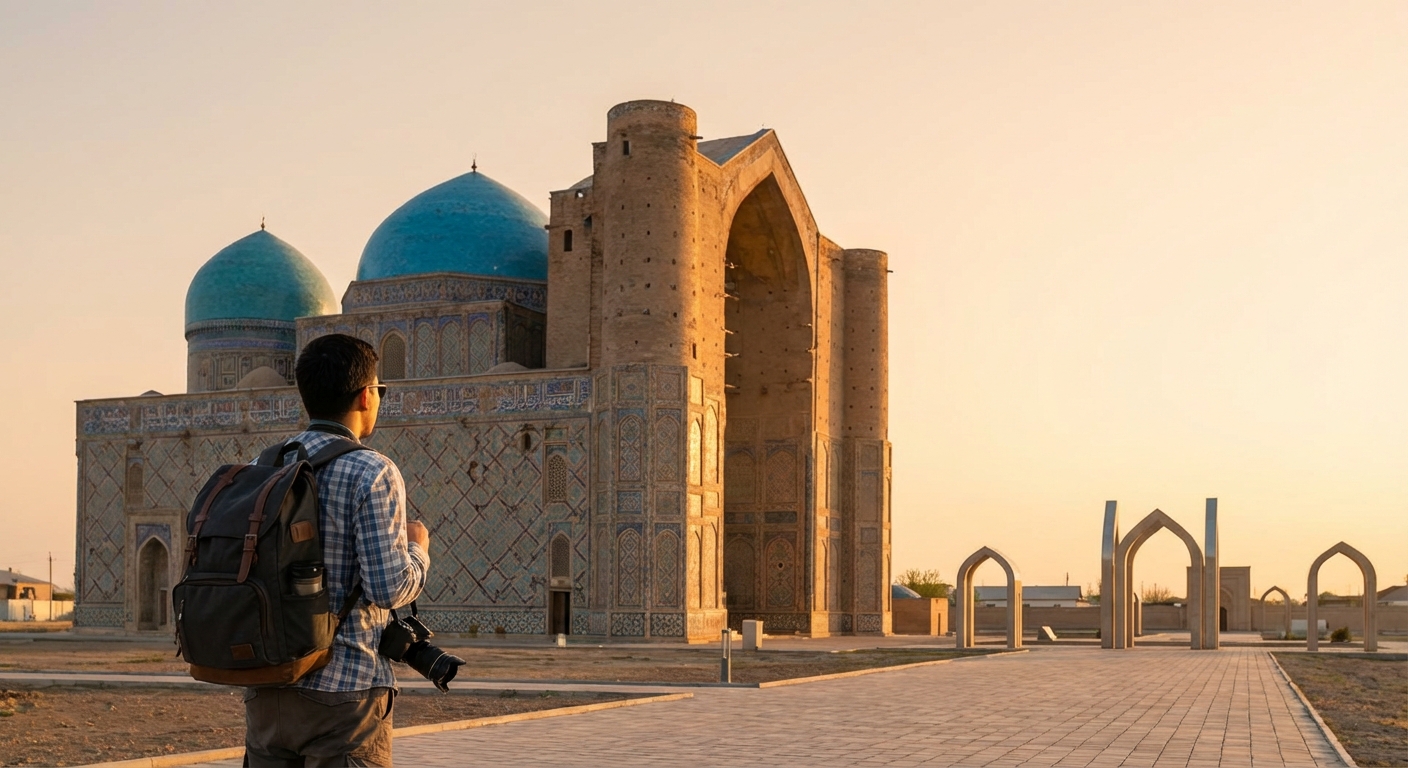
Turkistan sits in southern Kazakhstan, a city where turquoise domes rise against the desert sky and pilgrims have walked the same streets for over a thousand years. This is not a place of modern skyscrapers or bustling nightlife. It’s a city built around faith, history, and the legacy of a 12th-century Sufi mystic whose teachings still resonate across Central Asia.
Most travelers rush through Kazakhstan, hitting Almaty or Astana before moving on. But Turkistan offers something different. It’s quieter, older, and deeply rooted in the country’s spiritual identity. The UNESCO-listed Mausoleum of Khoja Ahmed Yasawi dominates the skyline, but there’s more here than one monument. Underground mosques, ancient bathhouses, and a sprawling bazaar reveal layers of Silk Road history that few international visitors take time to appreciate.
Turkistan is Kazakhstan’s spiritual heart, home to the UNESCO-protected Yasawi Mausoleum and ancient Islamic architecture dating back centuries. Located in the south near Shymkent, the city offers pilgrimage sites, Silk Road history, and authentic cultural experiences. Plan at least one full day to visit the mausoleum complex, underground mosques, and local markets while respecting religious customs and dress codes.
Why Turkistan matters to Kazakhstan
Turkistan has been a pilgrimage destination for centuries. Before Kazakhstan had its current borders, before the Soviet era, even before the Mongol invasions, this city was a center of Islamic learning and Sufi mysticism.
Khoja Ahmed Yasawi founded the Yasawiyya Sufi order here in the 12th century. His poetry and teachings spread across the Turkic world. When he died in 1166, his tomb became a sacred site. Pilgrims traveled across deserts and mountains to pray here.
Today, Kazakhs consider three visits to Turkistan equal to one hajj to Mecca. That belief reflects how deeply this city is woven into national identity.
The government has invested heavily in restoration and tourism infrastructure over the past decade. New museums, renovated monuments, and improved transportation have made Turkistan more accessible than ever. But the city hasn’t lost its authentic character. You’ll still see elderly pilgrims circling the mausoleum at dawn, vendors selling prayer beads in the bazaar, and families picnicking in the shade of ancient walls.
Getting to Turkistan from major cities
Turkistan is well connected to Kazakhstan’s main hubs, though it’s not as straightforward as flying into Almaty or Astana.
From Shymkent (160 km away)
Shymkent is the closest major city. Most international travelers fly into Shymkent and take ground transportation to Turkistan.
- Book a shared taxi or marshrutka from Shymkent’s bus station. The journey takes about 2 hours and costs 1,500 to 2,000 tenge per person.
- Hire a private driver for 8,000 to 12,000 tenge if you prefer flexibility and comfort.
- Take the train if you have time. Trains run daily but take longer and require checking the schedule in advance.
From Almaty (930 km away)
You can fly from Almaty to Turkistan on Air Astana or SCAT Airlines. Flights take about 90 minutes. Alternatively, take an overnight train if you enjoy scenic rail journeys. The train passes through vast steppe landscapes and smaller towns most tourists never see.
From Astana (1,200 km away)
Direct flights connect Astana to Turkistan several times per week. If you’re planning a multi-city trip, consider flying into Astana, spending a few days there, then heading south. After visiting Turkistan, you can continue to Shymkent or return to Almaty.
The Mausoleum of Khoja Ahmed Yasawi
This is the centerpiece of any Turkistan visit. Built by Timur (Tamerlane) in the late 14th century, the mausoleum is one of Central Asia’s finest examples of Timurid architecture.
The turquoise dome rises 44 meters high. Intricate tile work covers the exterior walls in geometric patterns and Arabic calligraphy. Inside, the main chamber holds a massive bronze cauldron weighing two tons. Pilgrims circle the tomb, whispering prayers and touching the walls.
UNESCO added the site to the World Heritage List in 2003. Restoration work has been ongoing for decades, carefully preserving original materials while stabilizing the structure.
Visiting tips
- Arrive early in the morning to avoid crowds and heat. Summer temperatures can exceed 40°C.
- Dress modestly. Women should cover their heads, shoulders, and knees. Men should avoid shorts.
- Photography is allowed in most areas, but ask permission before photographing people, especially worshippers.
- Hire a local guide at the entrance if you want detailed historical context. Guides speak English, Russian, and Kazakh.
Other historical sites worth your time
Turkistan’s appeal goes beyond the main mausoleum. The city has preserved several lesser-known monuments that reveal different aspects of its history.
Hilvet Underground Mosque
This small underground prayer space dates back to the 12th century. According to tradition, Khoja Ahmed Yasawi retreated here for meditation and prayer. The mosque is carved into the earth, with low ceilings and simple stone walls. It’s a stark contrast to the grand mausoleum above ground.
Mausoleum of Rabia Sultan Begum
Rabia Sultan Begum was the daughter of Timur’s grandson. Her mausoleum sits near the main complex. The building is smaller and less ornate than Yasawi’s tomb, but it shows similar architectural techniques and tile work.
Joma Mosque
This functioning mosque serves the local community. Visitors are welcome outside of prayer times. The courtyard offers shade and a peaceful atmosphere.
Ancient City Walls
Fragments of Turkistan’s medieval fortifications still stand on the city’s outskirts. Walking along these walls gives you a sense of how the city defended itself during centuries of conflict and invasion.
The Hammam
The restored bathhouse near the mausoleum complex shows how public bathing worked in medieval Central Asia. The building features heating systems, water channels, and separate chambers for men and women.
Planning your visit to Turkistan
| Aspect | Best Practice | Common Mistake |
|---|---|---|
| Duration | Spend at least one full day | Rushing through in 3 hours |
| Season | Visit in spring or fall | Coming in July or August heat |
| Dress code | Modest clothing, head covering for women | Wearing shorts or tank tops |
| Timing | Start early morning | Arriving at midday |
| Transportation | Arrange return transport in advance | Assuming taxis will be available |
Best time to visit
Spring (April to May) and fall (September to October) offer the most comfortable weather. Temperatures range from 15°C to 25°C. Summer can be brutally hot, with temperatures regularly hitting 40°C or higher. Winter is cold and windy, though you’ll encounter fewer tourists.
How long to stay
Most travelers visit Turkistan as a day trip from Shymkent. That’s enough time to see the main mausoleum, wander the complex, visit one or two smaller sites, and have lunch.
If you want a deeper experience, spend two days. This allows time for the Azret Sultan Museum, the bazaar, and the newer Turkistan Caravanserai complex.
Where to stay
Accommodation options have improved dramatically in recent years. The Hazret Sultan Hotel offers clean rooms and a central location near the mausoleum. Budget travelers can find guesthouses and smaller hotels for 5,000 to 8,000 tenge per night.
Many visitors prefer to stay in Shymkent and visit Turkistan as a day trip. Shymkent has better restaurant options, nightlife, and hotel variety.
What to eat in Turkistan
Turkistan’s food scene reflects southern Kazakhstan’s culinary traditions. Expect hearty meat dishes, fresh bread, and strong tea.
Must-try dishes
- Beshbarmak: Boiled meat (usually lamb or horse) served over flat noodles with onions. It’s Kazakhstan’s national dish. For more on where to find the best version, check out this guide to beshbarmak in Astana.
- Shashlik: Grilled meat skewers, often served with raw onions and bread.
- Lagman: Hand-pulled noodles in a spicy meat and vegetable soup.
- Samsa: Baked pastries filled with meat, onions, or pumpkin.
- Baursak: Fried dough balls, slightly sweet, often served with tea.
Where to eat
Small cafes and chaikhanas (teahouses) cluster around the mausoleum complex. These spots serve simple, inexpensive meals. Don’t expect English menus, but pointing and gesturing usually works.
The Turkistan Bazaar has food stalls selling fresh bread, dried fruits, nuts, and local sweets. It’s a good place to assemble a picnic or stock up on snacks.
For a sit-down meal, try restaurants in the newer part of the city. Quality varies, but you’ll find cleaner facilities and more variety.
Cultural etiquette and practical considerations
Turkistan is a conservative city with deep religious roots. Respecting local customs makes your visit smoother and more meaningful.
Dress appropriately
Both men and women should dress modestly. Women should bring a headscarf for visiting religious sites. Loose-fitting clothing that covers shoulders and knees is essential.
Photography rules
You can photograph buildings and landscapes freely. Ask permission before photographing people, especially women and religious figures. Some areas inside the mausoleum prohibit photography.
Prayer times
Be aware of the five daily prayer times. Mosques become busy, and you should avoid entering during prayers unless you’re participating.
Language
Most locals speak Kazakh and Russian. English is rare outside of tourist areas. Learn a few basic phrases in Russian or Kazakh. Greetings, thank you, and numbers will help significantly.
“Turkistan teaches you to slow down. It’s not a place you can rush through with a camera and a checklist. Sit in the courtyard. Watch the light change on the tiles. Listen to the call to prayer. That’s when the city reveals itself.” — Experienced Central Asia traveler
The Azret Sultan Museum and Caravanserai complex
The Azret Sultan Museum opened in recent years as part of the government’s effort to promote Turkistan as a cultural destination. The museum covers the history of the city, the life of Khoja Ahmed Yasawi, and the development of Islam in Kazakhstan.
Exhibits include ancient manuscripts, religious artifacts, traditional clothing, and archaeological finds from the region. English labels are limited, but the visual displays are worth seeing.
The nearby Turkistan Caravanserai is a modern recreation of a traditional Silk Road inn. It houses shops, restaurants, and exhibition spaces. The architecture mimics historical styles, though it’s clearly new construction. Some travelers find it too polished and commercial, but it’s a comfortable place to rest and grab a meal.
Turkistan Bazaar and local shopping
The bazaar sits a short walk from the main mausoleum complex. It’s a working market where locals shop for produce, meat, spices, and household goods.
What to buy
- Prayer beads: Wooden or stone beads in various sizes
- Traditional textiles: Embroidered scarves, rugs, and wall hangings
- Dried fruits and nuts: Apricots, raisins, almonds, and walnuts
- Spices: Cumin, coriander, and saffron
- Handmade crafts: Pottery, jewelry, and small decorative items
Bargaining is expected. Start at about 50% of the asking price and negotiate from there. Cash is king. Credit cards are rarely accepted.
Day trips and nearby attractions
If you have extra time, consider these nearby sites.
Otrar
The ruins of Otrar lie about 50 km northwest of Turkistan. This ancient city was a major Silk Road trading hub until Genghis Khan destroyed it in the 13th century. Today, you can see crumbling walls, foundations, and archaeological excavations. It’s a dusty, windswept site with little shade, but history enthusiasts will appreciate the atmosphere.
Sauran
Another ruined city, Sauran sits about 40 km from Turkistan. The circular city walls are remarkably well preserved. You can walk along sections of the ramparts and imagine what life was like in this medieval fortress.
Arystan Bab Mausoleum
Located about 150 km from Turkistan, this mausoleum honors Arystan Bab, a spiritual teacher and companion of the Prophet Muhammad according to local tradition. Many pilgrims visit this site before heading to Turkistan. The current structure dates from the 19th century, though the site is much older.
Combining Turkistan with other Kazakhstan destinations
Turkistan fits naturally into a broader Kazakhstan itinerary. Here’s how to connect it with other major destinations.
Southern route
Fly into Almaty. Spend two to three days there. Take a day trip to Charyn Canyon. Then travel to Shymkent by plane or train. Visit Turkistan as a day trip from Shymkent. This route covers Kazakhstan’s natural beauty, its largest city, and its spiritual center.
Full country tour
Start in Almaty. Head to Turkistan and Shymkent. Then fly north to Astana. Spend a few days in the capital exploring its futuristic architecture. Check out Astana’s illuminated landmarks if you have an evening free. This gives you a complete picture of Kazakhstan’s diversity.
Visa requirements
Check current visa requirements before booking. Kazakhstan offers visa-free entry to citizens of many countries for stays up to 30 days. For detailed information, see this Kazakhstan visa guide.
What makes Turkistan different from other Central Asian cities
Turkistan doesn’t compete with Samarkand’s grandeur or Bukhara’s maze-like old town. It’s smaller, quieter, and less polished. But that’s part of its appeal.
You won’t find crowds of tour groups here. There are no souvenir shops blasting music or aggressive touts. The city feels lived-in and authentic. People come here for spiritual reasons, not just to tick off a UNESCO site.
The architecture is stunning, but it’s the atmosphere that stays with you. The sound of prayers echoing across the courtyard. The smell of fresh bread from the bazaar. The sight of elderly women in white headscarves circling the mausoleum at sunset.
Turkistan reminds you that Central Asia’s history isn’t just about conquerors and empires. It’s also about faith, community, and continuity across centuries.
Money, connectivity, and practical details
Currency and payments
Kazakhstan uses the tenge (KZT). As of 2024, exchange rates hover around 450 to 480 tenge per US dollar. ATMs are available in Turkistan, but it’s wise to carry cash. Many smaller vendors and restaurants don’t accept cards.
Internet and mobile coverage
Mobile coverage is good in Turkistan. You can buy a local SIM card in Shymkent or Almaty. Major carriers include Kcell and Beeline. Data packages are inexpensive.
WiFi is available in hotels and some cafes, though speeds can be slow.
Safety
Turkistan is a safe city. Violent crime is rare. Petty theft can happen in crowded areas, so keep valuables secure. Women traveling alone should dress modestly and be aware of cultural norms, but harassment is uncommon.
Health considerations
Drink bottled water. Tap water is not reliably safe. Bring sunscreen and a hat for summer visits. The sun is intense, and shade is limited at many outdoor sites.
There are pharmacies in the city center for basic medications. For serious health issues, you’d need to return to Shymkent or Almaty.
Respecting Turkistan’s spiritual significance
Remember that Turkistan is not just a tourist attraction. It’s an active pilgrimage site with deep meaning for millions of people.
Do:
- Dress modestly and respectfully
- Speak quietly in religious spaces
- Ask permission before photographing people
- Remove shoes when entering carpeted areas
- Show patience and understanding during crowded times
Don’t:
- Interrupt prayers or religious ceremonies
- Touch religious objects without permission
- Wear revealing clothing
- Eat or drink in prayer areas
- Treat the site as just another photo opportunity
Your respectful behavior helps preserve the site’s sacred atmosphere and ensures future travelers are welcomed.
Bringing history to life in Kazakhstan’s spiritual heart
Turkistan won’t overwhelm you with size or spectacle. It works quietly, revealing itself in small moments. The way light filters through the mausoleum’s latticed windows. The taste of fresh samsa from a bazaar stall. The feeling of standing in a place where people have prayed for a thousand years.
This city represents a side of Kazakhstan most travelers miss. It’s not about oil wealth or futuristic architecture. It’s about roots, faith, and the long arc of history. Whether you spend a few hours or a few days here, Turkistan will change how you understand this vast, complex country. Pack modest clothing, bring an open mind, and give yourself time to simply sit and observe. That’s when Turkistan makes sense.
Leave a Reply