
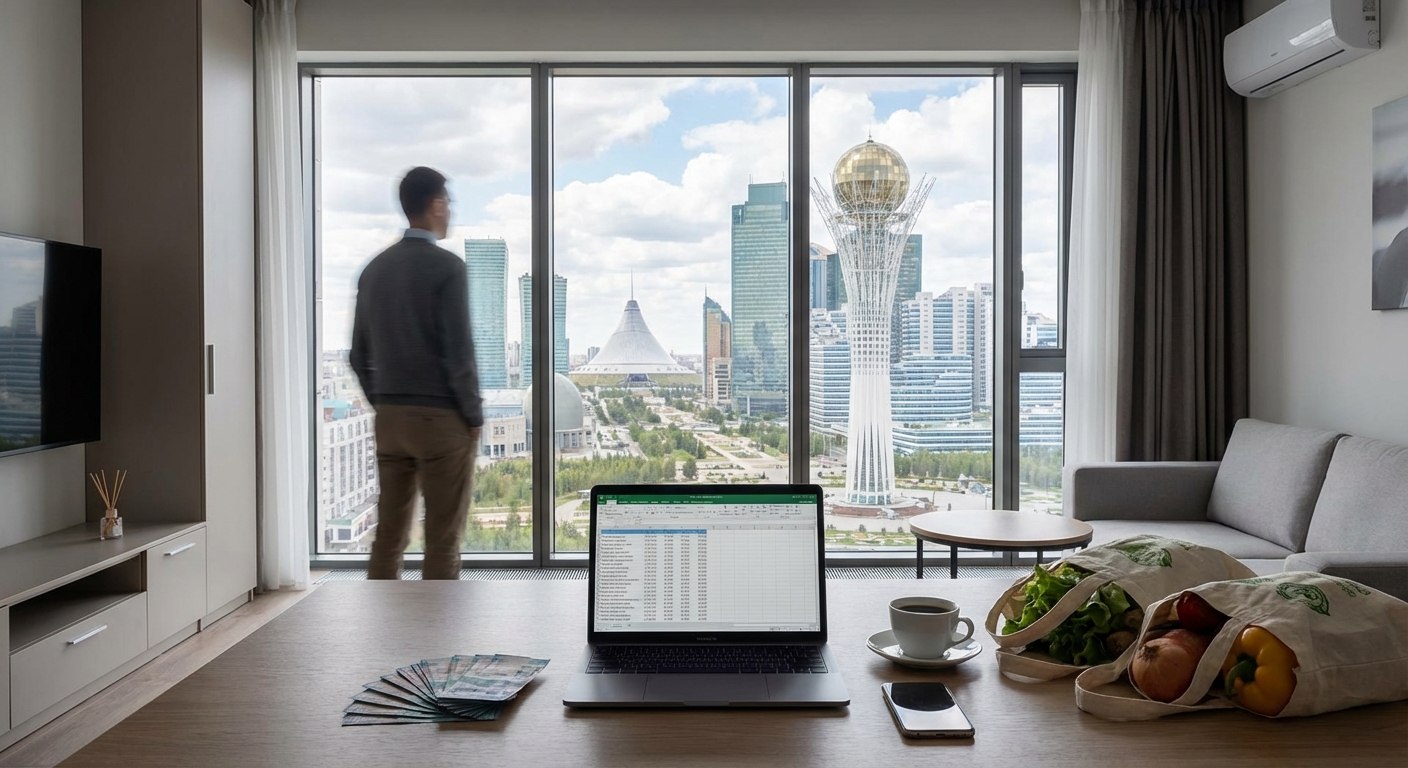
Moving to a new city means understanding what your paycheck will actually buy you. Astana offers a surprisingly affordable lifestyle compared to many global capitals, but the numbers vary wildly depending on your housing choices and lifestyle expectations.
Single expats typically spend $800 to $1,500 monthly in Astana, while families need $2,000 to $3,500. Housing takes the biggest bite at 30-40% of budgets. Local groceries and public transport remain incredibly cheap, but international schools and imported goods carry premium prices. Your lifestyle choices matter more than the city’s baseline costs.
Housing costs that shape your entire budget
Rent determines whether you live comfortably or stretch every tenge.
A one-bedroom apartment in the city center runs $350 to $600 monthly. Move to outer districts and you’ll pay $250 to $400 for similar space. Two-bedroom units in prime locations cost $600 to $1,000, while suburban options drop to $400 to $700.
Furnished apartments command 15-20% premiums over bare units. Most landlords require one month’s deposit plus first month’s rent upfront. Utilities rarely exceed $80 monthly for a one-bedroom, covering heating, electricity, water, and trash collection.
Many expats choose the areas where expats actually live based on proximity to international employers and schools. The Left Bank district attracts professionals working for multinational companies, while families often settle near educational facilities.
“I pay $450 for a renovated one-bedroom near Nurly Zhol metro station. The same apartment would cost $1,200 in Dubai or $2,000 in London. That difference alone makes Astana financially attractive for remote workers and international professionals.” – Sarah Chen, software developer from Singapore
Grocery bills and eating at home
Food costs separate budget-conscious expats from those maintaining Western consumption habits.
Local markets sell fresh produce at prices that shock newcomers. Potatoes cost $0.40 per kilogram, tomatoes $1.20, and apples $1.50. A dozen eggs runs $1.80, while a liter of milk costs $0.90. Chicken breast sells for $4.50 per kilogram, beef for $7.
Monthly grocery spending for one person typically falls between $150 and $250 if you cook mostly local ingredients. Families of four spend $400 to $600 monthly on groceries.
Imported items carry hefty markups. Western cereals, specialty cheeses, and international snacks cost 2-3 times their home country prices. Shopping at Ramstore or Small supermarkets gives you access to familiar brands, but your bill climbs fast.
Here’s what a typical weekly grocery basket costs:
| Item | Quantity | Price (USD) |
|---|---|---|
| Bread (local) | 1 loaf | $0.60 |
| Rice | 1 kg | $1.20 |
| Chicken | 1 kg | $4.50 |
| Seasonal vegetables | 3 kg | $3.50 |
| Fruit | 2 kg | $3.00 |
| Dairy products | Mixed | $6.00 |
| Cooking oil | 1 liter | $2.50 |
| Weekly total | $21.30 |
Restaurant meals and dining out
Eating out remains affordable if you stick to local establishments.
A substantial lunch at a neighborhood cafe costs $4 to $7. Traditional Kazakh restaurants charge $8 to $15 for main courses. Mid-range international restaurants price entrees at $12 to $20.
Fine dining establishments charge $30 to $60 per person for three-course meals. Coffee shop lattes run $2 to $4, while local tea costs under $1.
Fast food matches global chains’ pricing. A Big Mac meal costs around $5.50. Local alternatives like Doner kebabs or samsa pastries cost $2 to $3 and offer better value.
Budget $150 to $300 monthly if you eat out 8-10 times. Frequent diners spending 15-20 meals outside home should allocate $400 to $600.
Transportation expenses that add up differently

Getting around Astana costs almost nothing if you use public systems.
Bus and metro fares cost $0.20 per ride. Monthly unlimited passes run just $12. Taxis through Yandex or inDrive charge $2 to $5 for most cross-city trips. Even airport transfers rarely exceed $8.
Car ownership changes the equation dramatically. Gasoline costs $0.60 per liter. Parking in city center lots runs $1 to $3 hourly. Annual insurance for a mid-range sedan costs $300 to $500.
Winter demands proper tires, which cost $400 to $800 for a quality set. Maintenance and repairs run cheaper than Western Europe but still add $50 to $150 monthly to ownership costs.
Most single expats skip car ownership entirely. Families with children attending schools outside walking distance often find vehicles necessary despite the added expense.
Utilities and internet connectivity
Monthly utility bills remain predictable and low.
Heating costs dominate winter months but stay manageable thanks to district heating systems. A typical one-bedroom apartment pays:
- Heating: $30-50 (winter months)
- Electricity: $15-25
- Water and sewage: $10-15
- Internet (100 Mbps): $10-15
- Mobile phone: $5-10
Total monthly utilities for a one-bedroom rarely exceed $80, even during harsh winter periods. Two-bedroom apartments run $100 to $130.
Internet speeds and reliability match European standards in most residential areas. Staying connected requires minimal investment, with multiple providers offering competitive packages.
Healthcare and insurance considerations
Medical care quality varies between public and private systems.
Public healthcare theoretically costs nothing, but most expats avoid it due to language barriers and service quality concerns. Private clinics charge $30 to $60 for general consultations, $80 to $150 for specialists.
Comprehensive international health insurance runs $1,200 to $3,000 annually for individuals. Family coverage costs $4,000 to $8,000 yearly. Many employers provide insurance as part of compensation packages.
Prescription medications cost significantly less than Western countries. Common antibiotics run $5 to $15 per course. Chronic condition medications average 40-60% of US prices.
Dental care remains affordable. Cleanings cost $25 to $40, while fillings run $40 to $80. Cosmetic procedures attract medical tourists due to quality work at fraction of Western prices.
Entertainment and leisure spending
Your social life costs what you make it.
Movie tickets cost $4 to $7. Gym memberships run $25 to $60 monthly depending on facility quality. Museum entries rarely exceed $3, and many cultural sites offer free admission days.
Budget-friendly activities fill weekends without draining wallets. Walking tours, public parks, and architectural sightseeing cost nothing beyond transportation.
Nightlife expenses vary wildly. Local bars charge $2 to $4 for beer, $5 to $8 for cocktails. Upscale venues in hotels double those prices. Cover charges for clubs range from free to $20 on special events.
Theater and concert tickets cost $10 to $40 for most performances. International acts and premium seating push prices to $60 to $150.
Budget $100 to $300 monthly for moderate entertainment. Active social calendars require $400 to $600.
International school fees for families
Education represents the single largest expense for expat families.
International schools charge $8,000 to $20,000 annually per child. Some prestigious institutions exceed $25,000. These fees typically cover tuition only, with additional costs for uniforms, books, activities, and transportation.
Preschool and kindergarten programs run $400 to $800 monthly. After-school activities add $50 to $150 per child monthly.
Local Kazakh schools cost virtually nothing but teach primarily in Kazakh or Russian. Few expat families choose this option unless children already speak local languages fluently.
Many international employers provide education allowances covering partial or full tuition. Negotiate this benefit before accepting positions if you have school-age children.
Building your personal budget step by step
Creating an accurate budget requires honest assessment of your lifestyle needs.
- Calculate housing costs based on desired location and space requirements, adding 10% buffer for unexpected repairs or utility spikes.
- Estimate food expenses by deciding your cooking versus dining out ratio, then multiply weekly grocery totals by 4.3 for monthly figures.
- Add transportation costs matching your mobility needs, whether public transit passes or car ownership with all associated expenses.
- Include insurance premiums for health coverage, dividing annual costs by 12 for monthly allocation.
- Factor in entertainment and discretionary spending that matches your social expectations and hobby requirements.
- Add 15-20% contingency fund for unexpected expenses, currency fluctuations, or emergency travel.
Sample monthly budgets for different lifestyles
Real numbers help visualize actual living costs.
Single professional, modest lifestyle:
– Rent (one-bedroom, outer district): $350
– Utilities and internet: $70
– Groceries: $200
– Dining out (8 meals): $100
– Transportation (public): $12
– Mobile phone: $8
– Entertainment: $80
– Miscellaneous: $80
– Total: $900
Single professional, comfortable lifestyle:
– Rent (one-bedroom, city center): $550
– Utilities and internet: $75
– Groceries: $250
– Dining out (15 meals): $250
– Transportation (mix of taxi/public): $60
– Mobile phone: $10
– Gym membership: $50
– Entertainment: $200
– Miscellaneous: $150
– Total: $1,595
Family of four, moderate lifestyle:
– Rent (three-bedroom, good district): $900
– Utilities and internet: $130
– Groceries: $500
– Dining out: $200
– Transportation (car ownership): $250
– Mobile phones: $25
– International school (one child): $1,000
– Entertainment: $200
– Miscellaneous: $200
– Total: $3,405
Common budgeting mistakes expats make
Avoid these financial pitfalls when planning your move.
Many newcomers underestimate winter clothing needs. Quality cold-weather gear costs $300 to $800 initially. Skimping on proper winter wear makes brutal January temperatures unbearable.
Currency fluctuations catch expats earning in tenge but thinking in dollars or euros. The exchange rate volatility means your purchasing power shifts monthly. Build 10-15% buffers into budgets.
Imported comfort foods drain budgets faster than any other category. That $8 jar of peanut butter or $12 box of cereal adds up when you refuse to adapt to local alternatives.
Underestimating banking and money transfer costs eats into savings. International wire fees, exchange rate markups, and ATM charges compound quickly without proper financial planning.
Ignoring visa and permit expenses creates budget surprises. Work permits and residence registration involve fees, document translations, and occasional legal assistance totaling $500 to $1,500 annually.
Comparing Astana to other regional cities
Context helps evaluate if Astana fits your financial goals.
Almaty costs 15-25% more for comparable housing and dining. Dubai expenses run 2-3 times higher across most categories. Moscow prices exceed Astana by 40-60% for housing, though food costs stay similar.
Central Asian neighbors like Bishkek or Tashkent undercut Astana by 20-30%, but offer fewer international amenities and career opportunities. Eastern European cities like Warsaw or Budapest match Astana’s costs while providing easier Western access.
Your salary matters more than baseline costs. A $3,000 monthly income provides comfortable living in Astana but barely scrapes by in London. Compare purchasing power, not just nominal prices.
Salary expectations and local purchasing power
Income levels determine your lifestyle tier.
Entry-level positions at local companies pay $600 to $1,200 monthly. Mid-career professionals earn $1,500 to $3,000. Senior specialists and managers command $3,500 to $6,000.
International companies and oil sector jobs pay significantly more. Expat packages often include $4,000 to $8,000 base salaries plus housing allowances, insurance, and education benefits.
Kazakhstan’s flat 10% income tax rate means take-home pay stays high. Social contributions add another 10% for employees, but overall tax burden remains light compared to Western Europe’s 30-50% rates.
Remote workers earning Western salaries while paying Astana living costs achieve exceptional savings rates. A $5,000 monthly income allows luxury lifestyle while banking $2,000 to $3,000.
Seasonal cost variations throughout the year
Expenses fluctuate with Astana’s extreme climate.
Winter heating bills peak December through February. Budget an extra $30 to $50 monthly during coldest months. Taxi usage increases when temperatures hit -30°C, adding $50 to $100 to transportation costs.
Summer brings lower utility bills but higher entertainment spending. Outdoor cafes, weekend trips, and seasonal activities increase discretionary expenses by 20-30%.
Nauryz celebrations in March and New Year holidays create spending spikes. Traditional gift-giving and special meals add $100 to $300 to typical monthly budgets.
Back-to-school shopping in August hits families hard. Uniforms, supplies, and activity fees total $300 to $600 per child.
Money-saving strategies that actually work
Smart choices stretch budgets without sacrificing quality of life.
Shop at Green Bazaar and other local markets for produce. You’ll save 40-60% compared to supermarket prices while getting fresher ingredients.
Learn basic Russian or Kazakh phrases. Language skills unlock better deals, prevent tourist pricing, and open doors to local-only establishments with better value.
Cook large batches and freeze portions. Astana’s dry climate makes food storage easy, and meal prep cuts both costs and time.
Use Yandex Go or inDrive instead of traditional taxis. App-based services cost 30-50% less than street hails.
Take advantage of free cultural activities and public spaces. Museums, parks, and architectural walks provide entertainment without admission fees.
Join expat groups for shared resources. Community connections lead to furniture swaps, ride-sharing, and insider tips that save money.
Your financial reality in Kazakhstan’s capital
Numbers on spreadsheets transform into daily decisions about where you live, what you eat, and how you spend free time. Astana rewards those who adapt to local patterns while offering enough international amenities to prevent homesickness. Your budget works when you balance comfort with flexibility, splurging on priorities while accepting local alternatives elsewhere. Most expats find their sweet spot within three months, once initial setup costs pass and spending patterns stabilize into sustainable rhythms.