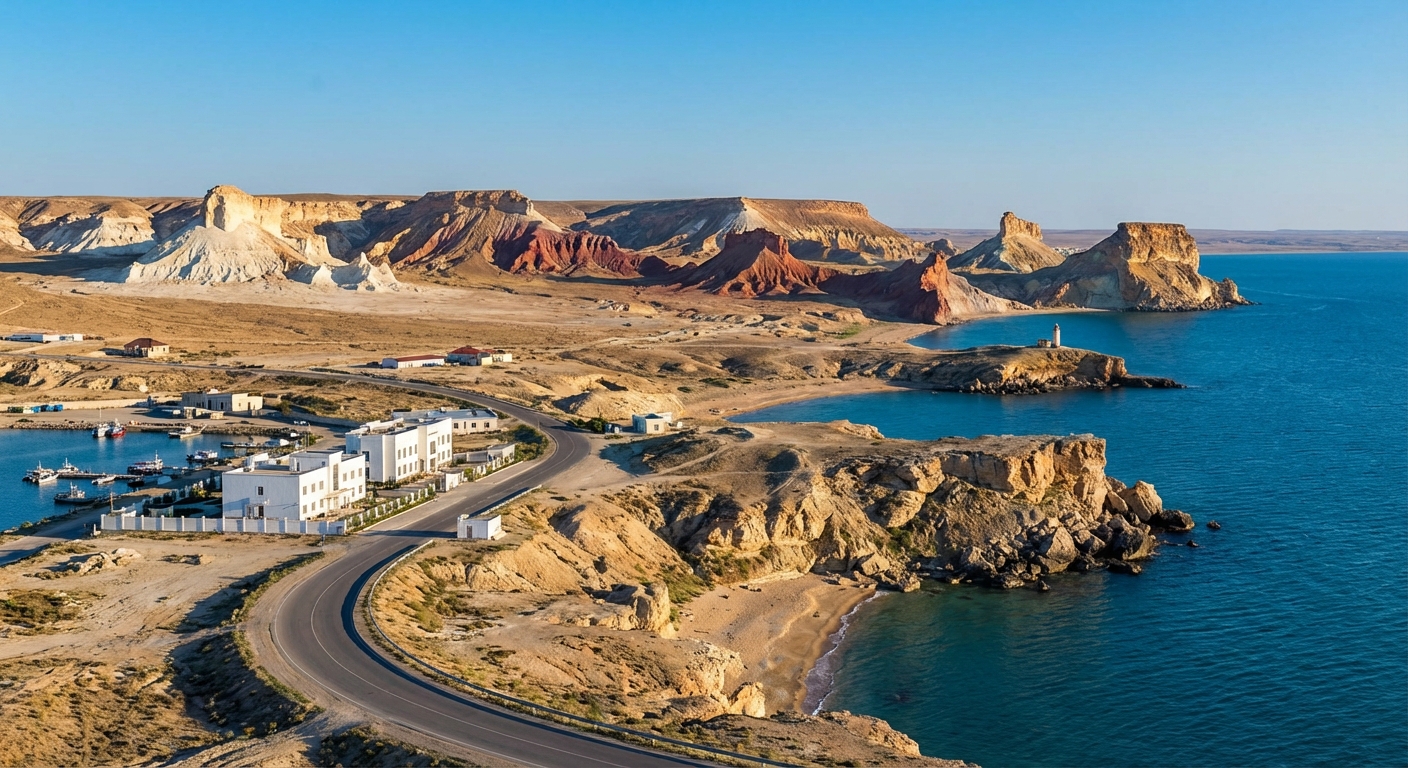
Standing on the cracked earth of Boszhira Valley feels like stepping onto another planet. The white chalk cliffs rise from the desert floor in jagged formations that look more like Mars than Central Asia. This is Mangystau, Kazakhstan’s wildest corner, where ancient ocean beds have transformed into landscapes so bizarre that most travelers struggle to believe the photos are real.
Mangystau region offers some of Central Asia’s most dramatic geological formations, from the chalk canyons of Boszhira to the spherical stones of Torysh Valley. This remote corner of Kazakhstan requires careful planning but rewards adventurous travelers with uncrowded alien landscapes, underground mosques, and Caspian Sea beaches. Most visitors base themselves in Aktau and arrange multi-day tours to reach the scattered sites across this vast desert region.
Why Mangystau Belongs on Your Central Asia Itinerary
Most travelers racing between Kazakhstan’s Silk Road cities never make it to Mangystau. The region sits isolated in Kazakhstan’s far southwest, pressed against the Caspian Sea and bordered by Turkmenistan to the south.
That isolation is exactly what makes it special.
The landscapes here formed over millions of years as the ancient Tethys Ocean receded. What remains is a geological wonderland of chalk plateaus, limestone formations, and desert valleys studded with fossils. You can touch ancient seashells embedded in cliff faces hundreds of meters above current sea level.
The region also holds deep spiritual significance for Kazakhs. Underground mosques carved into rock faces served as pilgrimage sites for centuries. Nomadic tribes left burial grounds marked by elaborate stone monuments. These cultural layers add depth to what could otherwise feel like a purely geological experience.
But let’s be honest about the challenges. Mangystau requires more effort than most Kazakhstan destinations. Roads are rough or nonexistent. Summer temperatures regularly exceed 40°C (104°F). Cell service disappears for days. You’ll need proper planning, reliable transportation, and realistic expectations about comfort levels.
Getting to Aktau and the Mangystau Region
Aktau serves as the gateway to Mangystau’s geological wonders. This Caspian port city has an airport with daily flights from Astana and Almaty.
Flight times run about 2.5 hours from Astana and 3 hours from Almaty. Prices fluctuate wildly based on season and booking timing. Expect to pay between $100 and $300 for a round trip. Book at least three weeks ahead if traveling during peak season (May through September).
The overland route from Astana takes roughly 30 hours by train or 24 hours by car. Most travelers skip this option unless they’re already touring western Kazakhstan. The journey crosses monotonous steppe with limited services.
Once you arrive in Aktau, you’ll need to arrange transportation to the actual geological sites. Public transport doesn’t reach any of the major formations. Your options break down into three categories:
- Join an organized tour with a local company
- Hire a private driver with a 4×4 vehicle
- Rent a vehicle and drive yourself (only recommended for experienced off-road drivers)
Tour companies in Aktau offer packages ranging from single-day trips to week-long expeditions. The standard three-day, two-night tour covers the most famous sites and costs between $300 and $500 per person, including camping gear, meals, and transportation.
Planning Your Mangystau Adventure
Timing matters enormously in this desert region. The best months for visiting fall between April and June, then again from September through October. These shoulder seasons offer comfortable temperatures and clear skies without the brutal summer heat.
Summer (July and August) brings scorching temperatures that make midday exploration dangerous. If you must visit during these months, plan activities for early morning and late afternoon. Carry more water than you think necessary.
Winter (November through March) can surprise visitors with snow and freezing temperatures. Some remote sites become inaccessible when dirt roads turn to mud. The Caspian coast faces bitter winds that make beach visits miserable.
Here’s a realistic packing list for a multi-day Mangystau trip:
- Sturdy hiking boots with ankle support
- Sun protection (hat, sunglasses, SPF 50+ sunscreen)
- Layers for temperature swings (desert nights get cold)
- Headlamp with extra batteries
- Reusable water bottles (5 liters minimum capacity)
- Portable phone charger
- Basic first aid supplies
- Toilet paper and hand sanitizer
- Camera with extra memory cards and batteries
- Cash in tenge (ATMs are scarce outside Aktau)
Most tours provide camping equipment, but confirm exactly what’s included. Some companies supply tents and sleeping bags while others expect you to bring your own.
The Essential Geological Sites
Boszhira Valley ranks as Mangystau’s most photographed location. The massive chalk formations rise like ancient fortresses from the valley floor. Two particularly striking pillars, known as the Fangs, dominate the landscape and appear in nearly every Mangystau photo collection.
The site sits roughly 250 kilometers northeast of Aktau. Reaching it requires 4 to 5 hours of driving on rough dirt roads. Most tours camp here overnight to catch sunset and sunrise, when the white cliffs glow orange and pink.
Mount Sherkala stands alone on the plain like a massive yurt made of stone. This conical mountain rises 332 meters and features distinct color bands running horizontally across its slopes. Locals consider it sacred, and you’ll often see prayer flags and offerings at its base.
The climb to the top takes about 45 minutes on the easier southern route. The northern face requires technical climbing skills. Views from the summit stretch across endless desert in every direction.
Torysh Valley contains thousands of spherical stones scattered across the landscape. These concretions formed through mineral deposits around organic cores millions of years ago. Sizes range from golf balls to boulders over 3 meters in diameter.
The spheres inspired local legends about dragon eggs and fallen stars. Scientists have studied them for decades, but they remain relatively rare geological features worldwide. Similar formations exist in only a handful of locations.
Airakty Shomanay, often called the Valley of Castles, features towering chalk formations that erosion has carved into shapes resembling medieval fortifications. Walking between these natural towers feels like exploring ruins of a civilization that never existed.
The site requires careful navigation. No marked trails exist, and it’s easy to become disoriented among the similar-looking formations. Stick with your guide and avoid wandering off alone.
Underground Mosques and Sacred Sites
Mangystau’s spiritual sites offer a different perspective on the region. These locations matter deeply to Kazakhs, who have made pilgrimages here for generations.
Beket-Ata Underground Mosque ranks as the most visited religious site. Built in the late 18th century by Sufi mystic Beket-Ata, the mosque sits carved into a cliff face overlooking a dramatic canyon. Reaching it requires descending 300 steps into the canyon, then climbing back up.
The mosque remains an active pilgrimage site. Visitors of all faiths are welcome, but dress modestly and behave respectfully. Remove shoes before entering the prayer rooms. Photography inside is generally acceptable, but ask permission first.
Shopan-Ata Mosque occupies a similar underground location about 180 kilometers from Aktau. This site receives fewer visitors but offers equally impressive architecture and spiritual atmosphere. The carved chambers include sleeping quarters where pilgrims once stayed for extended periods.
Necropolis sites dot the landscape throughout Mangystau. These ancient burial grounds feature elaborate stone monuments and mausoleums. The most significant include Sultan-Epe, Koshkar-Ata, and Shakpak-Ata.
Many of these sites combine Islamic and earlier Tengri traditions. You’ll see symbols and architectural elements that predate Islam’s arrival in Central Asia. Local guides can explain the historical layers and cultural significance.
“Mangystau taught me that the most powerful travel experiences come from places that challenge you. The landscapes are stunning, but the real reward is pushing beyond your comfort zone and discovering what lies in the truly remote corners of the world.” — Elena Petrova, adventure travel photographer
Aktau City and the Caspian Coast
Aktau itself deserves at least a day of your time. This Soviet-planned city might lack architectural charm, but it offers the only real urban amenities in the region.
The Caspian beaches provide a strange contrast to the desert landscapes you’ll see elsewhere. The water stays relatively warm from May through September. Several beach clubs operate along the coast, offering loungers, umbrellas, and food service.
The city’s central market sells fresh fish caught daily from the Caspian. Try sturgeon if available, though be aware that some species face conservation concerns. The market also stocks supplies you might need for desert trips.
Aktau’s museums include a small but informative regional history museum and a geology museum showcasing local fossils and minerals. Both offer English signage, though not extensively.
Accommodation options range from Soviet-era hotels to modern business properties. Book ahead during summer months when Kazakhstani tourists flock to the coast. Prices run higher than you’d expect for the facilities offered.
Practical Considerations and Common Mistakes
The biggest mistake first-time visitors make is underestimating distances and travel times. Mangystau is enormous. Sites that look close on a map can require 6 hours of driving on terrible roads.
This table breaks down realistic travel times and conditions:
| Route | Distance | Driving Time | Road Condition |
|---|---|---|---|
| Aktau to Boszhira | 250 km | 5-6 hours | Rough dirt track |
| Aktau to Sherkala | 170 km | 3-4 hours | Paved, then dirt |
| Aktau to Beket-Ata | 280 km | 6-7 hours | Very rough terrain |
| Boszhira to Airakty | 80 km | 3-4 hours | Off-road only |
| Sherkala to Torysh | 60 km | 2-3 hours | Dirt track |
Cell phone coverage drops to zero outside Aktau. Download offline maps before leaving the city. GPS devices work, but paper maps provide essential backup. Your tour company should have both.
Water scarcity is not a joke in this desert environment. Carry at least 5 liters per person per day during summer months. Dehydration symptoms appear faster than you expect in extreme heat and dry air.
Most geological sites have zero facilities. No bathrooms, no shade, no water sources. Plan accordingly and practice Leave No Trace principles. Pack out everything you bring in.
Wildlife encounters remain rare but possible. Snakes inhabit rocky areas, particularly during spring and fall. Watch where you place your hands and feet when scrambling over rocks. Scorpions hide under stones and in crevices.
The region’s remoteness means medical help sits hours away. Carry a comprehensive first aid kit and know how to use it. Travel insurance that covers emergency evacuation makes sense for Mangystau trips.
Choosing a Tour Company
Dozens of companies operate Mangystau tours from Aktau. Quality varies dramatically. Some maintain well-equipped vehicles and experienced guides. Others cut corners dangerously.
Look for these indicators of a reliable operator:
- Vehicles less than 5 years old with visible maintenance records
- Guides who speak your language competently
- Detailed itineraries provided before booking
- Clear policies on group size limits
- Emergency communication equipment (satellite phone)
- Proper camping gear (not worn-out Soviet-era equipment)
- Liability insurance coverage
Read recent reviews from other travelers. Pay attention to complaints about vehicle breakdowns, inadequate food, or guides lacking local knowledge. These problems appear repeatedly with budget operators.
Expect to pay between $80 and $150 per person per day for quality tours. This includes transportation, camping equipment, meals, and guide services. Very cheap offers (under $60 per day) usually mean compromised safety or comfort.
Private tours cost more but offer flexibility in timing and itinerary. A private vehicle with driver and guide typically runs $200 to $300 per day. This makes sense for groups of three or more people traveling together.
Photography Tips for Mangystau’s Landscapes
Mangystau presents incredible photographic opportunities but also significant challenges. The harsh light and monochromatic landscapes require different approaches than typical travel photography.
Golden hour (the hour after sunrise and before sunset) provides the best light. The white chalk formations glow with warm tones during these periods. Midday sun creates harsh shadows and washed-out colors.
Bring a polarizing filter to cut glare and enhance contrast in the bright desert conditions. A neutral density filter allows longer exposures during daylight hours, which can add drama to sky and cloud formations.
The scale of these landscapes makes composition tricky. Include people or vehicles in some shots to convey the massive size of formations like Sherkala or the Boszhira cliffs. Without scale references, photos often fail to capture the true grandeur.
Protect your camera gear from dust and sand. These fine particles infiltrate everything and can damage sensors and mechanisms. Keep equipment in sealed bags when not actively shooting. Clean sensors and lenses daily.
Drone photography has become popular in Mangystau, and the aerial perspectives are stunning. Check current regulations before traveling, as rules change frequently. Some sacred sites prohibit drone use out of respect for religious significance.
Battery life drops in extreme temperatures. Carry multiple spare batteries and keep them warm (or cool) in an insulated case. Memory cards are cheap, so bring more than you think necessary.
Connecting Mangystau to Your Broader Kazakhstan Trip
Most travelers combine Mangystau with other Kazakhstan destinations rather than making it a standalone trip. The region works well as either the start or end point of a longer journey.
From Aktau, you can fly back to Astana and spend time exploring the capital’s futuristic architecture before heading home. The contrast between Mangystau’s ancient landscapes and Astana’s modern skyline makes for a memorable combination.
Another option connects Mangystau with Kazakhstan’s other natural wonders. After the desert landscapes, head northeast to Charyn Canyon for a completely different geological experience. This requires flying through Almaty but creates a comprehensive natural history tour.
Travelers with more time sometimes continue south into Turkmenistan to visit the Darvaza gas crater (the Door to Hell). This requires advance visa arrangements and careful border crossing planning. The two sites pair well thematically as Central Asia’s most otherworldly landscapes.
Kazakhstan’s visa policies allow many nationalities to visit without advance arrangements, making multi-destination trips easier to plan. Check current requirements for your specific passport.
Food and Dining in Mangystau
Food on Mangystau tours tends toward simple but hearty fare. Tour companies typically prepare meals over campfires using basic ingredients. Expect lots of bread, rice, vegetables, and meat (usually lamb or chicken).
If you have dietary restrictions, communicate them clearly when booking. Vegetarian options are possible but require advance notice. Vegan diets prove more challenging, as dairy products feature heavily in Kazakh cuisine.
Aktau offers more dining variety, including Russian, Korean, and European restaurants alongside traditional Kazakh establishments. Fresh Caspian fish appears on most menus and represents the local specialty.
Try these regional dishes while in Mangystau:
- Beshbarmak (boiled meat with flat noodles, Kazakhstan’s national dish)
- Kuyrdak (fried organ meat with potatoes)
- Baursak (fried dough balls served with tea)
- Shelpek (flatbread traditionally made for memorial services)
- Kumys (fermented mare’s milk, an acquired taste)
Tea culture dominates social interactions. You’ll drink countless cups of black tea, often served with milk and sugar. Coffee remains less common outside Aktau’s modern cafes.
Pack supplemental snacks for long driving days. Energy bars, nuts, and dried fruit help maintain energy when meals run behind schedule. Chocolate melts in summer heat, so choose accordingly.
When Mangystau Gets Too Crowded
“Crowded” is relative in Mangystau. Even during peak season, you’ll encounter far fewer tourists than at popular European or Asian destinations. But the region has gained popularity among Kazakhstani domestic travelers and adventure tourists from Russia and neighboring countries.
The busiest periods fall during Kazakhstani school holidays and long weekends. Nauryz (spring equinox, usually March 21-23) brings many local visitors. The May holidays (May 1-2 and May 7-9) also see increased traffic.
If you want maximum solitude, visit during October or early November. Weather remains decent, and you’ll have sites nearly to yourself. The tradeoff comes in shorter daylight hours and cooler temperatures.
Some lesser-known geological sites receive almost no visitors. Ask your guide about alternative locations if the main attractions feel too busy. Mangystau’s vastness means countless similar formations exist beyond the standard tour circuit.
The underground mosques can feel crowded during major Islamic holidays and pilgrimage seasons. If you’re visiting primarily for the spiritual atmosphere rather than photography, these busy times offer authentic experiences of active religious sites.
Safety and Emergency Preparedness
Mangystau’s remoteness means you need to take safety seriously. Help sits hours away even in best-case scenarios.
Common issues include:
- Vehicle breakdowns on remote roads
- Dehydration and heat exhaustion
- Minor injuries from scrambling on rocks
- Getting lost in areas without clear landmarks
- Severe weather (sudden sandstorms or winter snow)
Your tour company should carry comprehensive emergency supplies, including first aid kits, extra water, spare vehicle parts, and communication equipment. Verify this before booking.
Learn basic first aid before traveling to remote regions. Know how to recognize and treat dehydration, heat stroke, and hypothermia. Carry personal medications in original packaging with prescriptions.
Register with your embassy before traveling to Kazakhstan. Provide them with your Mangystau itinerary and expected return date. This helps if something goes wrong and you need consular assistance.
Travel insurance that covers adventure activities and emergency evacuation is essential. Standard policies often exclude remote desert travel. Read the fine print and upgrade coverage if necessary.
Environmental and Cultural Responsibility
Mangystau’s fragile desert ecosystem and sacred sites require respectful behavior from visitors. Tourism has increased rapidly, and the impacts are becoming visible.
Follow these guidelines:
- Stay on established paths when they exist
- Never climb on or deface ancient monuments or mosques
- Pack out all trash, including organic waste
- Don’t collect fossils, rocks, or other natural souvenirs
- Respect prayer times and worshippers at religious sites
- Ask permission before photographing local people
- Support local guides and businesses rather than outside operators
The spherical stones in Torysh Valley have decreased noticeably as tourists take them as souvenirs. These geological features took millions of years to form. Leave them for future visitors to appreciate.
Underground mosques remain active religious sites. Dress modestly (covering shoulders and knees minimum). Remove shoes before entering prayer areas. Avoid visiting during prayer times unless invited by worshippers.
Some tour operators have begun implementing Leave No Trace practices, but many still allow careless behavior. Choose companies that prioritize environmental responsibility even if they cost slightly more.
Your Mangystau Journey Starts with Realistic Expectations
Mangystau rewards adventurous travelers willing to embrace discomfort and uncertainty. The landscapes will exceed your expectations. The logistics will challenge your patience. Both experiences are part of what makes this region memorable.
Don’t expect luxury or convenience. Expect dust, long drives, basic camping, and moments when you question your travel choices. Then expect those doubts to vanish when you stand alone in Boszhira Valley watching the sunset paint the chalk cliffs in shades of orange and pink.
This corner of Kazakhstan remains genuinely off the beaten path. That status won’t last forever as word spreads about these otherworldly landscapes. Visit sooner rather than later if you want to experience Mangystau before it appears on every Central Asia itinerary.
Start planning your trip by researching tour companies and checking flight schedules to Aktau. Book at least two months ahead for summer travel. Pack carefully, manage your expectations, and prepare for an adventure unlike anywhere else you’ve traveled.
Leave a Reply