
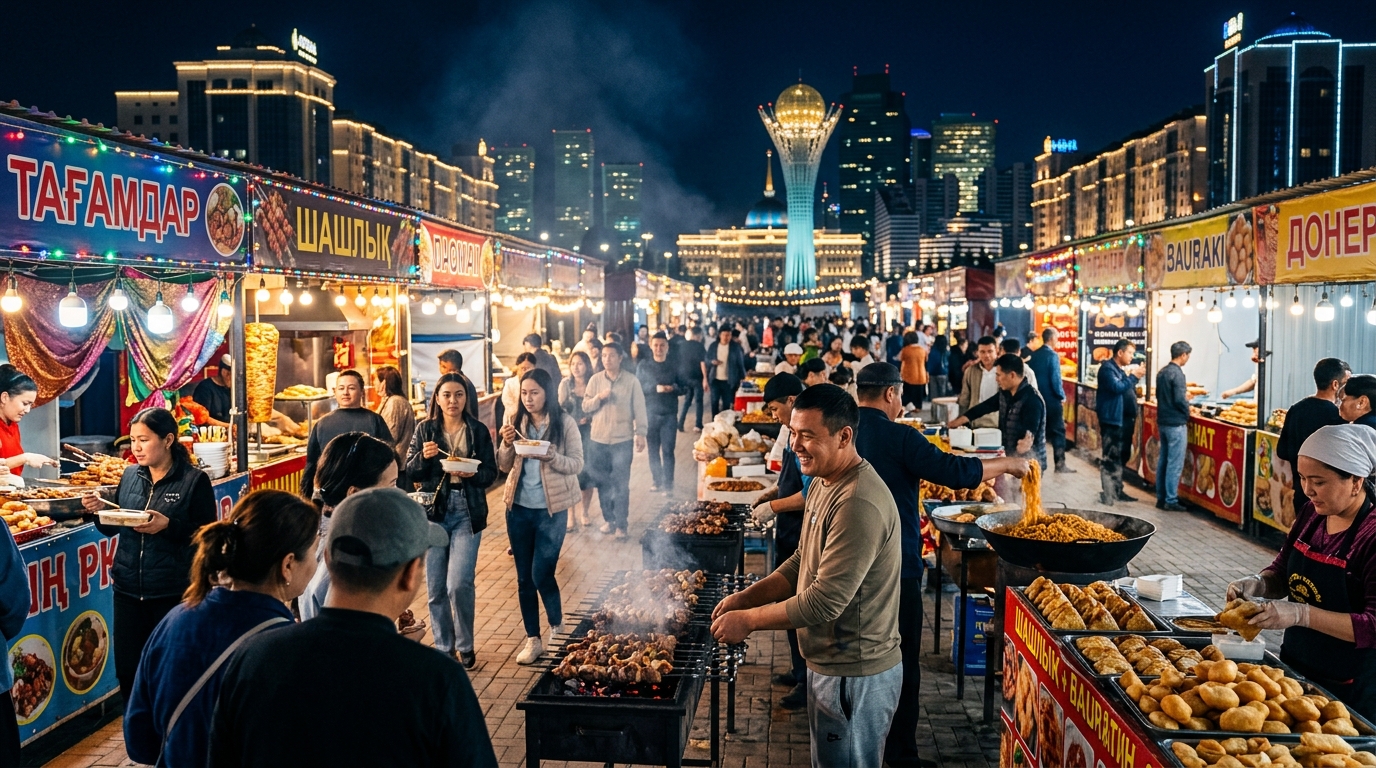
Astana’s food scene is a culinary crossroads where nomadic traditions meet modern Central Asian flavors. Walking through the capital’s streets, you’ll smell sizzling shashlik from street vendors, spot locals queuing for fresh baursak, and find restaurants serving horse meat dishes that have sustained Kazakh people for centuries. This isn’t a city where you’ll stumble upon tourist-trap restaurants. The best meals come from knowing exactly where locals eat and what dishes tell the story of Kazakhstan’s rich culinary heritage.
An Astana food tour reveals Central Asian cuisine shaped by nomadic traditions. Must-try dishes include beshbarmak (boiled meat with noodles), kazy (horse sausage), and baursak (fried dough). Green Bazaar and Saryarka markets offer authentic street food. Most restaurants welcome walk-ins, and meals cost between 2,000 to 5,000 tenge ($4 to $11 USD). Spring and fall provide the best weather for market exploration.
Understanding Kazakh Cuisine Before You Start Eating
Kazakh food centers around meat, dairy, and wheat. The nomadic lifestyle shaped every dish. Preservation mattered more than seasoning. Protein came from livestock that traveled with families across the steppe.
Horse meat appears in many traditional dishes. Don’t skip it out of unfamiliarity. Kazakhs have perfected horse meat preparation over centuries. The flavor is leaner than beef, slightly sweet, and surprisingly tender when cooked properly.
Dairy products go beyond milk and cheese. Kumis (fermented mare’s milk) and shubat (fermented camel’s milk) are acquired tastes. Both have slight alcohol content from fermentation. Locals drink them for health benefits and cultural connection.
Bread holds sacred status. Never place it upside down or step over it. Baursak, the puffy fried dough, appears at every celebration and casual meal. Each family has their own recipe passed down through generations.
“When you eat with Kazakhs, you’re not just tasting food. You’re experiencing hospitality that dates back to when survival on the steppe meant sharing what little you had with travelers.” – Aigul Nurgalieva, Astana food historian
Must-Try Dishes on Any Astana Food Tour
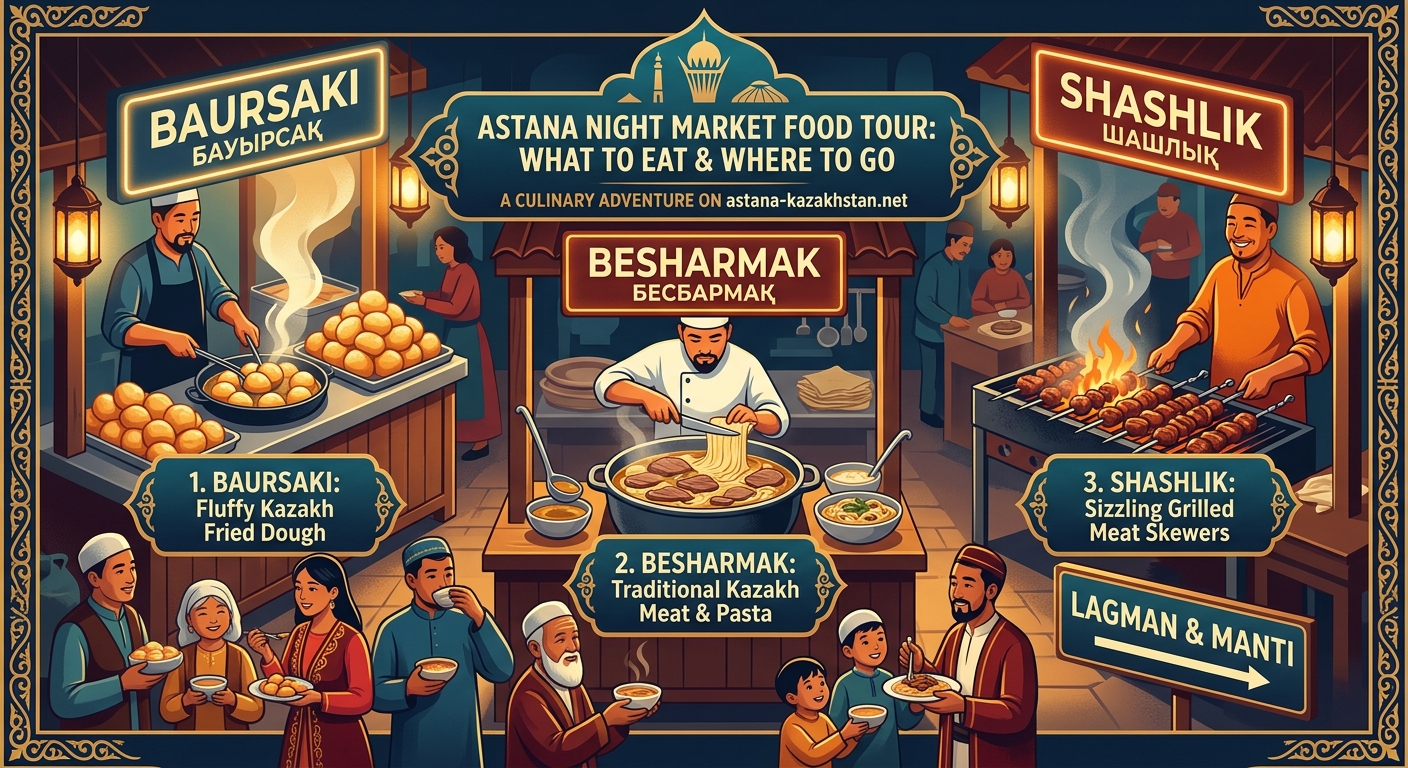
These dishes define Kazakh cuisine. You’ll find them at traditional restaurants, family gatherings, and special occasions.
Beshbarmak translates to “five fingers” because nomads ate it with their hands. Boiled meat (usually horse or lamb) sits atop flat noodles in a rich broth. Onions cooked in the broth add sharpness. This is Kazakhstan’s national dish. Every restaurant makes it differently. Order it at where to find the best beshbarmak in Astana for the most authentic versions.
Kazy is horse meat sausage made from rib meat and fat. The meat is salted, seasoned with garlic and pepper, then stuffed into intestine casings and smoked. Slice it thin and serve cold, or add it to beshbarmak. The fat-to-meat ratio makes it incredibly flavorful.
Baursak appears at every meal. These golden pillows of fried dough can be sweet or savory. Eat them with tea, dip them in honey, or use them to soak up broth. Street vendors sell them fresh throughout the day.
Shashlik is Central Asian kebab. Marinated meat (lamb, beef, or chicken) grilled over charcoal. The smoke and char create incredible flavor. Order it with raw onions, fresh bread, and a tomato salad.
Laghman shows Uyghur influence in Kazakh cuisine. Hand-pulled noodles in a spicy meat and vegetable stew. The noodles have a chewy texture you won’t find in machine-made pasta. Watch skilled cooks stretch and pull the dough if you visit during preparation hours.
Manti are steamed dumplings filled with minced meat and onions. The dough should be thin enough to see the filling. Eat them with sour cream or a vinegar-based sauce. Each dumpling holds a burst of savory juice.
Plov (pilaf) came from Uzbekistan but Kazakhs have made it their own. Rice cooked with meat, carrots, onions, and spices in a large cast-iron pot. The bottom layer gets crispy and golden. That’s the best part.
Kurt is dried sour milk formed into small balls. It’s salty, tangy, and extremely portable. Nomads carried it for months. Modern Kazakhs snack on it or dissolve it in soups. Start with a small piece. The intense flavor surprises first-timers.
Where to Eat Traditional Kazakh Food in Astana
Finding authentic restaurants means going where locals go. These spots prioritize flavor and tradition over Instagram-worthy presentations.
Alasha on Mangilik El Avenue serves traditional dishes in a yurt-inspired dining room. The beshbarmak here uses horse meat from local suppliers. Portions are massive. Come hungry or share. Expect to spend 4,000 to 6,000 tenge per person.
Line Brew combines craft beer with Kazakh tapas. Try the kazy platter with four types of horse sausage. The beer selection includes local breweries. The atmosphere is casual. Perfect for evening meals after walking through the futuristic left bank.
Gakku specializes in dishes from different regions of Kazakhstan. The menu explains the origin of each recipe. Order the Mangystau-style fish if it’s available. The restaurant offers English menus and staff who can explain preparation methods.
Kishlak recreates a traditional Central Asian village setting. The outdoor seating area has low tables and cushions. Inside, the decor features carpets and traditional instruments. The laghman is exceptional. So is the tandoor bread baked fresh throughout service.
Zheti Kazyna translates to “seven treasures.” The name refers to seven traditional Kazakh foods. This restaurant focuses on historical recipes. The staff wears traditional clothing. Live dombra music plays during dinner service on weekends.
Navigating Astana’s Markets for Street Food
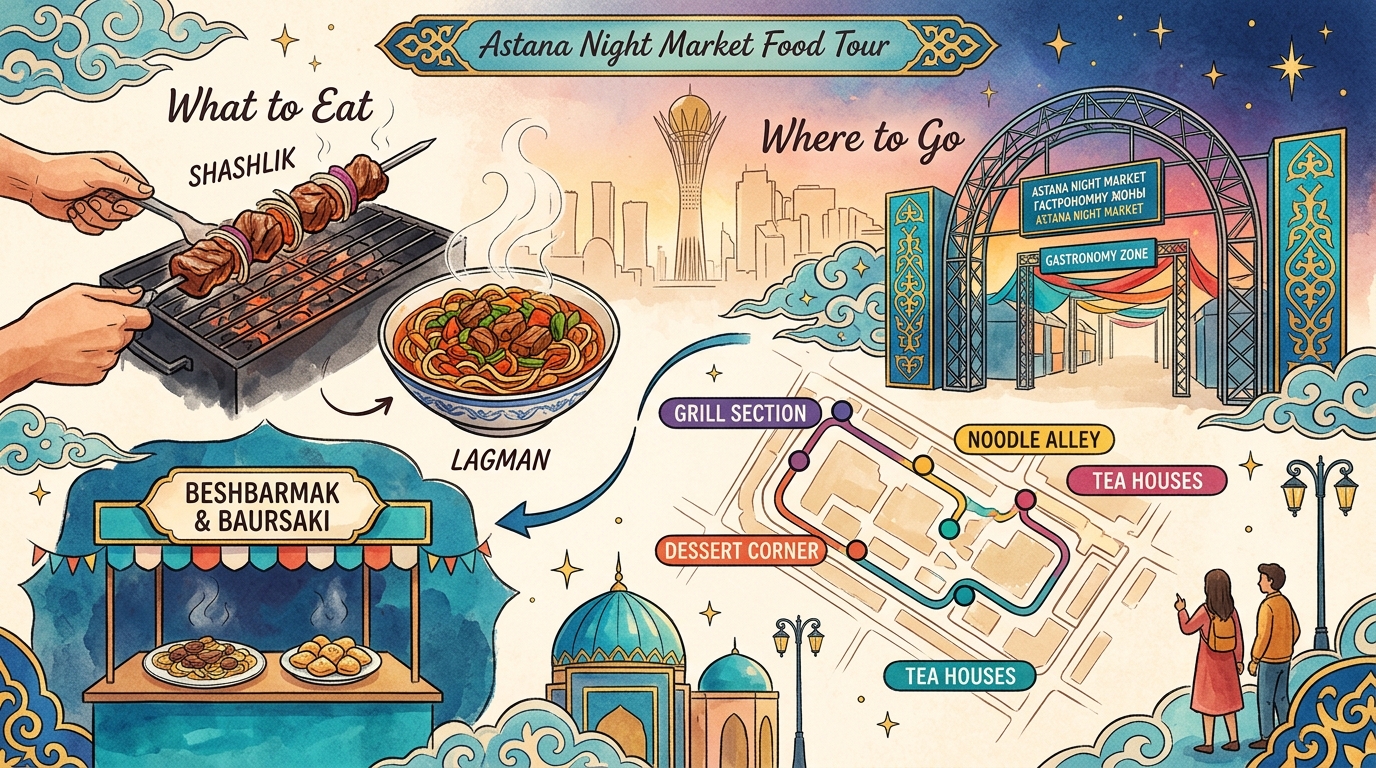
Markets offer the most authentic and affordable food experiences. Arrive hungry and bring cash. Most vendors don’t accept cards.
Green Bazaar (Zeleny Bazaar)
The largest market in Astana sprawls across multiple buildings and outdoor stalls. The food section occupies the western side.
Look for the baursak vendors near the main entrance. They fry batches throughout the day. Buy them warm for the best texture. A bag of ten costs around 300 tenge.
The prepared food section offers samsa (baked pastries filled with meat or pumpkin), plov sold by the portion, and grilled meats. Point at what looks good. Vendors will pile your plate high.
Dairy vendors sell kumis, shubat, and ayran (diluted yogurt drink). Ask for a small cup to taste before buying a full portion. The fermented drinks have a sour, slightly fizzy taste that grows on you.
The spice section sells dried herbs, ground peppers, and spice blends for plov. Even if you’re not cooking, the aromas alone make the visit worthwhile.
Saryarka Market
Smaller and less touristy than Green Bazaar. Local families shop here for weekly groceries.
The meat section displays whole carcasses, including horse. Butchers will cut specific pieces and vacuum-seal them if you’re taking meat home.
Fresh bread vendors bake in traditional tandoor ovens visible from the shopping aisles. The smell of baking bread fills the entire market. Buy a round loaf (500 tenge) and eat it while you walk.
The prepared food stalls serve breakfast items. Try kurt with tea, or order a bowl of sorpa (clear meat broth with vegetables). Breakfast here costs less than 1,000 tenge.
Night Market Near Khan Shatyr
This informal market sets up Thursday through Sunday evenings from May to September. Vendors sell grilled meats, corn on the cob, and sweet pastries.
The shashlik here is excellent. Watch vendors fan the charcoal and baste the meat. Order a full skewer (300 to 500 tenge) with bread and onions.
Sweet vendors sell chak-chak (fried dough with honey) and baursak dusted with powdered sugar. Perfect for dessert after a savory meal.
The market sits within walking distance of several illuminated landmarks. Plan your food tour to end here, then walk off the meal while photographing the city at night.
How to Plan Your Self-Guided Astana Food Tour
A well-structured food tour balances variety, timing, and digestion. Here’s how to organize your culinary adventure.
-
Start with breakfast at a market between 8:00 and 9:00 AM. Markets are freshest in the morning. Vendors have full stock. You’ll eat alongside locals starting their day. Try baursak with tea and a bowl of sorpa.
-
Visit a traditional restaurant for lunch around 1:00 PM. This is when Kazakhs eat their main meal. Order beshbarmak or laghman. Don’t rush. Lunch service moves at a relaxed pace. The restaurant experience includes conversation and multiple courses.
-
Take a walking break from 3:00 to 5:00 PM. Let the heavy lunch settle. Visit architectural sites or rest at your hotel. Kazakh portions are substantial. You need time between meals.
-
Sample street food in the early evening around 6:00 PM. Return to a market or find street vendors near parks. Try shashlik, samsa, or manti. These smaller portions prepare you for dinner without overwhelming your stomach.
-
End with a modern restaurant around 8:00 PM. Choose a place that fuses traditional and contemporary styles. Order dishes you haven’t tried yet. Save room for tea and sweets.
Common Mistakes Tourists Make on Food Tours
Avoid these errors to get the most from your culinary experience.
| Mistake | Why It’s a Problem | Better Approach |
|---|---|---|
| Ordering only familiar dishes | You miss the unique flavors that define Kazakh cuisine | Try at least one dish with horse meat and one fermented dairy product |
| Eating at hotel restaurants | They cater to international tastes and charge premium prices | Walk 10 minutes to find local restaurants with authentic preparation |
| Skipping markets | You miss the freshest ingredients and lowest prices | Visit at least one market for breakfast or lunch |
| Refusing offered food | Kazakhs consider this insulting to their hospitality | Accept small portions and taste everything offered |
| Not asking about ingredients | You might eat something you’re uncomfortable with | Ask servers to explain dishes before ordering |
| Eating too much at once | Kazakh portions are huge and rich | Share dishes or order one item at a time |
Dietary Restrictions and Food Allergies in Astana
Vegetarian options exist but require specific requests. Kazakh cuisine centers on meat. Most “vegetable” dishes contain meat broth or small pieces of meat for flavor.
For vegetarians, look for laghman with vegetables only, fresh salads, bread, and baursak. Some restaurants offer lagman without meat if you ask. Markets sell fresh produce, nuts, and dried fruits.
Vegans face more challenges. Dairy appears in many dishes. Butter cooks most foods. Bring snacks and shop at supermarkets for reliable options. International restaurants in Khan Shatyr offer plant-based menus.
Gluten-free travelers should avoid most traditional dishes. Noodles, bread, and dumplings form the base of Kazakh meals. Grilled meats without marinades are safe. Rice dishes like plov work if prepared without flour-thickened sauces.
Food allergies are not widely understood in Kazakhstan. Restaurant staff may not know all ingredients. Carry allergy cards in Russian and Kazakh. Stick to simple preparations where you can see all components.
Learn these phrases:
– “Without meat” = Etsiz (Kazakh) / Bez myasa (Russian)
– “I’m allergic to…” = Menin allergiyam bar… (Kazakh) / U menya allergiya na… (Russian)
– “Only vegetables” = Tek kökenister (Kazakh) / Tolko ovoshchi (Russian)
Traditional Beverages Beyond Tea
Tea is the default drink with every meal. Black tea with milk or lemon appears automatically. But traditional beverages offer insight into nomadic life.
Kumis (fermented mare’s milk) has a sour, slightly alcoholic taste. Mares produce milk only during summer months. Fresh kumis is best from May to August. The fermentation creates probiotics that aid digestion. Locals drink it for health, not pleasure. Start with a small glass.
Shubat (fermented camel’s milk) is thicker and saltier than kumis. Camels produce milk year-round. Shubat has higher fat content and more intense flavor. It’s an acquired taste even for many Kazakhs. Markets sell it in plastic bottles or fresh from vendors.
Ayran is diluted yogurt with salt. It’s refreshing and helps digest heavy meals. Order it with shashlik or plov. The tangy flavor cuts through rich, fatty foods.
Maksym is a fermented grain drink. It tastes slightly sweet with a hint of sourness. Made from wheat, corn, or millet. Street vendors sell it in summer. It’s non-alcoholic and considered a health drink.
Bozo is fermented millet. Thicker than maksym with a porridge-like consistency. You drink it but almost chew it. The flavor is earthy and filling. One glass can replace a snack.
Seasonal Considerations for Your Food Tour
Weather affects market hours, available ingredients, and outdoor dining options. Plan accordingly.
Spring (April to May) brings fresh dairy products. Mares begin producing milk. Markets overflow with kumis. Temperatures are mild (10°C to 20°C). Perfect for walking between food spots. The spring celebration of Nauryz features special foods and public feasts.
Summer (June to August) offers the most variety. All ingredients are available. Outdoor markets and street food vendors operate full hours. Evening food tours work well because daylight lasts until 10:00 PM. Temperatures can exceed 30°C. Carry water between stops.
Fall (September to October) provides comfortable temperatures (15°C to 25°C). Markets sell preserved foods for winter. This is when you’ll find the best dried meats and kurt. Restaurants prepare heartier dishes. Fewer tourists mean better service and attention.
Winter (November to March) limits outdoor markets. Temperatures drop to -20°C or colder. Focus on indoor restaurants and covered markets. Hot soups and tea become essential. This is the best time for beshbarmak and other warming dishes. Bundle up for any outdoor food experiences.
Budget Breakdown for a Full Day Food Tour
Prices in Astana are reasonable compared to European or North American cities. Here’s what to expect.
- Market breakfast: 1,000 to 1,500 tenge ($2 to $3 USD)
- Traditional restaurant lunch: 3,000 to 5,000 tenge ($7 to $11 USD)
- Street food snacks: 500 to 1,000 tenge ($1 to $2 USD)
- Modern restaurant dinner: 4,000 to 7,000 tenge ($9 to $15 USD)
- Beverages throughout the day: 1,000 to 2,000 tenge ($2 to $4 USD)
Total for a full day: 9,500 to 16,500 tenge ($21 to $37 USD)
Budget travelers can eat well for 5,000 to 7,000 tenge per day by focusing on markets and street food. Mid-range travelers spending 10,000 to 15,000 tenge get restaurant meals with variety. Splurging 20,000 tenge or more allows high-end restaurants and multiple courses.
Cash is essential. Many small vendors and markets don’t accept cards. ATMs are common throughout the city. Tipping isn’t expected but rounding up the bill is appreciated.
Food Safety and Practical Tips
Astana’s food is generally safe. Follow basic precautions.
Drink bottled water. Tap water is treated but can upset sensitive stomachs. Restaurants serve filtered or bottled water automatically.
Eat at busy places. High turnover means fresh ingredients. Empty restaurants might have food sitting too long.
Watch preparation when possible. Street food cooked in front of you is safer than pre-made items sitting out.
Wash fruit from markets. Or peel it before eating. Vendors handle produce with bare hands.
Avoid raw dairy from unknown sources. Stick to packaged dairy products or fermented drinks from reputable vendors.
Bring hand sanitizer. Public restrooms don’t always have soap. Markets rarely have hand-washing facilities.
Start slowly with fermented drinks. Your stomach needs time to adjust to kumis and shubat. Don’t drink a full glass on your first try.
Ask about freshness. Markets sell day-old items at discount. Fresh is always better for meat and dairy.
Most restaurants have English menus or pictures. Google Translate works well with Russian text. Pointing and gesturing also works. Kazakhs are patient with foreigners trying to order food.
Guided Food Tours vs. Going Solo
Guided tours offer structure and context. Solo exploration provides flexibility and authenticity.
Guided food tours include:
– Pre-selected restaurants with quality guarantees
– English-speaking guides who explain dishes and customs
– Transportation between locations
– Reserved seating at busy restaurants
– Cultural context and historical background
Tours cost 15,000 to 30,000 tenge ($35 to $70 USD) for 3 to 4 hours. They remove uncertainty but limit spontaneity.
Self-guided tours offer:
– Freedom to eat what interests you
– Ability to spend more time at favorite spots
– Lower costs (no guide fees or markup)
– Real interactions with vendors and locals
– Flexibility to change plans based on weather or energy
Going solo requires more research and confidence. Use this guide as your framework. Many travelers combine both: take a guided tour on day one to learn the basics, then venture out independently.
If you’re only in Astana for 24 hours, a guided tour maximizes limited time. For longer stays, self-guided exploration reveals hidden gems tours skip.
Essential Kazakh Food Vocabulary
Learning a few words improves your experience. Vendors and servers appreciate the effort.
- Rachmet (rah-met) = Thank you
- Kosh keldiniz (kosh kel-dee-neez) = Welcome
- Dämdi (dahm-dee) = Delicious
- Kansha turady? (kan-sha too-rah-dee) = How much does it cost?
- Nan (nahn) = Bread
- Et (et) = Meat
- Sut (soot) = Milk
- Shay (shy) = Tea
- Ysty (oos-tee) = Hot
- Suyk (soo-ik) = Cold
Most vendors also speak Russian. These phrases help:
– Spasibo (spa-see-boh) = Thank you
– Skolko stoit? (skol-koh stoh-eet) = How much?
– Ochen vkusno (oh-chen fkoos-noh) = Very tasty
– Bez myasa (bez mya-sah) = Without meat
Pointing at food and holding up fingers for quantity works everywhere. Smiling and showing appreciation transcends language barriers.
What Makes Astana’s Food Scene Unique
Astana’s youth as a capital (since 1997) creates an interesting culinary landscape. The city drew people from all regions of Kazakhstan. Each group brought their food traditions.
You’ll find Mangystau fish dishes, Almaty-style laghman, and Shymkent plov all within blocks of each other. This concentration of regional cuisines doesn’t exist in other Kazakh cities.
Modern restaurants experiment with traditional recipes. Chefs trained abroad return with new techniques. They apply them to Kazakh ingredients and flavors. The result is a contemporary Central Asian cuisine emerging in real time.
The city’s international population influences the food scene. Expats from Turkey, China, Korea, and Europe open restaurants. These create fusion dishes and introduce new ingredients. But traditional Kazakh food remains the foundation.
Unlike Almaty’s established food culture, Astana’s scene is still defining itself. You’re eating in a city discovering its culinary identity. That makes every food tour an exploration of something actively evolving.
Your Astana Food Tour Starts With One Bite
The best way to understand Kazakhstan is through its food. Every dish tells a story of survival, adaptation, and celebration. Horse meat connects you to nomadic ancestors. Fermented milk shows ingenuity in preservation. Shared meals demonstrate hospitality that defines Kazakh culture.
Start with one traditional dish. Maybe beshbarmak at a local restaurant. Or baursak from a market vendor. Let that first taste guide you to the next. Follow your curiosity and appetite. The food tour that matters most is the one you create based on what excites your palate.
Pack comfortable shoes, bring cash, and arrive hungry. Astana’s food scene is waiting to surprise you with flavors you won’t find anywhere else. The city might be young, but the cuisine carries centuries of tradition in every bite.