
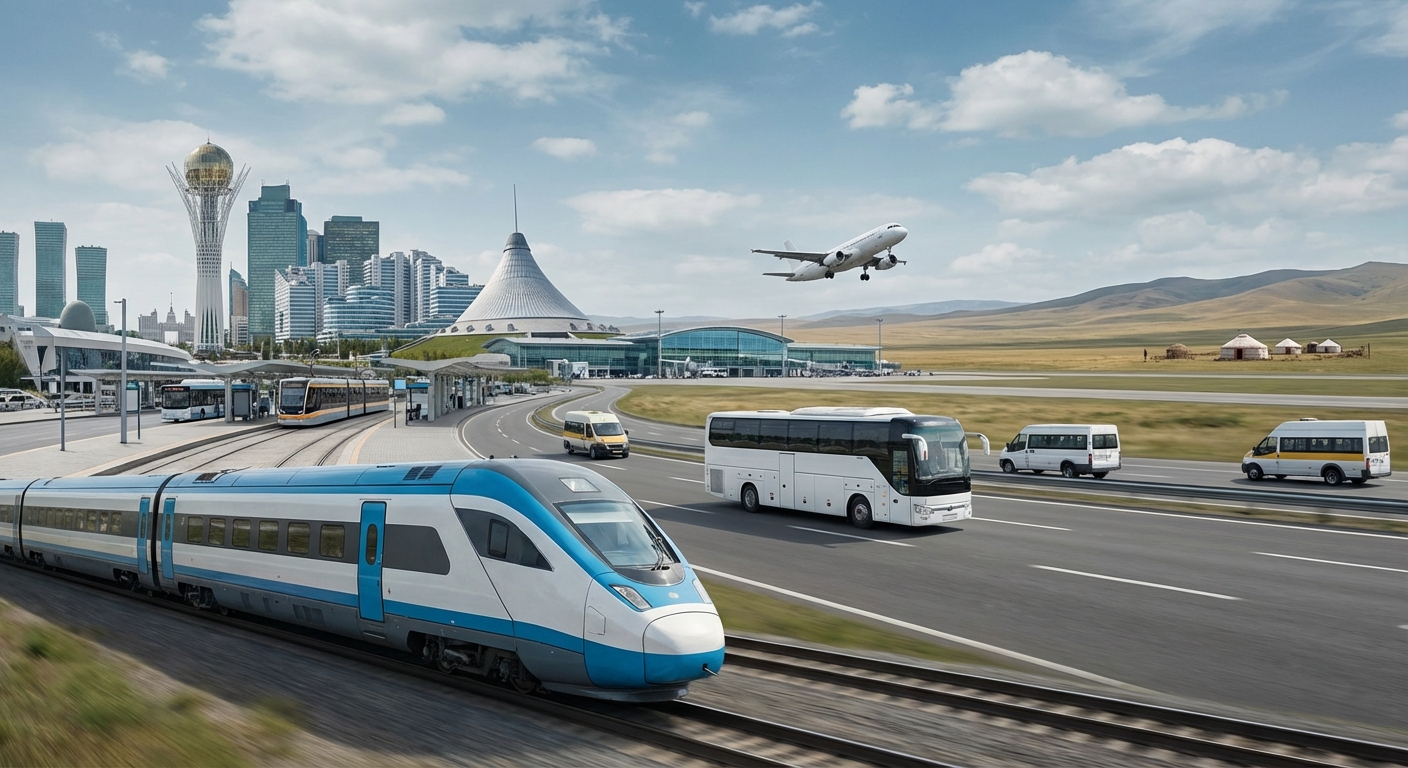
Kazakhstan is the ninth largest country on Earth, stretching across 2.7 million square kilometers. Getting from point A to point B requires planning, but the country’s transportation network is more developed than most travelers expect. Buses connect every major city. Trains rumble across the steppe overnight. Modern metros operate in Almaty and Astana. Domestic flights bridge distances that would take days by road.
Kazakhstan offers diverse transportation options including extensive bus networks, comfortable overnight trains, two metro systems, affordable taxis, and frequent domestic flights. Most cities use contactless payment cards, while long-distance travel requires advance booking during peak seasons. Understanding local transport apps and ticketing systems makes navigating this vast country straightforward and affordable for international visitors.
Understanding Kazakhstan’s Transportation Landscape
The country’s sheer size shapes every travel decision. Almaty to Astana spans 1,200 kilometers. Aktau on the Caspian coast sits 2,700 kilometers from the eastern border. Road trips that look manageable on a map translate to 12-hour bus rides or multi-day drives.
Most travelers base themselves in Almaty or Astana, then branch out to regional destinations. Both cities offer international airports, modern public transit, and connections to smaller towns. The transportation infrastructure improves each year, with new highways, upgraded trains, and expanding metro lines.
English signage remains limited outside major tourist areas. Russian and Kazakh dominate public announcements and ticket counters. Download offline maps and translation apps before you arrive. Learning basic Cyrillic helps immensely when reading bus numbers and station names.
City Transportation Systems
Almaty Metro and Buses
Almaty operates Central Asia’s first metro system, opened in 2011. The single line runs 8.6 kilometers with nine stations, connecting residential areas to the city center. Trains arrive every 8 minutes during peak hours. A ride costs 80 tenge (about $0.18).
The metro uses contactless smart cards called Onai. Purchase one at any station for 500 tenge, which includes 200 tenge credit. Tap the card at turnstiles to enter. Refill at automated kiosks using cash or cards.
Almaty’s bus network covers 140 routes across the city. Route numbers and maps appear at most stops, though schedules can be approximate. Bus fare costs 150 tenge when paying with Onai, 180 tenge with cash. Buses run from 6:00 AM to 11:00 PM on most routes.
Marshrutkas (shared minivans) fill gaps in the official bus network. These privately operated vehicles follow set routes but stop anywhere along the way when passengers request. Fares range from 150 to 200 tenge. Tell the driver your destination when boarding and pay before exiting.
Astana Public Transit
Astana lacks a metro but operates an extensive bus network with over 70 routes. The city covers a vast area, making buses essential for reaching attractions spread across the left and right banks of the Ishim River.
The Astana transit system uses the Avtobys contactless card, similar to Almaty’s Onai. Purchase cards at kiosks near major bus stops or at the central bus station. Bus fares cost 90 tenge with the card, 150 tenge cash.
Modern articulated buses serve high-traffic routes, while smaller buses cover residential areas. Real-time bus tracking apps like 2GIS and Yandex Maps work reliably in Astana, showing arrival times and route planning. The ultimate walking tour of Astana’s futuristic left bank district covers many attractions within walking distance, reducing your reliance on buses.
Winter temperatures in Astana regularly drop below minus 30 Celsius. Heated bus shelters protect waiting passengers, but outdoor waits can be brutal. Plan indoor backup options when exploring during January and February.
Regional City Transport
Smaller cities like Shymkent, Karaganda, and Aktobe rely primarily on buses and marshrutkas. Payment systems vary by city. Some accept contactless cards, others require cash. Carry small bills (100, 200, and 500 tenge notes) for easy payment.
Taxis dominate urban transport in cities without extensive bus networks. The ride-hailing app Yandex Taxi operates nationwide, offering transparent pricing and cashless payment. Download the app and add a payment method before your trip. Fares typically cost 500 to 1,500 tenge for cross-city rides.
Avoid unmarked taxis at airports and train stations. These drivers charge inflated rates to tourists. Stick with official taxi stands or use apps for fair pricing.
Intercity Bus Travel
Kazakhstan’s bus network connects virtually every population center. Private companies operate most routes, with varying levels of comfort and reliability.
Booking Bus Tickets
Three methods work for booking intercity buses:
- Visit the bus station in person and purchase tickets at the counter
- Use online platforms like Busfor.kz or Aviata.kz to book in advance
- Ask your hotel reception to arrange tickets (small service fee applies)
Book popular routes 2-3 days ahead during summer and holidays. Less traveled routes often have same-day availability. Arrive at the bus station 30 minutes before departure to locate your platform.
Bus stations in major cities offer luggage storage, waiting rooms, and small cafes. Facilities in smaller towns may be basic. Pack snacks and water for longer journeys.
What to Expect on Intercity Buses
Modern coaches with air conditioning and reclining seats serve major routes like Almaty to Astana or Shymkent to Turkestan. Older buses handle secondary routes, offering less comfort but similar reliability.
Most long-distance buses include:
- Assigned seating (check your ticket for row and seat number)
- Luggage storage beneath the passenger cabin
- Rest stops every 2-3 hours at roadside cafes
- Occasional police checkpoints where passengers show ID
Bring your passport on all intercity trips. Police occasionally board buses to check documents, particularly near border regions.
“I’ve taken dozens of buses across Kazakhstan. The key is managing expectations. Almaty to Astana takes 18 hours, not the advertised 14. Bathroom stops are infrequent. Download movies, bring snacks, and embrace the journey as part of the experience.” – Experienced Kazakhstan traveler
Overnight buses save accommodation costs but sacrifice comfort. Seats recline but don’t fully flatten. Bring a neck pillow, eye mask, and earplugs. Temperatures inside buses vary wildly, so dress in layers.
Train Travel Across Kazakhstan
Kazakhstan Temir Zholy (KTZ) operates the national railway network, connecting major cities with overnight and day trains. Train travel offers more space and comfort than buses, at slightly higher prices.
Types of Trains
Tulpar trains are modern high-speed services linking Almaty and Astana in 13 hours, compared to 18 hours on regular trains. These trains feature comfortable seating, dining cars, and power outlets. Tickets cost 8,000 to 12,000 tenge depending on class.
Overnight trains offer sleeping compartments called kupe (four-berth) or spalny vagon (two-berth). Kupe compartments include four bunks, a small table, and storage space. Spalny vagon provides more privacy and comfort at double the price. Sheets, pillows, and blankets come included. Attendants serve tea from samovars throughout the journey.
Platskart (open sleeping cars) offer the cheapest option, with 54 bunks in an open carriage. Privacy is minimal but the social atmosphere appeals to budget travelers and those wanting to meet locals.
Booking Train Tickets
Book tickets through the official KTZ website (tickets.kz) or mobile app. The interface offers English language options. Payment requires an international credit card. Tickets become available 45 days before departure.
Popular routes sell out during holidays and summer months. Book the Almaty to Astana route at least one week ahead. Less traveled routes typically have availability even a few days before travel.
Print your ticket or save the PDF to your phone. Conductors check tickets when boarding and occasionally during the journey. Bring your passport, as it must match the name on the ticket.
Train Station Navigation
Major train stations in Almaty and Astana feature modern facilities including waiting areas, restaurants, luggage storage, and shops. Announcements occur in Kazakh and Russian. Electronic boards display departure information in Cyrillic script.
Arrive 45 minutes before departure. Locate your platform number on departure boards, then proceed through security screening. Platform numbers appear on your ticket. Conductors stand beside each carriage checking tickets and passports before allowing passengers to board.
If you’re planning 7 breathtaking day trips from Astana you can’t miss, trains provide comfortable transportation to destinations like Burabay and Karaganda.
Domestic Flights
Air Astana and FlyArystan connect Kazakhstan’s major cities with daily flights. Flying makes sense for long distances like Almaty to Aktau (3 hours) or Astana to Atyrau (2 hours), which take 30+ hours by ground transport.
Airline Options
Air Astana is the full-service national carrier, offering complimentary meals, checked baggage, and seat selection. Prices range from $80 to $200 for domestic routes depending on season and booking time.
FlyArystan, Air Astana’s budget subsidiary, strips away extras to offer lower fares. Expect to pay $40 to $100 for the same routes, with charges for checked bags, seat selection, and food. The aircraft and safety standards match Air Astana.
Book directly through airline websites for best prices. Third-party booking sites add fees without providing benefits. Domestic flights open for booking 6 months in advance.
Airport Procedures
Arrive 90 minutes before domestic flights. Check-in counters close 40 minutes before departure. Security procedures mirror international standards, with liquid restrictions and electronics screening.
Almaty International Airport (ALA) serves as the country’s busiest hub. Terminal 1 handles international flights, Terminal 2 serves domestic routes. Free shuttle buses connect the terminals.
Astana Nursultan Nazarbayev International Airport (NQZ) operates from a single modern terminal. The airport sits 15 kilometers from the city center. Taxis cost 2,000 to 3,000 tenge, while bus 10 provides budget transport for 150 tenge.
Taxis and Ride-Hailing Apps
Taxis provide flexible transportation in cities and for trips to nearby attractions. Understanding the options prevents overcharging.
Using Yandex Taxi
Yandex Taxi dominates Kazakhstan’s ride-hailing market. The app works identically to Uber, showing upfront pricing and driver details. Create an account using your phone number, add a payment method, and request rides.
Prices vary by city and time of day. Expect to pay:
- 500-800 tenge for short city trips (2-3 km)
- 1,000-1,500 tenge for cross-city rides (8-10 km)
- 2,000-3,000 tenge for airport transfers
Surge pricing applies during peak hours, bad weather, and holidays. The app displays the multiplier before you confirm the ride.
Drivers call immediately after accepting your ride. Most speak only Russian or Kazakh. Use the in-app chat to communicate pickup details or share your location pin.
Official Taxi Services
Licensed taxis display company names and phone numbers on their doors. Many use meters, though agreeing on a price before departure prevents disputes. Typical rates match Yandex pricing.
Call dispatch services in cities without reliable app coverage. Hotel receptions can arrange taxis and help negotiate fair prices. Expect to pay 20-30% more than app-based rides for this convenience.
Car Rentals and Driving
Renting a car offers freedom to reach remote destinations like Charyn Canyon or the Caspian coast on your own schedule. However, driving in Kazakhstan presents challenges.
Rental Requirements
International rental companies (Hertz, Europcar) operate in Almaty and Astana airports. Local companies offer lower rates with variable service quality. Requirements include:
- Valid driver’s license held for at least 2 years
- International Driving Permit (recommended but not always required)
- Credit card for deposit (3,000 to 5,000 USD hold)
- Minimum age 23-25 depending on company
Daily rates start at $40 for economy cars, $70 for SUVs. Book through company websites before arrival for better availability and rates.
Driving Conditions
Roads connecting major cities are generally good, with smooth asphalt and clear markings. Secondary roads range from acceptable to challenging, with potholes, unpaved sections, and minimal lighting.
Traffic police frequently set up checkpoints. Carry your passport, driver’s license, IDP, rental agreement, and insurance documents at all times. Police may request these documents and check vehicle registration.
Speed limits are 60 km/h in cities, 90 km/h on rural roads, and 110-140 km/h on highways. Speed cameras are common. Fines for violations range from 5,000 to 50,000 tenge.
Winter driving requires experience with snow and ice. Temperatures below minus 20 Celsius can cause vehicle problems. Rent from companies offering winter tires and emergency assistance.
Navigation and Fuel
2GIS and Yandex Maps provide reliable offline navigation. Download maps for your travel regions before departing. GPS coordinates work better than addresses for remote destinations.
Fuel stations are plentiful on major routes but sparse in remote areas. Fill up whenever possible if traveling to places like Mangystau or the Altai region. Stations accept cash and cards. Fuel costs approximately 200-250 tenge per liter.
Transportation Payment Systems
| Payment Method | Best For | Limitations | Where to Buy |
|---|---|---|---|
| Onai Card (Almaty) | Metro and buses | Only works in Almaty | Metro stations, kiosks |
| Avtobys Card (Astana) | City buses | Only works in Astana | Bus station, major stops |
| Cash (small bills) | Marshrutkas, taxis, small cities | Need exact change often | ATMs, exchange offices |
| Yandex Taxi app | City rides nationwide | Requires phone data | Download before trip |
| Credit/debit card | Trains, flights, major stations | Not accepted on vehicles | N/A |
Special Transportation Considerations
Traveling with Luggage
Buses and trains accommodate large luggage in storage compartments. Pack valuables in carry-on bags kept with you during transit. Theft is rare but occurs, particularly on overnight buses.
Metro systems prohibit oversized luggage during peak hours. Plan trips outside rush periods (7:00-9:00 AM and 5:00-7:00 PM) when moving between accommodations.
Accessibility Challenges
Transportation accessibility for wheelchair users remains limited. Modern buses in Almaty and Astana include low floors and ramps, but only on select routes. Metro stations have elevators, though not all function consistently.
Trains offer limited accessible compartments. Book well in advance and confirm accessibility features with KTZ customer service. Taxis through Yandex allow requesting larger vehicles but don’t guarantee wheelchair-accessible vans.
Seasonal Variations
Winter weather (November through March) affects all transportation modes. Buses and trains run on schedule but roads become hazardous. Flights face delays and cancellations during snowstorms.
Summer (June through August) brings peak tourism. Book trains and flights 2-3 weeks ahead. Bus frequencies increase on popular routes to Burabay and Turkestan.
Border Crossings
International buses and trains connect Kazakhstan with Russia, Kyrgyzstan, Uzbekistan, and China. Border procedures add 1-3 hours to journey times. Carry your passport and any required visas.
Shared taxis operate from Almaty to Bishkek (Kyrgyzstan) and from Shymkent to Tashkent (Uzbekistan). These offer faster border crossing than buses but cost more. Agree on the total price before departing, confirming it includes all passengers.
Essential Apps and Resources
Download these apps before arriving in Kazakhstan:
- 2GIS: Offline maps with public transit routes and business listings
- Yandex Maps: Navigation, traffic updates, and route planning
- Yandex Taxi: Ride-hailing with transparent pricing
- tickets.kz: Official railway booking app
- Aviata.kz: Flight and bus ticket comparison
- Google Translate: Offline Russian and Kazakh translation
Purchase a local SIM card at the airport or any mobile phone shop. Kcell, Beeline, and Activ offer prepaid plans with 10-20 GB data for 2,000-3,000 tenge. Data coverage extends across cities and major highways.
Making Sense of It All
Kazakhstan’s transportation network connects one of the world’s largest countries through buses, trains, metros, and flights. Each mode serves different needs. Buses reach every corner affordably. Trains offer overnight comfort between major cities. Metros and taxis handle urban transport. Flights conquer vast distances.
Start with major cities as your base. Master their public transit systems using contactless cards and navigation apps. Book intercity trains and flights in advance during peak season. Keep cash for marshrutkas and small-town transport. Learn basic Russian phrases for asking directions and buying tickets.
The country rewards travelers who embrace its transportation quirks. Yes, buses take longer than advertised. Train stations can be confusing. Not everything runs on time. But these challenges fade as you adapt to local rhythms. You’ll find yourself confidently navigating metro systems, negotiating with taxi drivers, and settling into overnight train compartments like a seasoned traveler. Kazakhstan’s transportation system works once you understand its logic, opening access to ancient Silk Road cities, mountain lakes, and endless steppe horizons.