
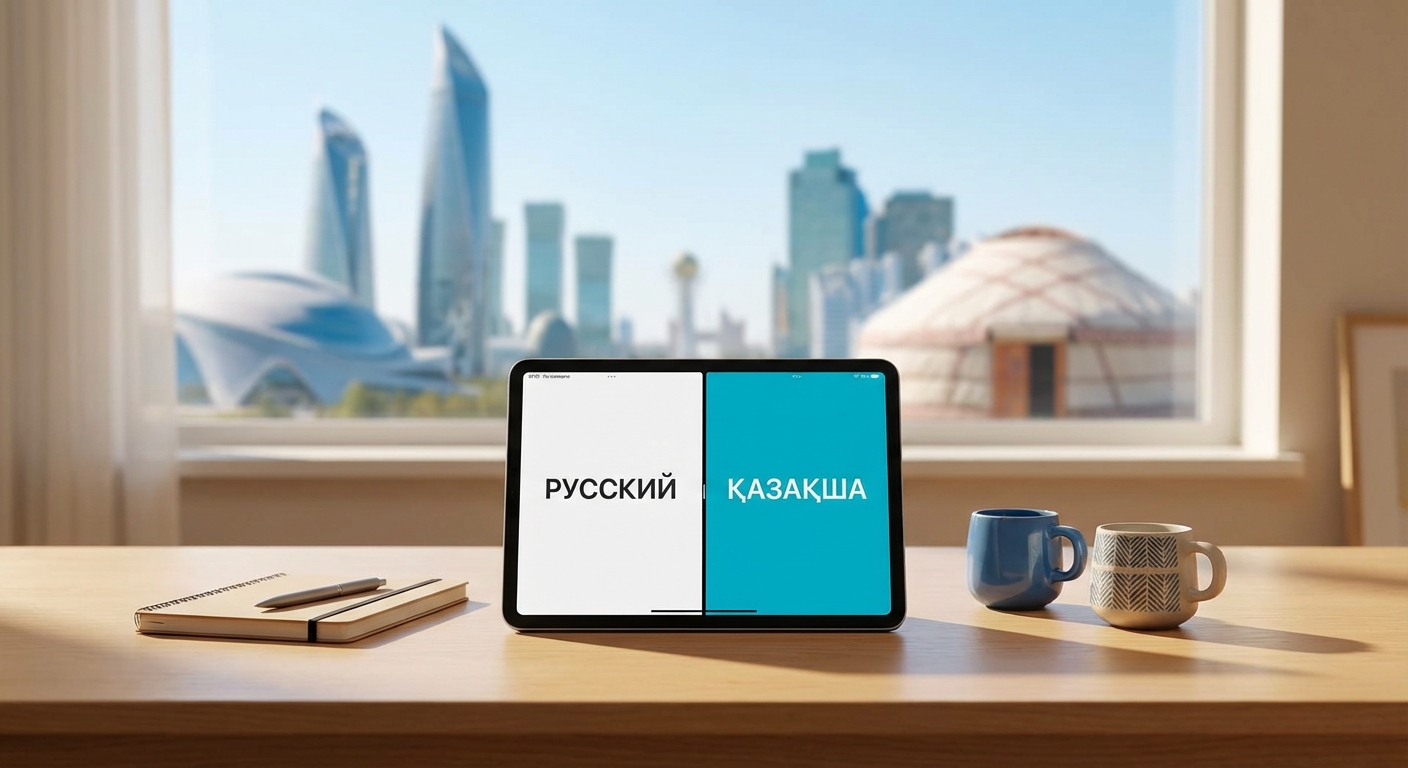
You’ve accepted the job offer in Astana. The visa paperwork is underway. Then someone asks which language you should learn first, and suddenly you’re staring at two completely different alphabets wondering if you made the right choice.
Here’s the truth: both Russian and Kazakh matter in Astana, but in different contexts and to different degrees. The language landscape is shifting as Kazakhstan pushes for greater Kazakh usage, yet Russian remains dominant in business and daily transactions. Your choice depends on your work environment, social circles, and how long you plan to stay.
Russian remains the primary language for daily life and business in Astana, spoken fluently by 95% of residents. Kazakh is growing in government and formal settings but less common in shops and restaurants. Most expats prioritize Russian for practical needs, then add Kazakh phrases for cultural respect. English works in international companies and tourist areas but fails in markets, taxis, and residential neighborhoods.
The current language reality in Astana
Walk into any cafe in the futuristic left bank district and you’ll hear Russian. Order a taxi, and the driver speaks Russian. Browse the aisles at a grocery store, and all the chatter is Russian.
Despite being the capital of Kazakhstan, Astana functions primarily in Russian for everyday interactions. This reflects decades of Soviet influence and the city’s diverse population. Many residents are ethnic Russians, Ukrainians, or other groups who grew up speaking Russian as their first language.
Kazakh is the state language according to the constitution. You’ll see it on official documents, government buildings, and street signs. Schools now teach more subjects in Kazakh than a decade ago. President Tokayev has emphasized the importance of Kazakh language development while acknowledging Russian’s continued role.
But in practice, Russian dominates commerce, media, and casual conversation. Even ethnic Kazakhs often switch to Russian in professional settings or when speaking with mixed groups.
The linguistic divide isn’t hostile. Most people code-switch naturally between both languages. You’ll hear sentences that start in Kazakh and finish in Russian, or vice versa. This bilingualism is so common that locals barely notice it.
Where Russian gives you the most utility
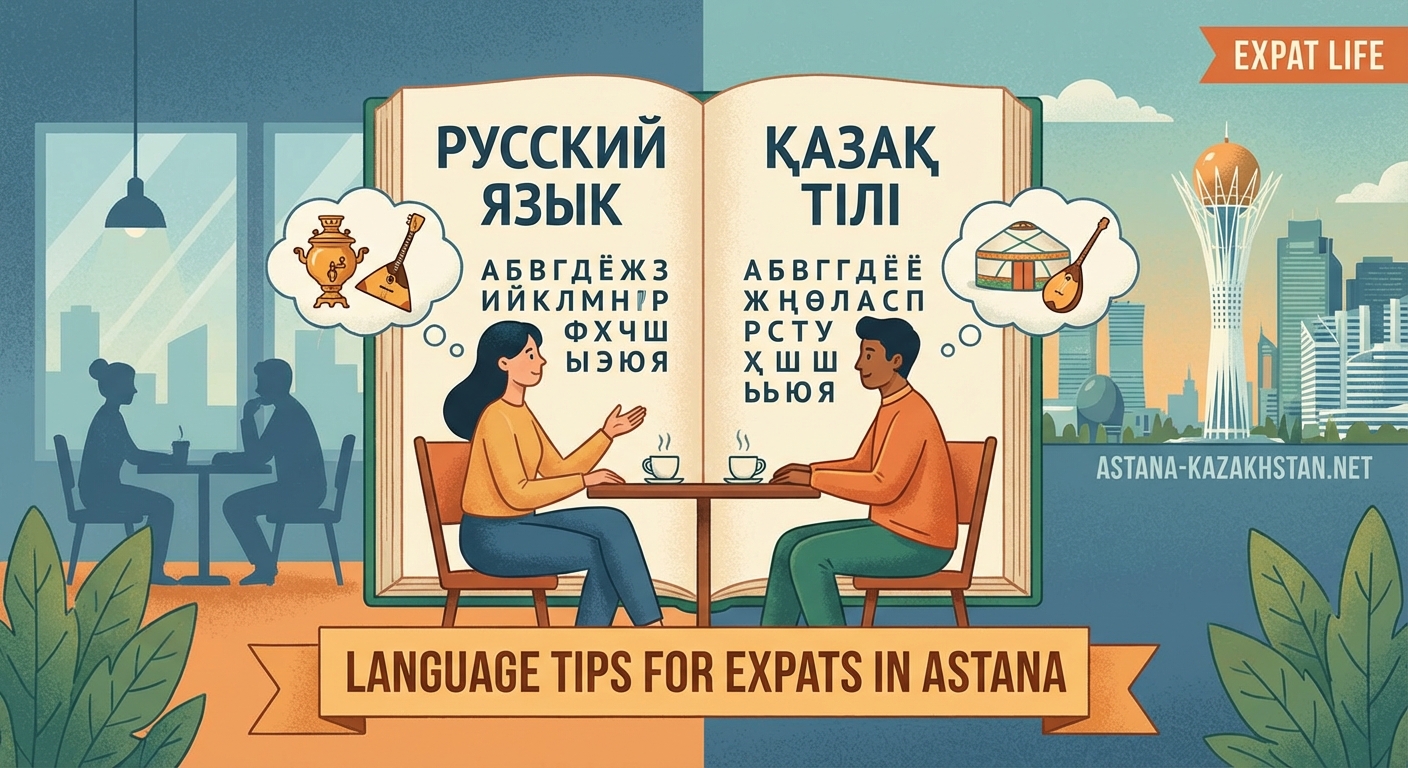
Russian unlocks almost everything you need as an expat in Astana. Here’s where it matters most:
- Shopping and services: Markets, repair shops, hair salons, and retail stores operate in Russian. Staff may not speak English, and Kazakh-only speakers are rare in customer-facing roles.
- Healthcare: Doctors and nurses typically communicate in Russian, even at international clinics. Medical terminology and prescriptions use Russian or Latin script.
- Real estate: Landlords, rental agents, and property managers conduct business in Russian. Lease agreements are often in Russian with Kazakh translations that may be less precise.
- Transportation: Taxi drivers, bus schedules, and train announcements default to Russian. The Yandex.Taxi app interface works in English, but drivers rarely speak it.
- Social life: Restaurants, bars, gyms, and entertainment venues cater to Russian speakers. Menus may have English sections at upscale places, but staff explanations happen in Russian.
If you’re finding an apartment in Astana, Russian becomes essential for negotiating terms, understanding utility bills, and communicating with building maintenance.
Banking presents an interesting case. Major banks offer English-language apps and sometimes English-speaking staff at flagship branches. But smaller branches and phone support operate in Russian. Opening an account, resolving issues, or applying for services goes much smoother with Russian skills.
When Kazakh becomes important
Kazakh matters more in specific contexts that many expats encounter less frequently. Government interactions top the list. Immigration offices, civil registration departments, and municipal services increasingly use Kazakh as the primary language. Forms appear in Kazakh first, with Russian translations below.
Formal business meetings with government officials or state-owned enterprises often begin with Kazakh greetings and opening remarks before switching to Russian. Knowing basic Kazakh phrases shows respect and cultural awareness that colleagues appreciate.
Education is shifting toward Kazakh. If you have children, some international schools teach Kazakh language classes. Local schools teach more subjects in Kazakh each year, though Russian-language schools still exist.
Cultural events and traditional celebrations like Nauryz Meyrami feature Kazakh prominently. Understanding the language deepens your appreciation of performances, speeches, and ceremonies.
The younger generation speaks more Kazakh than their parents. University students and recent graduates often prefer Kazakh among themselves, even if they switch to Russian with older colleagues. This generational shift means Kazakh’s importance will grow over time.
Regional variations matter too. Astana has more Russian speakers than cities in southern Kazakhstan, where Kazakh dominates. If you travel for work or leisure, Kazakh becomes more useful outside the capital.
Step-by-step language learning strategy for new arrivals
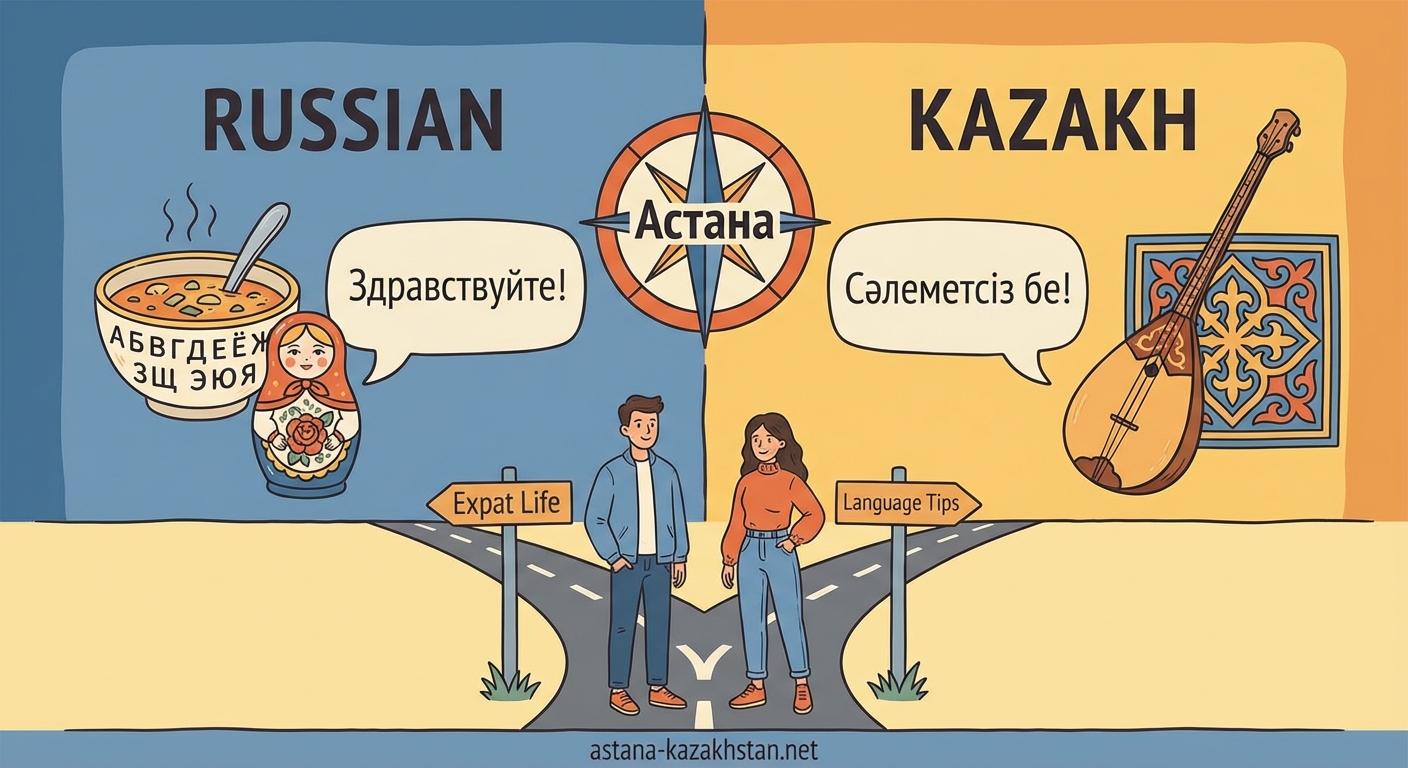
Here’s a practical approach that matches how expats actually live in Astana:
-
Start with survival Russian in your first month: Learn greetings, numbers, basic questions, and food vocabulary. Focus on pronunciation and the Cyrillic alphabet. Apps like Duolingo or Memrise work for initial exposure, but supplement with a tutor for speaking practice.
-
Add transactional phrases by month two: Master shopping vocabulary, directions, taxi instructions, and restaurant ordering. Practice these in real situations immediately. The repetition cements the patterns faster than classroom study.
-
Build conversational Russian by month three: Start forming your own sentences instead of memorizing phrases. Find a language exchange partner or hire a tutor for twice-weekly conversation sessions. Aim for 30-minute daily practice.
-
Introduce Kazakh basics around month four: Once Russian feels functional, add Kazakh greetings, thank you, please, and common courtesies. This shows cultural respect without overwhelming your learning capacity.
-
Assess your long-term needs at six months: If you’re staying multiple years and working with government entities, invest in formal Kazakh lessons. If your role is purely private sector, deepen your Russian instead.
-
Maintain both languages through immersion: Watch Russian TV shows, listen to Kazakh music, read bilingual street signs, and practice with colleagues. The environment naturally reinforces both languages if you stay open to learning.
This staged approach prevents burnout and matches the reality of which language you need when. Trying to learn both simultaneously from day one usually means learning neither effectively.
Common language mistakes expats make
| Mistake | Why It Happens | Better Approach |
|---|---|---|
| Assuming everyone speaks English | International company bubble | Learn Russian basics even if your office uses English |
| Ignoring Cyrillic alphabet | Seems too difficult initially | Spend one week on alphabet before vocabulary; reading signs matters |
| Only learning formal textbook Russian | Traditional language courses | Learn colloquial speech and slang from natives, not just grammar |
| Neglecting listening practice | Focus on speaking and reading | Watch Russian YouTube, listen to podcasts, tune into local radio |
| Avoiding Kazakh entirely | “Everyone speaks Russian anyway” | Learn polite phrases; cultural integration matters beyond transactions |
| Using translation apps as a crutch | Technology makes it easy | Apps fail with accents and context; build real skills for independence |
The biggest mistake is waiting to start. Language learning takes months to show results. Beginning in your first week in Astana, even just 15 minutes daily, compounds into real ability by your sixth month.
Another common error is hiring a teacher who doesn’t understand expat needs. Many local tutors teach Russian as a foreign language using academic methods suited for university students, not working professionals who need practical communication skills. Interview potential tutors about their experience with expats and their teaching philosophy before committing.
Language resources that actually work in Astana
Online apps get you started, but they won’t make you functional. You need resources connected to Astana’s specific context.
Local language schools: Several schools in Astana specialize in Russian for foreigners. Lingua House, Interpress Language School, and Dostyk Language Center offer group and private lessons. Expect to pay 3,000 to 5,000 tenge per hour for private tutoring, less for group classes.
University language programs: Nazarbayev University and L.N. Gumilyov Eurasian National University run intensive Russian and Kazakh courses for international students and professionals. These programs provide structure and official certificates if needed for visa purposes.
Language exchange meetups: Check Facebook groups like “Astana Expats” or “Internations Astana” for language exchange events. These informal gatherings pair native Russian or Kazakh speakers wanting to practice English with expats learning local languages. Free and social.
Private tutors through local platforms: Websites like Profi.kz and OLX.kz list hundreds of tutors in Astana. Read reviews carefully. Look for tutors who mention expat experience or business Russian. Rates vary from 2,000 to 8,000 tenge per hour depending on qualifications.
Russian media for immersion: Watch Первый канал (Channel One) for news, НТВ for dramas, or TNT for comedy shows. Listen to Russian podcasts like “Радио Свобода” or music on Yandex.Music. Read Russian news sites like Tengrinews.kz to build vocabulary around current events.
Kazakh learning materials: Resources for Kazakh are scarcer but improving. The “Qazaq Tili” app teaches basics. YouTube channels like “Easy Kazakh” provide free lessons. The Til-Qazyna Foundation offers courses, though most instruction happens in Kazakh or Russian, not English.
Children’s books and media: This sounds elementary, but children’s books in Russian and Kazakh use simpler grammar and vocabulary. They’re perfect for adult beginners. Bookstores near Khan Shatyr stock Russian children’s books. For Kazakh, try Meloman stores.
How English actually functions in Astana
English works in limited contexts. International companies use English as their working language. Hotels catering to business travelers have English-speaking staff. Restaurants in expat-heavy areas print English menus.
But step outside these bubbles and English vanishes. The taxi driver taking you home doesn’t speak English. The electrician fixing your apartment doesn’t speak English. The woman selling vegetables at the market definitely doesn’t speak English.
Even in professional settings, English has limits. Your Kazakhstani colleagues may speak excellent English in meetings, but they’ll switch to Russian for complex discussions or when explaining nuanced points. Side conversations happen in Russian. Office humor and bonding occur in Russian.
English creates a barrier to real integration. You can survive in Astana speaking only English if you stay within expat circles, order everything online, and limit your social life to international venues. But you’ll miss the actual city.
Learning Russian transforms your experience. Suddenly you can joke with the cashier at the grocery store, understand why everyone’s laughing at the office, and navigate any situation without anxiety. The city opens up.
“I spent my first six months in Astana speaking only English and wondering why I felt so isolated. Once I learned basic Russian, everything changed. People became friendlier. I understood the culture better. I actually made local friends instead of only hanging out with other expats.” — Sarah, Canadian teacher who moved to Astana in 2021
The future of languages in Astana
Kazakhstan’s government continues pushing Kazakh language development. Schools teach more subjects in Kazakh. Government jobs increasingly require Kazakh proficiency. Street signs now show Kazakh first, Russian second.
This doesn’t mean Russian is disappearing. The transition happens slowly, over decades, not years. Russian remains too embedded in business, media, and daily life for rapid change. Most Kazakhstanis value bilingualism and see both languages as part of their identity.
For expats, this means Russian remains your priority for the next five to ten years. But learning some Kazakh positions you better for the long term and shows respect for Kazakhstan’s cultural direction.
The younger generation’s language preferences offer clues. University students increasingly speak Kazakh among friends, even if they grew up in Russian-speaking families. They see Kazakh as modern and cool, not old-fashioned. This generational shift will gradually change Astana’s linguistic landscape.
English is also growing, but slowly. More young Kazakhstanis study English, and international schools are expanding. But English won’t replace Russian as the lingua franca anytime soon. Learning Russian remains essential for expats, regardless of English’s slow growth.
Practical tips for faster language acquisition
Immersion beats classroom study every time. Here’s how to immerse yourself in Astana:
- Change your phone and computer language settings to Russian. You’ll learn interface vocabulary quickly through daily use.
- Label items in your apartment with Russian words. Seeing “холодильник” on your refrigerator every day drills vocabulary.
- Think in your target language. When walking around, mentally narrate what you see in Russian or Kazakh.
- Speak from day one, even if you make mistakes. Locals appreciate effort and will help you improve.
- Join hobby groups conducted in Russian. Sports clubs, art classes, or volunteer organizations force language use in low-pressure contexts.
- Date locally if you’re single. Nothing accelerates language learning like romantic motivation.
- Watch movies and shows with Russian audio and Russian subtitles, not English. This trains your ear and reading simultaneously.
- Keep a vocabulary journal of words you encounter daily. Review it weekly. Spaced repetition works.
Avoid common pitfalls that slow progress. Don’t spend months on grammar before speaking. Don’t exclusively study with other English speakers. Don’t retreat to English when conversations get difficult.
Accept that you’ll sound foolish sometimes. Every expat who became fluent went through an awkward phase of broken Russian and confused looks. Push through it. The embarrassment fades, but the language skills remain.
If you’re making friends in Astana, language skills become your biggest asset. Locals warm up to expats who try to speak Russian or Kazakh, even imperfectly.
Language needs by expat profile
Your language priorities shift based on your situation:
Corporate expats at international firms: English works at the office, but learn Russian for life outside work. Kazakh phrases show cultural awareness in formal settings. Minimum target: conversational Russian within one year.
English teachers: You’ll work in English but need Russian for housing, shopping, and social life. Students may ask questions in Russian. Many schools prefer teachers who speak some Russian. Minimum target: intermediate Russian within 18 months.
Entrepreneurs and small business owners: Russian is essential for dealing with suppliers, contractors, and most customers. Kazakh helps with government paperwork and official interactions. Minimum target: business-level Russian within one year, basic Kazakh within two years.
Digital nomads and remote workers: You can function with minimal Russian if you live in expat areas and order everything online. But you’ll miss authentic experiences. Learn enough Russian to handle emergencies and basic transactions. Minimum target: survival Russian within six months.
Retirees: Russian makes daily life comfortable and helps with healthcare. Pace yourself with learning since you’re not under work pressure. Join language classes as a social activity. Minimum target: conversational Russian within two years.
Students: Your university likely offers Russian and Kazakh courses. Take advantage of them. You have more time and cognitive flexibility than working expats. Minimum target: fluent Russian and intermediate Kazakh by graduation.
Making your language choice work
You don’t need perfect fluency to thrive in Astana. You need enough Russian to handle daily tasks and enough Kazakh to show respect in cultural contexts.
Start with Russian. Get functional within six months. Add Kazakh phrases as you go. Immerse yourself in local media and conversations. Practice daily, even just 15 minutes.
The language you learn opens doors to the real Astana, beyond the expat bubble. You’ll understand jokes, make local friends, and feel at home instead of like a perpetual tourist. That comfort makes your time in Kazakhstan richer and more rewarding.
Your language skills also matter if you’re exploring neighborhoods to live in or trying to understand local hospitality customs. Language and culture intertwine. Learning one deepens your appreciation of the other.
Don’t let the challenge intimidate you. Thousands of expats have learned Russian in Astana before you. The resources exist. The locals are patient. You just need to start.
Your language journey starts today
The question isn’t whether to learn Russian or Kazakh. It’s how quickly you can start learning Russian while adding Kazakh phrases for cultural fluency.
Download a language app tonight. Book a tutor for next week. Change your phone settings tomorrow. Start speaking with shopkeepers this weekend, even if you only know three words.
Every small step compounds. The expat who starts learning in week one has conversational Russian by month six. The expat who waits until they “have time” is still struggling two years later.
Astana rewards effort. Learn the languages, and the city becomes yours.