
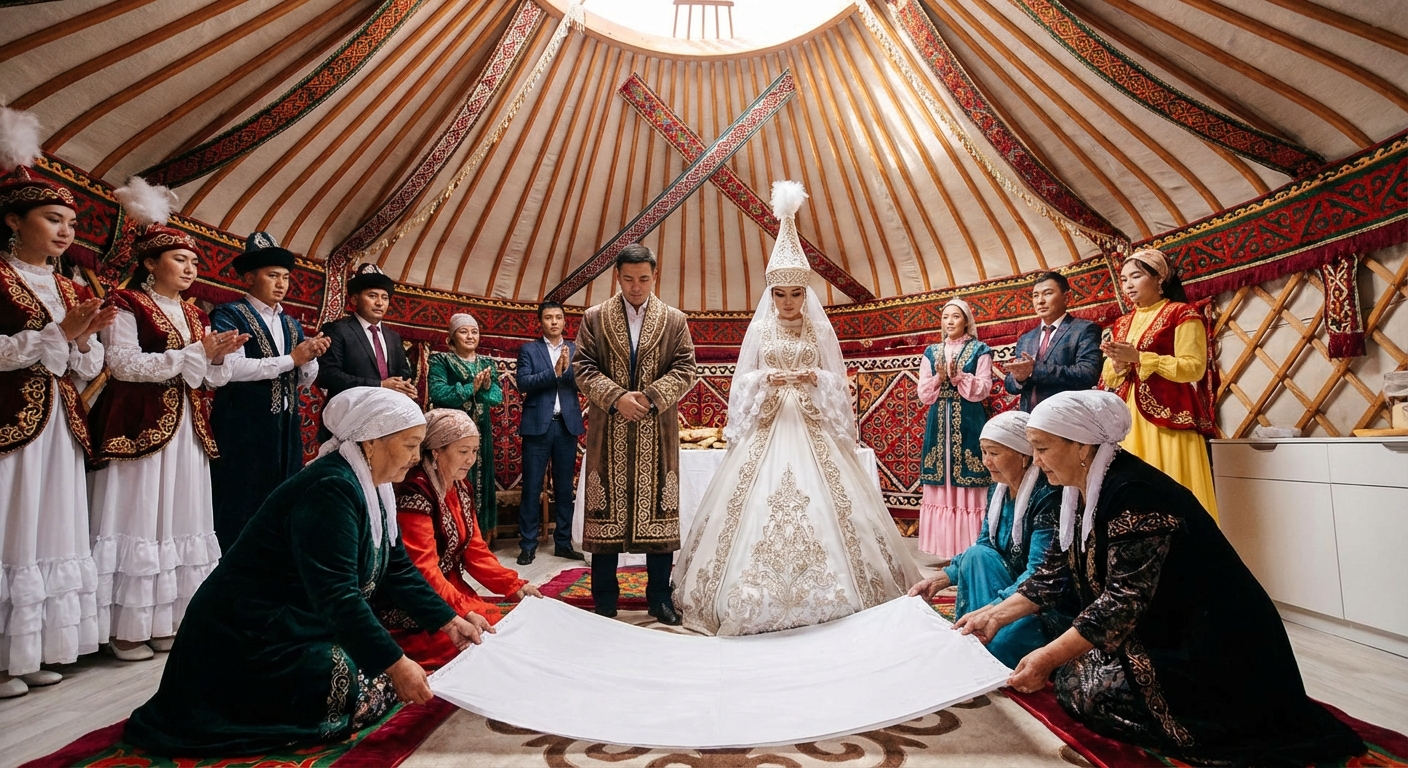
You’ve received an invitation to a Kazakh wedding. Or maybe you’re planning to marry into a Kazakh family. Either way, you’re about to witness one of Central Asia’s most elaborate and meaningful celebrations.
A traditional Kazakh wedding ceremony isn’t a single event. It’s a series of rituals that can span several months, each with its own significance. Some families follow every tradition. Others blend modern and traditional elements. But understanding the core ceremonies helps you appreciate the cultural depth behind each celebration.
Traditional Kazakh weddings involve multiple ceremonies over several months, including matchmaking (kyz aitytru), meeting of in-laws (kuda tusu), bride’s farewell party (uzatu toi), bride’s arrival (kelin tusiru), and the unveiling ceremony (betashar). Each ritual carries deep cultural meaning, involving gift exchanges, symbolic gestures, and community participation. Modern Kazakh weddings often blend these traditions with contemporary celebrations, creating unique experiences that honor heritage while embracing change.
The Matchmaking Process Comes First
Before any celebration begins, families engage in kyz aitytru, the matchmaking ritual.
The groom’s parents visit the bride’s family to formally request her hand in marriage. This isn’t a casual conversation. Both families discuss compatibility, values, and expectations.
The bride’s family doesn’t immediately say yes. They might request time to consider. They might ask about the groom’s character, education, and prospects. This deliberation shows respect for the decision’s gravity.
Once both families agree, they exchange gifts. The groom’s family brings jewelry, fabric, and sometimes livestock. These gifts represent the groom’s ability to provide for his future wife.
Some families skip this tradition entirely, especially in urban areas like Astana. But many still honor it, even if in simplified form.
Meeting the In-Laws Officially
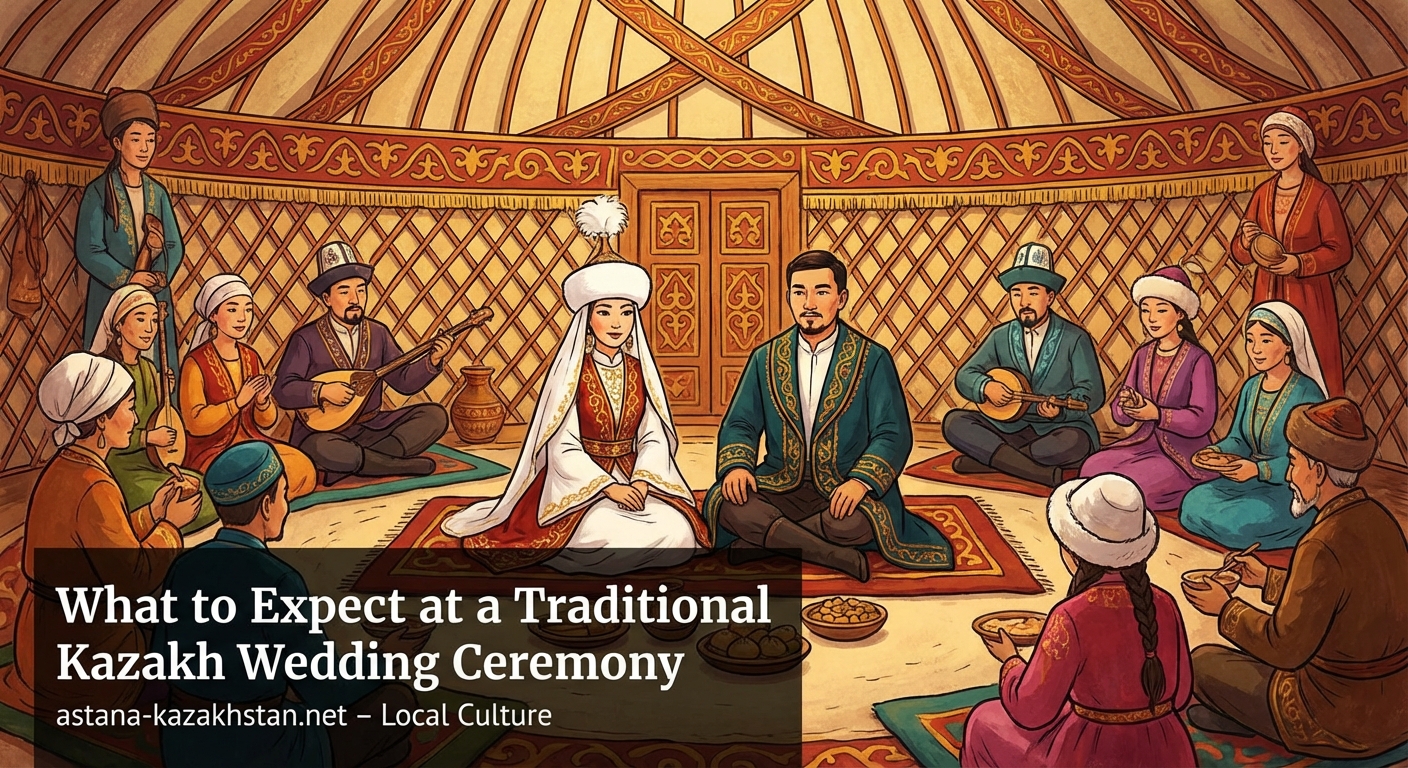
Kuda tusu marks the formal meeting between both families as future relatives.
The groom’s family hosts this gathering. They prepare a feast with traditional dishes like beshbarmak, kazy (horse meat sausage), and baursak (fried dough). The meal matters because sharing food symbolizes unity.
During kuda tusu, families discuss the kalym, a bride price paid by the groom’s family. This practice has evolved significantly. Historically, it involved livestock and valuable goods. Today, it might be money, jewelry, or symbolic gifts.
The amount varies widely. Rural families might still exchange substantial gifts. Urban families often treat it as a formality. Some progressive families skip it altogether, viewing it as outdated.
Both families also discuss the wedding timeline and responsibilities. Who pays for what? Where will ceremonies take place? How many guests will attend? These practical conversations prevent misunderstandings later.
The Bride’s Farewell Celebration
Uzatu toi is the bride’s send-off party, held at her family’s home.
This ceremony carries emotional weight. The bride is leaving her childhood home to join her husband’s family. Friends and relatives gather to celebrate her and offer blessings.
Women perform traditional songs called koshtasu, farewell songs that express both joy and sadness. The lyrics often advise the bride on married life, remind her of her family’s love, and wish her happiness.
Guests bring gifts, usually household items the bride will need in her new home. Linens, dishes, decorative items, and kitchen tools are common. These gifts help the bride establish her new household.
The bride wears an elaborate dress, often red or white with intricate embroidery. Her outfit includes heavy jewelry and a decorative headpiece. Family members help her dress, another symbolic gesture of support.
Food flows abundantly. Tables overflow with traditional dishes, sweets, and tea. Hospitality defines Kazakh culture, and uzatu toi showcases this value.
The Bride Arrives at Her New Home
Kelin tusiru happens when the bride arrives at the groom’s family home for the first time as a married woman.
The groom’s family prepares their home meticulously. They clean every corner, arrange decorations, and prepare special foods. The home must be perfect to welcome the new family member.
As the bride approaches, the groom’s mother performs a welcoming ritual. She might sprinkle water or flour in the bride’s path, symbolizing purity and prosperity. She offers the bride a taste of honey or sugar, wishing her a sweet life.
The bride must step over a threshold carefully, often placing her right foot first. Small rituals like this carry meaning passed down through generations.
Once inside, the bride greets her new family members. She might bow to elders as a sign of respect. They offer her blessings and small gifts in return.
The groom’s family hosts another feast. This one welcomes the bride into their household and introduces her to extended family and neighbors.
The Unveiling Ceremony Holds Deep Meaning
Betashar is perhaps the most visually striking ceremony in a traditional Kazakh wedding.
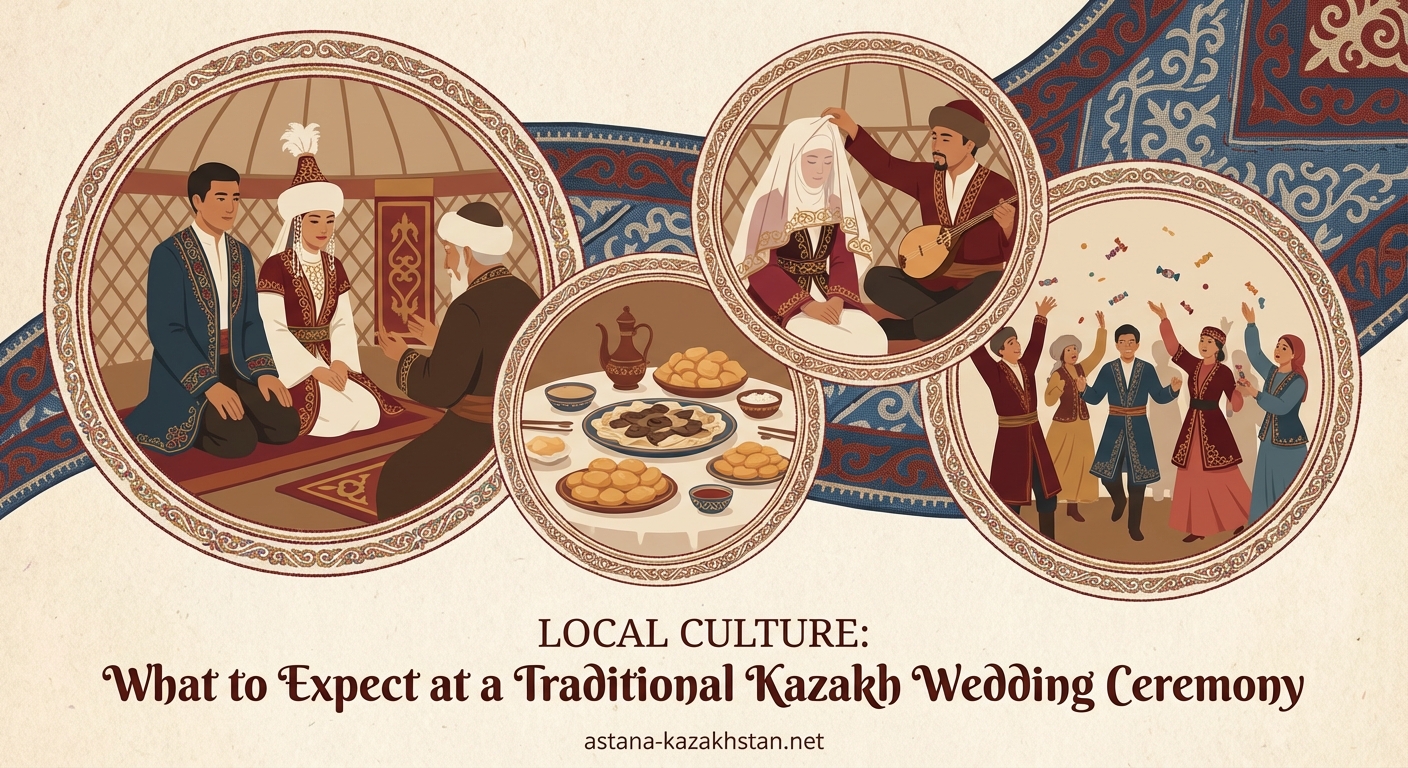
The bride wears a special veil that completely covers her face. A respected elder or musician performs a ceremonial song while gradually lifting the veil to reveal the bride to her new family.
The song introduces each family member by name and relationship. As each person is mentioned, the bride bows respectfully. This ritual formally acknowledges her new family connections.
The betashar song often includes advice, blessings, and expectations for the bride’s behavior in her new family. It emphasizes respect for elders, harmony in the household, and maintaining family honor.
Guests throw candies and coins as the veil is lifted, symbolizing wishes for prosperity. Children scramble to collect these treats, adding a playful element to the solemn ceremony.
Modern interpretations of betashar vary. Some families perform abbreviated versions. Others skip it entirely. But in traditional weddings, especially in rural areas, betashar remains central.
The Official Marriage Registration
Neke kiyar is the legal marriage ceremony, similar to a civil wedding in Western countries.
Couples register their marriage at a government office or wedding palace. In cities like Astana, wedding palaces are grand buildings designed specifically for this purpose. If you’re visiting the capital and notice elaborate buildings with wedding parties outside, you’re likely seeing what to see in Astana when you only have 24 hours includes these architectural landmarks.
The registration ceremony is brief. An official reads from the marriage code, asks both parties to confirm their consent, and issues a marriage certificate.
Witnesses must be present, usually close friends or family members. They sign the marriage certificate alongside the couple.
After registration, couples often take photos at scenic locations. Astana’s futuristic architecture provides stunning backdrops. The ultimate walking tour of Astana’s futuristic left bank district covers popular photo spots.
The Main Wedding Reception
The toy, or main wedding reception, is what most people think of when they imagine a Kazakh wedding.
This celebration happens at a restaurant, banquet hall, or outdoor venue. Guest lists can reach several hundred people. Kazakh hospitality means inviting extended family, neighbors, colleagues, and community members.
The reception follows a structured program. A toastmaster (tamada) guides the evening, introducing performances, coordinating toasts, and keeping energy high.
Traditional music and dance performances are essential. Professional musicians play dombra (a traditional string instrument) and perform folk songs. Dancers in traditional costumes showcase Kazakh choreography.
Guests also participate. Anyone can take the microphone to offer congratulations, share stories, or perform. These spontaneous moments often become the most memorable.
Food arrives in waves. Appetizers, salads, hot dishes, and desserts keep appearing throughout the evening. Beshbarmak is typically served as the main course, and you can learn more about this national dish at where to find the best beshbarmak in Astana.
Guests bring gifts, usually money in decorative envelopes. The couple receives these gifts publicly, with the toastmaster announcing each gift amount. This transparency ensures accountability and shows community support.
Dancing continues late into the night. Modern Kazakh weddings blend traditional folk dances with contemporary music. Don’t be surprised to hear both dombra melodies and current pop hits.
Gift-Giving Traditions You Should Know
Understanding gift expectations helps you navigate a Kazakh wedding appropriately.
Monetary gifts are standard and expected. The amount depends on your relationship to the couple and your financial situation. Close family gives more than distant acquaintances.
Envelopes should be decorative and new. Many stores sell special wedding envelopes with traditional patterns or modern designs.
Some guests bring physical gifts instead of or in addition to money. Household items, decorative pieces, or practical appliances are appropriate.
If you’re attending as a foreigner or outsider, hosts don’t expect you to follow every tradition perfectly. Your presence and genuine congratulations matter most.
Modern Adaptations and Changes
Contemporary Kazakh weddings often blend tradition with modern preferences.
Many couples hold two ceremonies: a traditional one for family and a modern one for friends. This allows them to honor heritage while celebrating in contemporary style.
Destination weddings are becoming popular among urban, affluent couples. Some choose scenic locations in Kazakhstan, like near how to visit the Charyn Canyon, while others travel abroad.
Wedding dresses reflect this blend too. Brides might wear a white Western-style gown for the reception and change into a traditional Kazakh dress for specific rituals.
Younger generations question certain traditions, particularly the bride price. Many view it as outdated or objectifying. Progressive families adapt or eliminate practices that don’t align with modern values.
Social media influences wedding trends significantly. Couples want Instagram-worthy moments, elaborate decorations, and professional photography. The visual spectacle has intensified.
What Guests Should Wear and Bring
Dress codes at Kazakh weddings lean formal.
Women typically wear elegant dresses or traditional Kazakh attire. Long dresses are more appropriate than short ones, especially at traditional ceremonies. Bright colors are welcome and encouraged.
Men wear suits or dress shirts with trousers. Ties are common but not always required. Traditional Kazakh men’s clothing, like a chapan (long coat), is also appropriate if you have access to one.
Comfortable shoes matter. Weddings last many hours, often involving standing, dancing, and moving between venues.
Bring your gift in a proper envelope or wrapped appropriately. Arriving empty-handed would be considered disrespectful.
If you’re unsure about anything, ask the couple or a family member beforehand. Kazakhs appreciate when foreigners show interest in their customs and ask questions.
Timeline and Duration Expectations
Traditional Kazakh wedding ceremonies unfold over extended periods.
The entire process, from matchmaking to final celebrations, can span three to six months. Some families condense this timeline, while others extend it further.
Individual ceremonies vary in length. The betashar might last 30 minutes, while the main reception continues for six to eight hours.
If you’re invited to multiple ceremonies, clarify which ones you’re expected to attend. Close family attends everything. Friends might only attend the main reception.
Plan for late nights. Kazakh celebrations rarely end early. Receptions commonly continue past midnight, sometimes until dawn.
Regional Variations Across Kazakhstan
Wedding traditions differ between regions and between urban and rural areas.
Southern Kazakhstan maintains stronger connections to traditional practices. Families there often perform every ritual in its complete form.
Northern regions, influenced by proximity to Russia, sometimes blend Kazakh and Russian traditions.
Astana and Almaty, as cosmopolitan cities, showcase the most modern adaptations. Urban weddings might simplify or skip certain traditional elements.
Rural communities preserve traditions most faithfully. If you attend a village wedding, expect more elaborate traditional ceremonies and stronger community involvement.
Participating Respectfully as an Outsider
Foreigners and non-Kazakhs are usually welcomed warmly at weddings.
Show genuine interest in the traditions. Ask questions respectfully. Kazakhs take pride in their culture and enjoy sharing it.
Participate when invited. If someone asks you to dance, join in. If offered traditional food, try it. Your willingness to engage matters more than perfect execution.
Photography is generally welcome, but ask permission before photographing specific rituals or individuals. Some families prefer privacy during sacred moments.
Learn a few Kazakh phrases. “Kuttyktar bolsyn” (congratulations) and “Rakhmet” (thank you) go a long way.
Respect elder family members. In Kazakh culture, age commands respect. Greet older people first, offer them seats, and listen when they speak.
Common Mistakes to Avoid
Understanding potential missteps helps you navigate the celebration smoothly.
| Mistake | Why It Matters | Better Approach |
|---|---|---|
| Arriving late to ceremonies | Shows disrespect for the family and tradition | Arrive 15-30 minutes early |
| Refusing food or drink | Considered rude in hospitality-focused culture | Accept at least a small portion |
| Leaving too early | Suggests the celebration isn’t important to you | Stay for the main meal and key rituals |
| Inappropriate clothing | Shows lack of respect for the formal occasion | Dress conservatively and elegantly |
| Not bringing a gift | Violates basic guest expectations | Bring money in an envelope or appropriate gift |
| Over-drinking | Reflects poorly on you and embarrasses hosts | Pace yourself and stay respectful |
The Role of Music and Performance
Music threads through every Kazakh wedding ceremony.
Traditional instruments like the dombra and kobyz (a bowed instrument) provide authentic soundscapes. Musicians often perform epic songs that tell stories of love, heroism, and history.
Professional performers are hired for major celebrations. They might include folk dance troupes, modern singers, or even circus-style entertainers.
Guest participation in music is encouraged. If you play an instrument or sing, you might be invited to perform. This spontaneous sharing creates memorable moments.
Modern weddings incorporate DJ sets alongside traditional music. The mix keeps different generations engaged throughout the long celebration.
A Kazakh elder once told me: “A wedding without music is like a steppe without grass. The land exists, but it cannot nourish life. Music nourishes our celebrations and connects us to our ancestors.”
Food as a Central Element
Kazakh weddings showcase the country’s culinary traditions extensively.
Beshbarmak, the national dish of boiled meat and noodles, appears at nearly every wedding. Its name means “five fingers” because it’s traditionally eaten by hand.
Kazy, a horse meat sausage, is considered a delicacy. Guests receive it as a sign of honor and respect.
Baursak, fried dough pieces, pile high on tables. They’re often the first thing served with tea when guests arrive.
Kurt, dried cheese balls, appear as snacks. Their salty, tangy flavor might surprise first-timers, but they’re beloved in Kazakh cuisine.
Sweets include traditional pastries, cakes, and modern desserts. The wedding cake cutting ceremony has become standard, borrowed from Western traditions.
Tea flows constantly. Kazakhs drink tea throughout celebrations, often with milk and sometimes with butter in traditional style.
Photography and Documentation
Capturing wedding memories has become increasingly elaborate.
Professional photographers and videographers are standard at modern Kazakh weddings. They document everything from preparation to final dances.
Photo shoots happen at multiple locations. Couples might visit parks, monuments, or scenic viewpoints around the city. These sessions can last several hours and involve numerous outfit changes.
Drone photography is increasingly popular, especially for outdoor ceremonies. Aerial shots capture the scale and beauty of celebrations.
Social media documentation happens in real time. Guests post photos and videos throughout the event. Some couples create wedding hashtags for collecting all shared content.
If you enjoy photography and want to capture Astana’s architectural beauty during wedding festivities, check out how to photograph Astana’s golden towers like a professional.
Planning Your Visit Around a Wedding
If you’re traveling to Kazakhstan specifically for a wedding, plan accordingly.
Arrive a few days early to adjust to the time zone and recover from travel. Wedding schedules are demanding, and you’ll want energy for long celebrations.
Book accommodation near the wedding venue if possible. Late-night celebrations make convenient lodging valuable. For budget-conscious travelers, explore free things to do in Astana during your downtime.
Check visa requirements well in advance. The Kazakhstan visa guide covers everything you need to know about entry requirements.
Bring appropriate clothing for multiple events. You might need formal wear for several days, plus comfortable clothes for daytime activities.
Consider extending your trip to see more of Kazakhstan. If you have extra days, 7 breathtaking day trips from Astana you can’t miss offers excellent options.
Understanding the Emotional Significance
Beyond the visible rituals, Kazakh weddings carry deep emotional meaning.
For families, weddings represent the continuation of lineage and tradition. They’re moments when ancestors feel present and future generations are blessed.
The bride’s departure from her family home is genuinely emotional. Mothers and daughters often cry during farewell ceremonies. These tears aren’t performative but reflect real sadness at a significant life transition.
The groom’s family feels responsibility for welcoming and caring for their new member. The elaborate preparations aren’t just for show but express their commitment to the bride’s wellbeing.
Community participation reinforces social bonds. Weddings aren’t private affairs but collective celebrations that strengthen neighborhood and family networks.
Navigating Language Barriers
Language differences can create challenges but shouldn’t prevent participation.
Many young Kazakhs speak English, especially in cities. They often serve as informal translators during celebrations.
Russian is widely spoken across Kazakhstan. If you know Russian, you can communicate with most guests.
Kazakh is the national language, but not everyone speaks it fluently, particularly in northern regions. However, making an effort to use Kazakh phrases shows respect.
Non-verbal communication works remarkably well. Smiles, gestures, and genuine warmth transcend language barriers.
Toast times can be challenging if you don’t understand the language. Watch others for cues about when to drink, stand, or applaud.
When Tradition Meets Personal Choice
Modern Kazakh couples navigate between family expectations and personal preferences.
Some families insist on every traditional ceremony. Others are flexible and allow couples to choose which rituals to include.
Interfaith and intercultural marriages add complexity. When one partner isn’t Kazakh, families often adapt traditions to accommodate both backgrounds.
Financial considerations matter too. Traditional weddings are expensive. Guest lists of 300-500 people, multiple ceremonies, and elaborate celebrations strain budgets.
Some couples opt for smaller, more intimate celebrations. This choice can create family tension but reflects changing attitudes about wedding priorities.
The key is communication. Successful couples discuss expectations with both families early, finding compromises that honor tradition while respecting personal values.
The Role of Elders and Blessings
Respect for elders permeates every aspect of Kazakh weddings.
The oldest family members receive special honor. They sit in prominent positions, speak first at ceremonies, and give the most important blessings.
Bata, the traditional blessing, is central to wedding rituals. Elders place their hands on the couple’s heads and recite prayers wishing them prosperity, health, and happiness.
These blessings aren’t casual. They’re considered spiritually powerful, connecting the couple to ancestral wisdom and protection.
Younger family members seek blessings from multiple elders throughout the celebration. Each blessing adds another layer of support and good wishes.
If an elder offers you food or drink personally, accept it graciously. This gesture shows they’ve welcomed you into the celebration.
Experiencing Kazakhstan Beyond the Wedding
Wedding attendance offers a unique entry point into Kazakh culture.
Use the opportunity to learn about the country beyond the celebration. Ask your hosts about daily life, traditions, and local attractions.
If time allows, visit cultural sites and natural wonders. Kazakhstan offers stunning landscapes and fascinating history that most travelers never experience.
The capital city itself deserves exploration. Astana after dark reveals a different side of the city’s architectural wonders.
Consider visiting other cities too. Is Shymkent worth visiting answers questions about Kazakhstan’s third-largest city.
The connections you make at weddings often lead to deeper friendships and future invitations. Kazakhs value relationships and remember guests who showed genuine interest in their culture.
Why These Traditions Still Matter Today
In a globalizing world, traditional Kazakh wedding ceremonies serve important functions.
They maintain cultural identity in younger generations. As Kazakhstan modernizes rapidly, weddings become moments to reconnect with heritage.
They strengthen family and community bonds. The elaborate preparations require cooperation, creating shared experiences and memories.
They mark life transitions meaningfully. Unlike brief civil ceremonies, traditional weddings acknowledge the magnitude of marriage through extended rituals.
They preserve language, music, and crafts. Traditional songs, clothing, and ceremonial objects might otherwise disappear without these regular cultural performances.
They create intergenerational dialogue. When young people ask about wedding traditions, elders share stories, values, and history.
Bringing the Experience Home With You
Attending a traditional Kazakh wedding ceremony changes how you understand the culture.
You’ll leave with stories that no guidebook contains. The warmth of Kazakh hospitality, the beauty of traditional music, and the depth of family bonds create lasting impressions.
Take photos and videos respectfully, but also take mental snapshots. Some moments are best remembered rather than recorded.
Stay in touch with people you meet. Social media makes maintaining international friendships easier than ever.
Share your experience with others. Your stories might inspire friends to visit Kazakhstan or learn more about Central Asian cultures.
Consider incorporating elements you appreciated into your own celebrations. Cultural exchange works both ways, and beautiful traditions deserve to spread.
The invitation to a Kazakh wedding is more than a request to attend a party. It’s an invitation into a family’s most important moment, a window into centuries of tradition, and an opportunity to witness how ancient customs adapt to modern life while maintaining their essential meaning.