
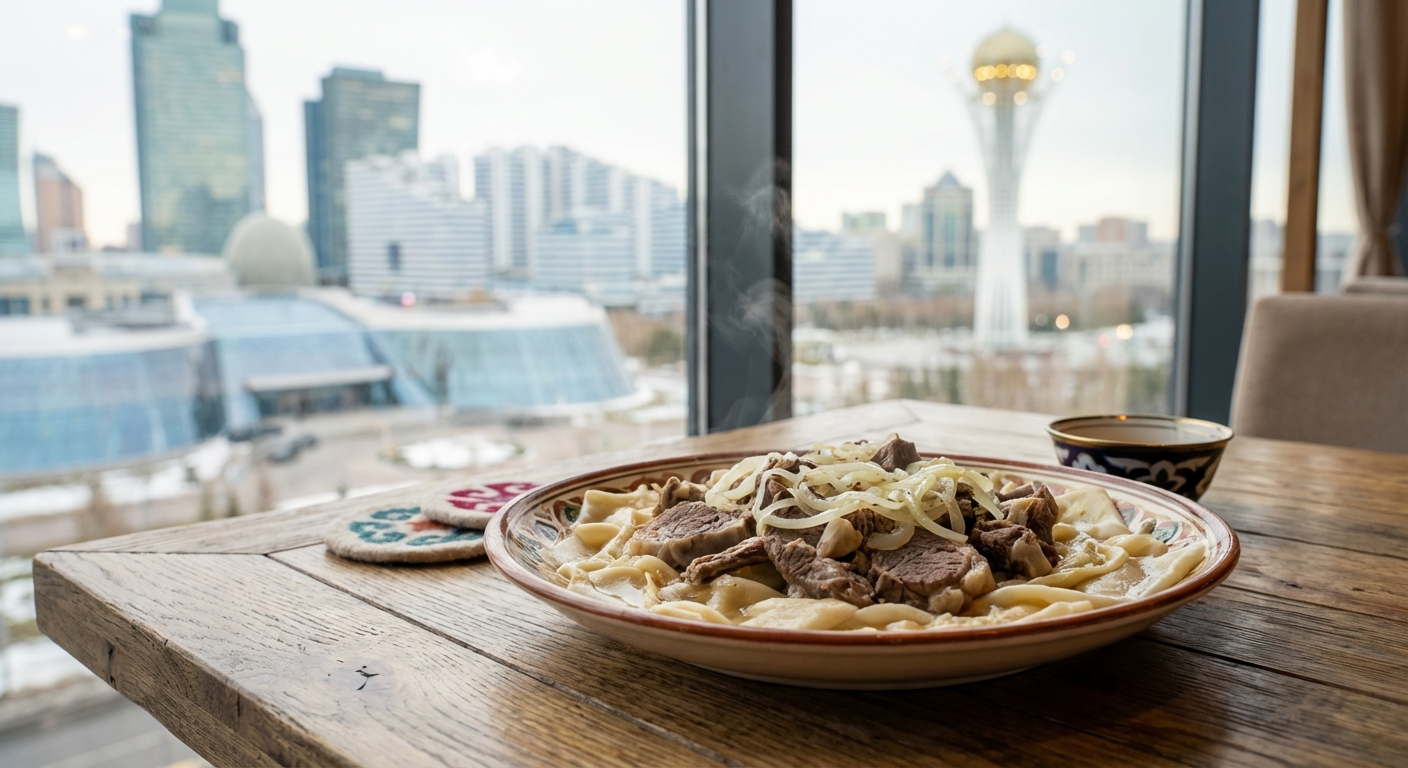
You can’t claim you’ve experienced Kazakhstan until you’ve eaten beshbarmak. Not the tourist version. The real thing.
This isn’t just food. It’s a cultural handshake. A test of your willingness to understand this country beyond its futuristic skyline and golden towers.
I’ve spent months eating my way through Astana’s dining scene, from fancy establishments near the futuristic left bank district to family-run spots where nobody speaks English. What I learned: the best beshbarmak in Astana rarely appears in glossy travel guides.
Astana’s best beshbarmak comes from restaurants that honor traditional preparation methods: boiled horse or lamb, hand-rolled noodles, and rich broth infused with onions. Saksaul, Alasha, and Astana Nury lead the pack for authenticity, while Qazaq Gourmet offers refined versions. Expect to pay 3,500 to 6,000 tenge per serving. Visit during lunch for the freshest preparations, and always order the horse meat version if you want the genuine experience.
What Makes Beshbarmak Actually Good
The name translates to “five fingers” because traditionally you eat it with your hands.
Most tourists never get this right. They order beshbarmak at the first restaurant they see, get a mediocre plate of overcooked meat and soggy noodles, then declare the national dish overrated.
Here’s what separates exceptional beshbarmak from forgettable versions:
- The meat must be tender enough to pull apart easily but not mushy
- Noodles should be hand-rolled, slightly thick, with a satisfying chew
- The broth needs depth from hours of simmering bones
- Onions must be cooked in the meat fat until sweet and translucent
- The meat-to-noodle ratio favors meat generously
Traditional beshbarmak uses horse meat. Some restaurants offer lamb or beef alternatives, but horse delivers a distinct sweetness you won’t find elsewhere.
The broth, called sorpa, comes served separately in small bowls. Drink it between bites. It aids digestion and cleanses your palate.
“Real beshbarmak takes six hours minimum to prepare properly. If a restaurant serves it in 20 minutes, they made it yesterday or cut corners. The best places start cooking early morning for lunch service.” — Aigul, third-generation Kazakh chef
Where to Find Authentic Beshbarmak in Astana
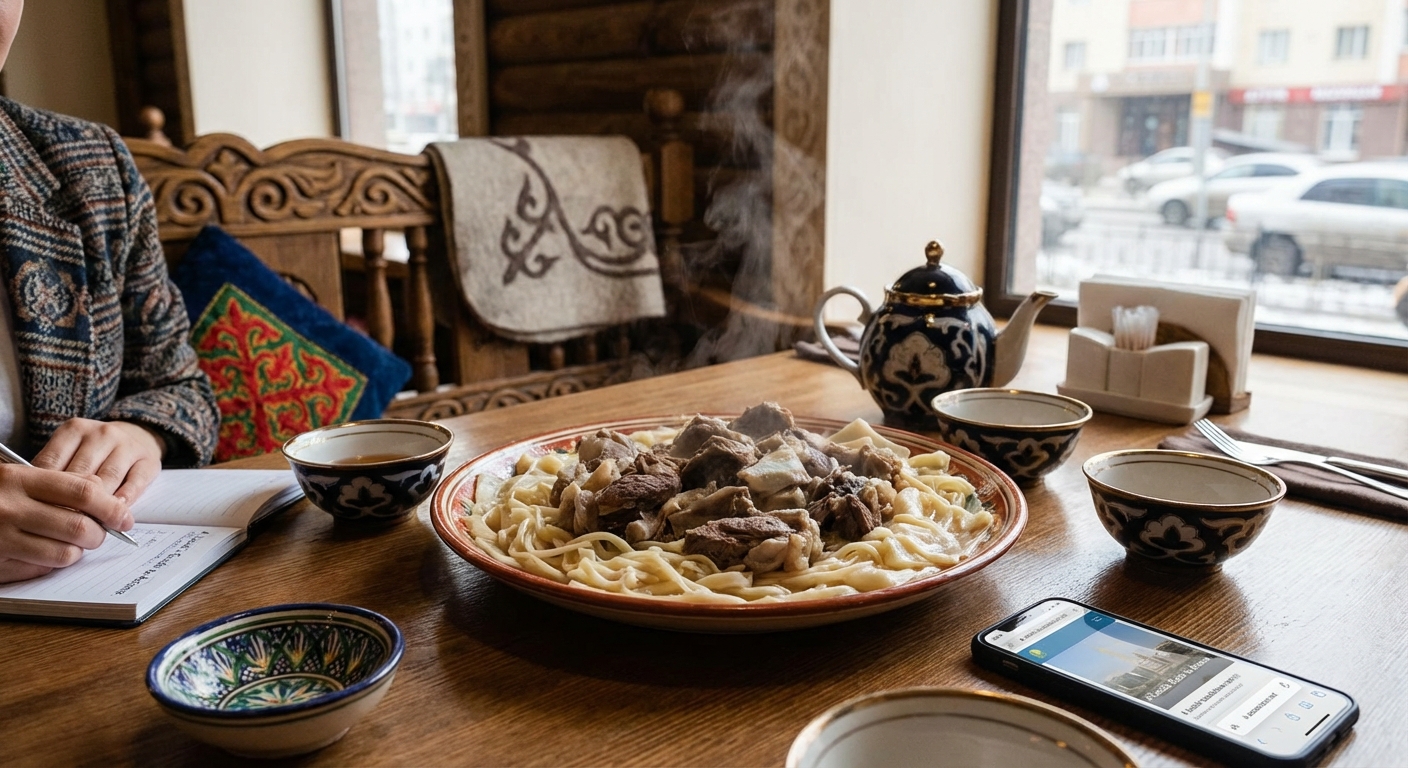
Saksaul
Located near the Ishim River, Saksaul has earned its reputation through consistency.
They prepare beshbarmak the old way. No shortcuts. No fusion experiments.
The dining room features traditional Kazakh décor without feeling like a theme park. Wooden tables, felt carpets, and copper serving dishes create an atmosphere that respects the food’s heritage.
Order the horse meat beshbarmak. It arrives on a massive platter meant for sharing, though solo diners can request smaller portions.
Price: 5,500 tenge for a generous serving
Best time to visit: Weekday lunch between 1 PM and 3 PM when they’ve just finished the day’s batch
Alasha
This restaurant sits in the older part of the city, away from the tourist corridor.
Alasha specializes in regional Kazakh cuisine, and their beshbarmak reflects northern Kazakhstan’s style with slightly thicker noodles and a richer broth.
The kitchen uses a mix of horse and lamb, which some locals prefer for a more complex flavor profile. The meat comes from their own suppliers in the countryside, guaranteeing quality.
What sets Alasha apart: they serve the traditional accompaniments that many restaurants skip. You’ll get kazy (horse sausage), zhaya (horse hip meat), and kartop (rectum, surprisingly delicious).
Price: 4,800 tenge
Atmosphere: Casual, family-friendly, often packed with local celebrations
Astana Nury
Don’t let the fancy exterior intimidate you. Astana Nury maintains authenticity despite catering to both locals and visitors.
Their beshbarmak uses a recipe from the chef’s grandmother in Karaganda. The noodles are rolled fresh every morning, and the horse meat comes from farms in the Akmola region.
The presentation leans slightly modern, served on white porcelain instead of traditional platters, but the taste stays true to tradition.
They offer a tasting portion if you want to try beshbarmak alongside other dishes without committing to a full serving.
Price: 6,000 tenge (full portion), 3,500 tenge (tasting size)
Bonus: English-speaking staff who can explain the dish’s cultural significance
Qazaq Gourmet
This is where traditional meets contemporary.
Qazaq Gourmet takes the fundamental beshbarmak recipe and elevates presentation without compromising authenticity. The chef trained in France but returned to Kazakhstan specifically to work with traditional cuisine.
Their version uses organic horse meat from sustainable farms and adds subtle modern touches like herb-infused broth and precision-cut vegetables.
Some purists argue this isn’t “real” beshbarmak. I disagree. The core elements remain intact while making the dish more approachable for first-timers.
Price: 7,200 tenge
Best for: Visitors who want authenticity with refined presentation
Kishlak
Technically an Uzbek restaurant, but their Kazakh menu items deserve mention.
Kishlak’s beshbarmak uses lamb exclusively, which makes it a good entry point if you’re hesitant about horse meat. The preparation follows Kazakh methods, though the spice profile shows slight Uzbek influence.
The noodles here are exceptional. Thin, delicate, perfectly cooked. Some locals claim they’re the best in Astana.
Price: 4,200 tenge
Location: Near Khan Shatyr, convenient for tourists
How to Order Beshbarmak Like a Local
Walking into a traditional Kazakh restaurant can feel intimidating. Here’s your step-by-step approach:
- Greet the staff with “Salem” (hello in Kazakh)
- Ask if beshbarmak is available today (some places only make it certain days)
- Specify your meat preference: horse (жылқы ет), lamb (қой еті), or beef (сиыр еті)
- Indicate portion size: full (толық) or half (жарты)
- Request sorpa on the side if it doesn’t come automatically
- Order tea (black tea with milk is traditional)
Most restaurants serve beshbarmak family-style on large platters. If you’re dining alone, mention “бір адамға” (for one person) to avoid receiving enough food for four people.
The proper eating method:
- Use your right hand only
- Take meat and noodles together in small portions
- Sip sorpa between bites
- Finish everything on your plate (leaving food suggests the host didn’t provide enough)
Don’t stress about perfect etiquette. Kazakhs appreciate foreigners making the effort more than executing flawless table manners.
Common Beshbarmak Mistakes and How to Avoid Them
| Mistake | Why It Happens | How to Fix It |
|---|---|---|
| Ordering at dinner | Many restaurants prepare beshbarmak for lunch only | Call ahead or visit between 12 PM and 3 PM |
| Choosing beef over horse | Fear of trying unfamiliar meat | Start with a mixed platter or small portion of horse |
| Eating too fast | Excitement or hunger | Pace yourself; the dish is rich and filling |
| Skipping the sorpa | Not understanding its purpose | Always drink the broth; it’s essential to the experience |
| Going to tourist restaurants | Following generic recommendations | Ask hotel staff where they personally eat beshbarmak |
| Expecting spicy food | Assumptions based on other Central Asian cuisines | Kazakh food is mild; flavor comes from meat quality and cooking technique |
The biggest mistake? Judging beshbarmak by your first experience. If you don’t love it initially, try a different restaurant. Preparation quality varies dramatically.
Understanding the Cultural Context
Beshbarmak isn’t everyday food for most Kazakhs. It’s celebration food, guest food, special occasion food.
Families prepare it for weddings, holidays like Nauryz, and when honoring important visitors. Serving beshbarmak signals respect and hospitality.
The dish has rules beyond preparation. The most honored guest receives the head of the sheep or horse. Different cuts carry different meanings:
- Pelvis bone: Given to young married women
- Shin: For young men
- Ribs: For children
- Ears: For young girls (so they listen well)
Restaurants simplify these traditions, but understanding them adds depth to your experience.
When locals invite you to eat beshbarmak at their home, they’re extending significant hospitality. This invitation matters. It’s not casual. Accepting means respecting their hospitality customs.
What to Pair with Your Beshbarmak
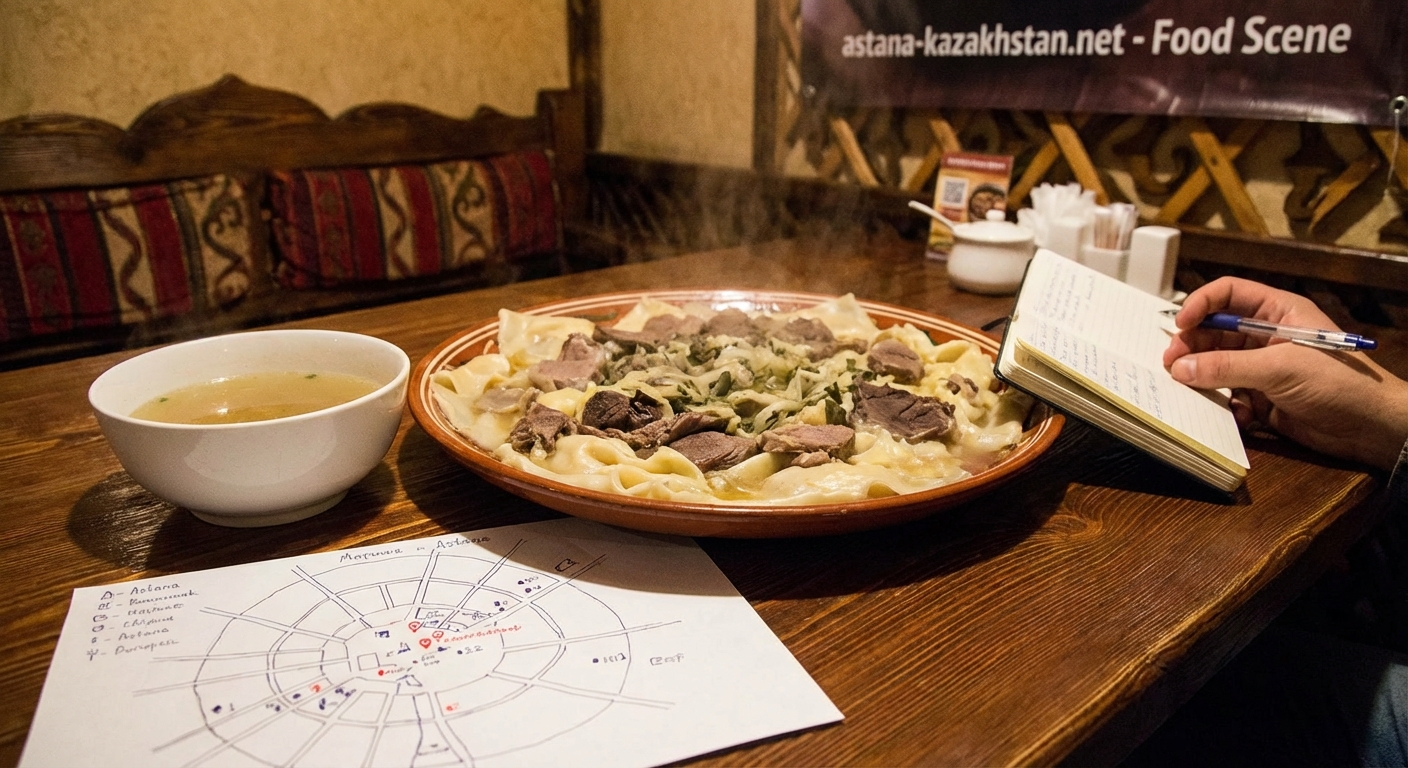
Beshbarmak is substantial. You probably won’t need appetizers.
That said, these accompaniments enhance the meal:
- Shubat (fermented camel milk): An acquired taste but traditional
- Kumis (fermented mare’s milk): Lighter than shubat, slightly fizzy
- Black tea with milk: The most common beverage choice
- Baursak (fried dough): Sometimes served alongside for textural contrast
- Pickled vegetables: Cuts through the richness
Avoid ordering other heavy dishes. Beshbarmak provides enough protein and carbohydrates for an entire meal.
For dessert, try chak-chak (fried honey dough) or simple fresh fruit. Your stomach will thank you.
Budget Considerations and Value
Beshbarmak isn’t cheap, but it’s not prohibitively expensive either.
Expect to pay between 3,500 and 7,500 tenge depending on the restaurant and portion size. This typically feeds one person generously or two people moderately.
Compare this to other Kazakh dishes: lagman runs 2,000 to 3,000 tenge, plov costs 1,800 to 2,500 tenge, and shashlik ranges from 1,500 to 3,000 tenge per serving.
The higher price reflects preparation time and meat quality. Good beshbarmak requires premium cuts and hours of cooking.
Budget travelers can still enjoy authentic beshbarmak by:
- Visiting during lunch specials (some restaurants offer reduced prices)
- Sharing a full portion between two people
- Choosing restaurants in residential areas rather than tourist zones
- Asking about “business lunch” menus on weekdays
One excellent beshbarmak meal beats three mediocre restaurant experiences. Budget accordingly.
Vegetarian Alternatives and Dietary Restrictions
Let’s be honest: traditional beshbarmak is fundamentally a meat dish.
No authentic vegetarian version exists. The entire concept centers on boiled meat and meat broth.
Some modern restaurants offer “vegetable beshbarmak” with mushrooms replacing meat, but this misses the point entirely. It’s like ordering vegetarian steak.
If you’re vegetarian or have dietary restrictions:
- Focus on other Kazakh dishes better suited to your needs
- Try lagman with vegetables
- Order samsa with pumpkin or potato filling
- Sample the excellent bread and dairy products
Don’t compromise your dietary principles trying to experience beshbarmak. Kazakhstan offers plenty of other culinary traditions worth exploring.
For those avoiding horse meat specifically, lamb or beef versions work fine. The preparation method matters more than the specific animal.
Timing Your Beshbarmak Experience
Most restaurants prepare beshbarmak fresh for lunch service starting around 11 AM.
By 4 PM, many places have sold out or are serving reheated portions. Quality drops significantly after the initial batch.
Weekends get crowded. Families celebrate, tourists flock to recommended spots, and wait times extend beyond an hour at popular restaurants.
Your best strategy:
- Visit Tuesday through Thursday
- Arrive between 12:30 PM and 2 PM
- Call ahead to confirm availability
- Make reservations for groups of four or more
Some restaurants take advance orders for beshbarmak, guaranteeing fresh preparation when you arrive. This works especially well if you’re visiting with a group and want the full traditional presentation.
Winter months see higher beshbarmak consumption. The rich, warming dish suits cold weather perfectly. Summer brings lighter eating patterns, though restaurants still serve it.
Beyond the Plate
After you’ve tried beshbarmak at restaurants, consider these next-level experiences:
Cooking classes: Several Astana-based tour operators offer beshbarmak cooking workshops where you learn traditional preparation from Kazakh grandmothers. These typically cost 15,000 to 25,000 tenge and include eating what you make.
Home dining experiences: Platforms connecting travelers with local families sometimes feature beshbarmak dinners. This provides cultural context restaurants can’t match.
Regional variations: If you’re traveling beyond Astana to places like Almaty, try beshbarmak there too. Southern Kazakhstan’s version differs slightly in spicing and noodle thickness.
Festival attendance: Nauryz celebrations in March feature massive communal beshbarmak preparations. Participating in these public feasts offers unmatched authenticity.
The dish tastes better when you understand its cultural weight. It’s not just lunch. It’s centuries of nomadic tradition, hospitality values, and national identity served on a platter.
Making the Most of Your Visit
Combine your beshbarmak experience with other Astana activities for a full day of cultural immersion.
Morning: Visit the National Museum to understand Kazakh history and nomadic heritage. This context makes the food more meaningful.
Lunch: Enjoy beshbarmak at one of the recommended restaurants.
Afternoon: Walk off your meal exploring architectural gems or strolling the riverfront.
Evening: Catch the illuminated landmarks after sunset.
This rhythm respects the heavy nature of beshbarmak while maximizing your Astana experience.
Photography tip: Beshbarmak looks best photographed from directly above, showing the circular arrangement of meat and noodles. Natural light works better than flash. Ask permission before photographing in traditional restaurants.
The Real Measure of Success
You’ll know you’ve found great beshbarmak when:
- The meat pulls apart without effort
- The noodles have distinct texture, not mushiness
- The broth tastes complex, not watery or overly salty
- You feel satisfied but not uncomfortably stuffed
- The flavors linger pleasantly without heavy greasiness
Great beshbarmak doesn’t need sauce or condiments. The meat’s natural flavor, enhanced by slow cooking and quality broth, stands alone.
If you find yourself reaching for salt, pepper, or ketchup (yes, some tourists do this), something went wrong in the kitchen.
Your Beshbarmak Journey Starts Now
Finding the best beshbarmak in Astana isn’t about checking boxes on a tourist itinerary.
It’s about understanding what makes this dish central to Kazakh identity. It’s about respecting traditions while being open to new flavors. It’s about sitting down, taking your time, and letting the food tell you something about this remarkable country.
Start with Saksaul or Alasha if you want pure tradition. Choose Qazaq Gourmet if you prefer refined presentation. Visit Astana Nury for the best balance of authenticity and accessibility.
Whichever restaurant you choose, approach beshbarmak with curiosity rather than judgment. This isn’t food designed for Instagram or international palates. It’s food that sustained nomads across harsh steppes for centuries.
That history sits on your plate. Taste it with respect, and you’ll understand Kazakhstan in ways no museum or monument can teach.