
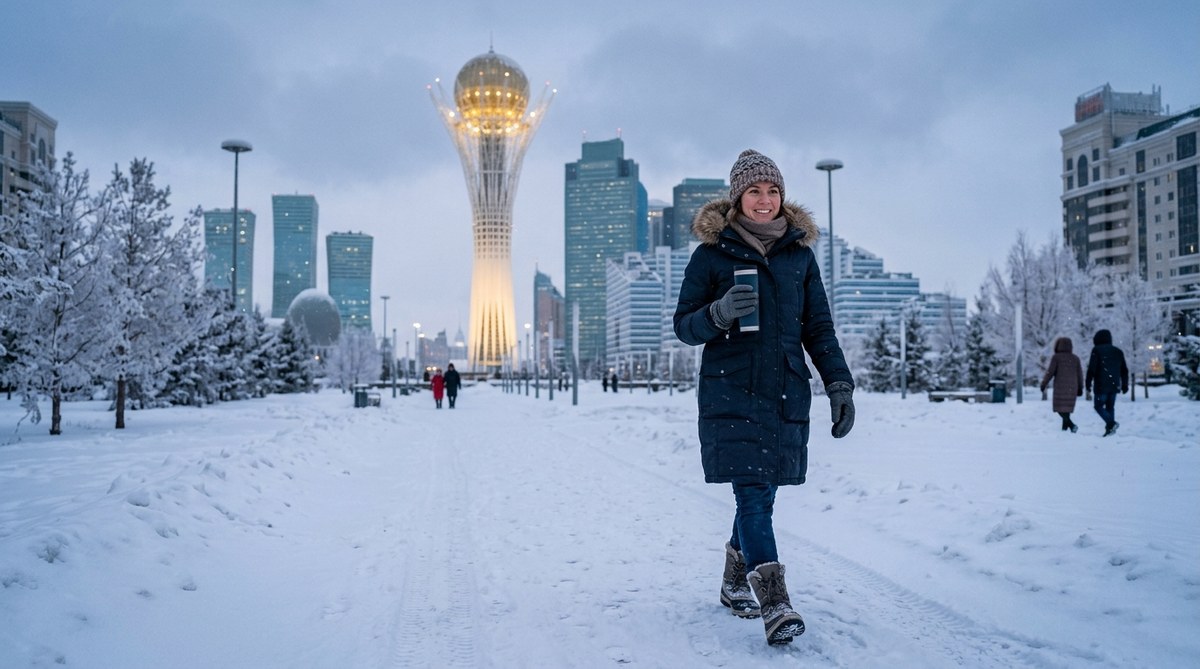
The first time the temperature in Astana dropped below minus 40, I checked my weather app three times. I thought it was broken. But the locals around me didn’t flinch. They kept walking, shopping, and even eating ice cream inside the Khan Shatyr mall. That was the moment I realized surviving Astana winter isn’t about brute force. It is about smart preparation, the right gear, and a few cultural tricks that Kazakhs have perfected over generations. This guide is everything I wish someone had told me before my first winter here.
You can thrive in Astana’s extreme winters by following a three layer clothing system, using public transport to avoid long walks, and embracing indoor activities like shopping malls and cultural sites. The real secret is mental: treat winter as an adventure, not a punishment, and your whole experience will shift.
The Real Temperature Reality Check
Astana is the second coldest capital city in the world, right after Ulaanbaatar. Winter temperatures here regularly drop to minus 30 degrees Celsius (minus 22 Fahrenheit), and cold snaps can push the mercury to minus 45 or even lower. The wind chill makes it feel even more brutal. But here is the good news: the city was designed for this. Buildings have powerful heating systems, sidewalks are cleared quickly, and the underground pedestrian passages keep you warm while crossing major intersections.
The winter season typically runs from November through March. January is the coldest month, while February often brings the heaviest snowfall. If you are moving here for work or a long term stay, plan your arrival for late spring or early autumn. Arriving in January is a shock to the system that even some locals struggle with.
The Three Layer System That Never Fails
Kazakhs have a saying about winter clothing: “There is no bad weather, only bad clothing.” They are right. You do not need one massive parka. You need a system.
Layer One: Base Layer
Your base layer must wick moisture away from your skin. Cotton is your enemy here. It holds sweat and makes you cold. Look for merino wool or synthetic materials like polypropylene. A good merino wool top and bottom set costs around $80 to $120, but it is worth every tenge. You will wear this every single day from November to March.
Layer Two: Insulation Layer
This is the layer that traps heat. A fleece jacket, a lightweight down vest, or a synthetic puffy jacket works well. You want something that compresses easily but provides serious warmth. Many expats in Astana use a Patagonia R2 or similar mid layer fleece.
Layer Three: Outer Shell
Your outer layer must block wind and snow. Look for a long, insulated parka that covers your hips. The longer the better. A knee length parka with a hood lined with faux fur will protect your face from windburn. Brands like Canada Goose and Fjallraven are popular here, but you can also find excellent quality at local stores like Adidas or Sportmaster in Astana.
Footwear and Accessories
Do not skimp on boots. You need insulated, waterproof boots with a thick sole for traction on ice. Sorel and Columbia make reliable options. Pair them with wool socks. For your hands, mittens are warmer than gloves because your fingers share heat. A balaclava or a thick scarf that covers your nose and mouth is essential. The air hurts your lungs when it is minus 40.
How to Get Around the City in Winter
Walking more than 10 minutes in extreme cold is not advisable. The city understands this, so it has built several solutions.
The Underground Passages
Astana has an extensive network of underground pedestrian crossings, especially on the left bank. These are heated, well lit, and often have small shops or food stalls inside. You can walk from the Baiterek Tower area to Khan Shatyr almost entirely underground. Use these passages whenever possible.
Public Transport
Buses and the new LRT line (opened in 2025) are heated and reliable. A single ride costs around 90 tenge (about 20 cents). Download the “Astana Bus” app to track routes in real time. Taxis are also affordable, with a typical ride across the city costing between 1,000 and 2,000 tenge. Use the Yandex Taxi app, which works well in English.
Driving
If you bring a car, you must equip it with winter tires. Many expats also carry a small shovel and a bag of sand in the trunk. Parking is plentiful and usually free, but be prepared for your car to be covered in snow every morning. Allow 10 extra minutes to scrape the ice off your windshield.
What to Eat and Drink to Stay Warm
Kazakh cuisine is built for winter. Embrace it.
Hearty Meals
Beshbarmak, the national dish of boiled horse meat and noodles, is served at nearly every winter gathering. It is rich, fatty, and keeps you full for hours. Shurpa, a lamb and vegetable soup, is another winter staple. You can find excellent shurpa at the traditional restaurant Alasha on the left bank. For a cheaper option, any of the food courts in Khan Shatyr serve hot lagman noodles.
Hot Drinks
Tea is the lifeblood of Astana winter. Kazakhs drink black tea with milk and butter, a combination called “kalmytskiy chay.” It sounds strange but it is incredibly warming. You can also find excellent coffee at specialty shops like Coffee Boom or Paul. Avoid alcohol to warm up. It actually lowers your core body temperature.
The Vitamin D Problem and How to Fix It
Sunlight is scarce in winter. The sun rises around 9 a.m. and sets by 4 p.m., and many days are overcast. This can lead to seasonal affective disorder (SAD) and low energy.
Practical Solutions
- Take a vitamin D supplement every morning. Most expats take 2,000 to 5,000 IU daily.
- Use a light therapy lamp for 20 minutes each morning. You can buy one on Amazon or at local electronics stores like Sulpak.
- Exercise indoors. Join a gym like World Class or Gold’s Gym. Many offer monthly memberships for around $50.
- Socialize. Isolation makes winter feel longer. Join expat groups on Facebook or attend events at the American Corner in the National Library.
Indoor Activities That Save Your Sanity
Winter in Astana does not mean you stay home. The city has world class indoor attractions.
Khan Shatyr Entertainment Center
This giant tent shaped mall is a city unto itself. It has a shopping mall, a food court, a cinema, and even an indoor beach with a wave pool. You can spend an entire day here without going outside. It is the number one winter refuge for families and expats alike.
Museums and Cultural Sites
The National Museum of Kazakhstan is free on the first Tuesday of every month. It is huge, warm, and fascinating. The Palace of Peace and Reconciliation, designed by Norman Foster, offers guided tours in English. The Hazrat Sultan Mosque is also open to visitors and provides a peaceful space for reflection.
The LRT Tour
Ride the new LRT line from one end to the other just for fun. The trains are modern, clean, and give you a unique view of the city’s futuristic architecture. It is a cheap way to break up a gray afternoon.
A Common Mistake Table
| Mistake | Why It Is Dangerous | What to Do Instead |
|---|---|---|
| Wearing cotton socks | Sweat freezes, causing frostbite | Wear merino wool or synthetic socks |
| Not covering your ears | Frostbite can occur in minutes | Wear a hat or earmuffs that fully cover your ears |
| Walking on untreated ice | Falls are the most common winter injury | Wear boots with good traction or use ice grips |
| Drinking alcohol to warm up | Alcohol lowers body temperature | Drink hot tea or broth instead |
| Skipping breakfast | Your body has no fuel to generate heat | Eat a protein heavy breakfast like eggs or meat |
The Mental Game: How Locals Stay Positive
Kazakhs do not complain about winter. They accept it and adapt. This mindset is the most important tool you can adopt.
“Winter is not a problem. It is just a season. You put on your clothes, you go outside, and you live your life. The cold does not stop anything.” — A local shopkeeper in the Green Bazaar
Reframe Your Thinking
Instead of saying “It is so cold I cannot go out,” say “I have the right gear, so I can handle this.” Plan one small outdoor activity each day, even if it is just a 5 minute walk to buy bread. This prevents cabin fever and keeps your body acclimated.
Celebrate Winter Events
Astana hosts a winter festival called “Astana Winter” in December and January. There are ice sculptures, skating rinks, and warm food stalls. The city also celebrates Nauryz in March, which marks the spring equinox. Participating in these events gives you something to look forward to.
Your Winter Packing Checklist
Here is what you need to buy or bring before your first Astana winter:
- A knee length insulated parka
- A merino wool base layer (top and bottom)
- A fleece or down mid layer
- Waterproof insulated boots
- Wool socks (at least 5 pairs)
- A balaclava or thick scarf
- Mittens (not gloves)
- A hat that covers your ears
- A light therapy lamp
- Vitamin D supplements
- A small backpack for carrying layers you remove indoors
Why Astana Winter Is Worth It
Yes, the cold is extreme. But winter is also when Astana is most beautiful. The snow covers the futuristic buildings and creates a scene that looks like a sci fi movie. The locals are at their friendliest, always ready to help a foreigner who is shivering. The indoor spaces are cozy and welcoming. And when spring finally arrives, you will feel a sense of accomplishment that only comes from surviving something genuinely hard.
You can read more about how the city was built for winter in our guide to Astana’s architectural wonders beyond the main landmarks. If you are still deciding whether to visit, our honest review of Is Kazakhstan Safe for Tourists might help you decide.
One Final Piece of Advice
The best thing you can do for your first winter in Astana is to find a local friend. Let them show you where to buy the warmest boots, which bus routes stay reliable in a blizzard, and which cafe serves the best tea. Kazakh hospitality is legendary, and winter is when it shines brightest. Accept their help, learn from their habits, and within one season, you will stop thinking of winter as something to survive. You will start thinking of it as just another part of life in this incredible city.