
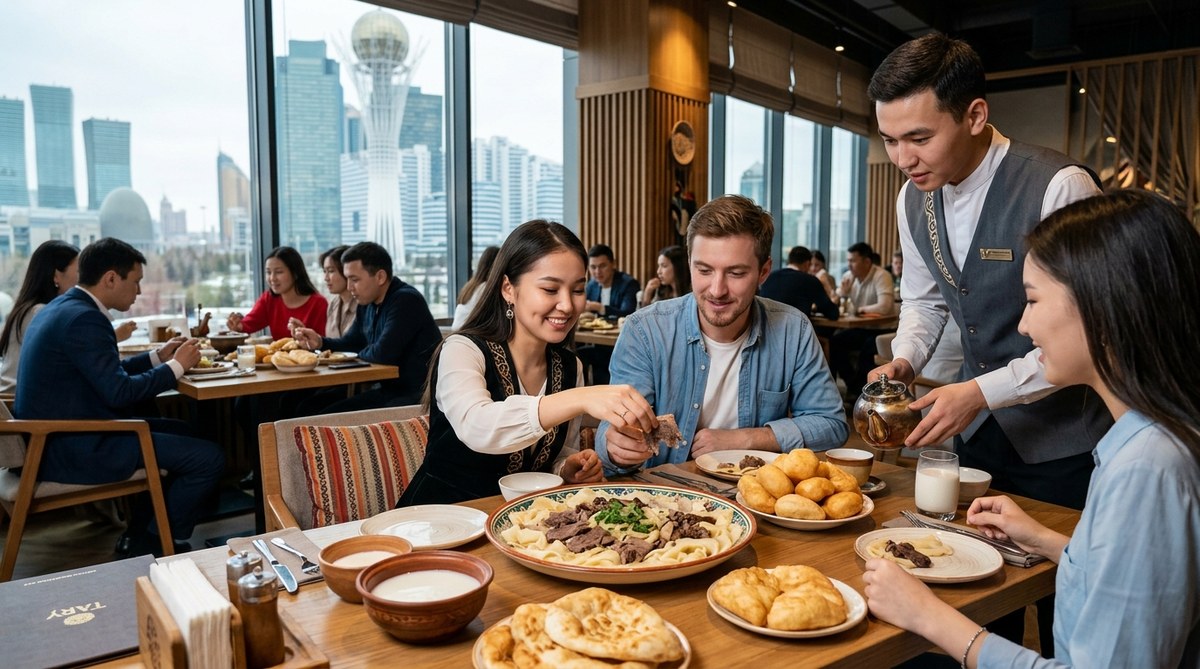
Walking into a traditional Kazakh restaurant in Astana for the first time can feel a bit overwhelming. The menu is full of unfamiliar names, the portions are generous, and the customs around sharing food are different from what you might be used to back home. You want to experience authentic Kazakh hospitality, not just eat a meal. You want to understand the ritual of the dastarkhan, know which dish to order for the table, and avoid the awkward moment of asking for a fork when you should be using bread. This guide will teach you exactly how to order like a local at a Kazakh restaurant in Astana, so you can walk in with confidence and leave with a full stomach and a deeper connection to the culture.
To order like a local in Astana, start with tea and small talk, let your host order if you are a guest, and always share dishes family-style. Prioritize beshbarmak for the table, order kazy for the group, and finish with kumys or shubat. Never refuse food with both hands full, and always wait for the eldest to start eating first.
The First Rule of Kazakh Dining: Patience and Tea
Kazakh meals are not rushed. When you sit down at a traditional restaurant, the first thing that will arrive is not the menu. It is a pot of tea and a small bowl of sweets or dried fruit. This is not a mistake. This is the start of the meal.
In Kazakhstan, eating is a social event. The conversation comes first. You will be offered tea immediately, and it is polite to accept at least a small cup. Even if you do not normally drink tea, take it. Holding a warm bowl of tea in your hands signals that you are ready to be part of the gathering.
If you are dining with a local host, they will likely order for the table. This is a sign of respect and generosity. Do not insist on ordering for yourself. Instead, smile, say “rakhmet” (thank you), and enjoy the surprise. If you are ordering for yourself, follow the local rhythm. Start with appetizers, then move to the main dish, and always leave room for tea and dessert at the end.
How to Read a Kazakh Menu Like a Local
A traditional Kazakh menu is built around a few core ingredients: horse meat, lamb, beef, and dairy. The dishes are hearty and designed to be shared. Here is a breakdown of the most common categories you will see.
Appetizers and Salads (Suzhina and Salat)
Most meals start with a selection of cold appetizers. These are not light salads in the Western sense. They are often meat-based or creamy.
- Kazy: This is the crown jewel of Kazakh appetizers. It is a horse meat sausage, rich and fatty, similar to a high-end salami. It is served sliced thin and often paired with a pickled cucumber or tomato.
- Shuzhuk: Another type of sausage, usually made from horse meat or beef. It is drier and spicier than kazy.
- Zhanbas: Smoked horse meat served on the bone. It is a delicacy and a sign of respect when offered to a guest.
- Salat Olivier: The Soviet-era potato salad is everywhere in Astana. It is creamy, filling, and a safe bet if you are not ready for horse meat.
Soups (Sorpa and Kuyrdak)
Kazakhs love soup, especially in the cold months. The broth is always the star.
- Sorpa: A clear, rich broth made from lamb or horse meat. It is served in a large bowl, often with a piece of meat floating in it. You drink the broth and eat the meat separately.
- Kuyrdak: This is a hearty stew of fried meat (usually lamb or beef) with onions, potatoes, and liver. It is served in a clay pot and eaten with bread.
- Lagman: A noodle soup that is technically Uyghur but beloved across Kazakhstan. The hand-pulled noodles are served in a spicy broth with beef and vegetables.
The Main Event: Beshbarmak
Beshbarmak is the national dish of Kazakhstan. The name means “five fingers” because it was traditionally eaten with the hand. It is a dish of boiled horse meat or lamb served over a bed of thin, flat noodles and topped with a light onion sauce.
When you order beshbarmak, you are not just ordering a meal. You are participating in a ritual. The meat is served on a large platter, and the head of the table (usually the eldest or the guest of honor) is given the choicest piece, often a piece of the head or a large bone. Do not be alarmed if a sheep’s head is placed in front of you. It is the highest honor. You are expected to take a small piece and pass it to someone else.
Bread (Nan or Lepyoshka)
Bread is sacred in Kazakhstan. It is never thrown away or placed on the floor. At a restaurant, a basket of round flatbreads (lepyoshka) will appear on the table. Tear off pieces with your hands. Do not cut bread with a knife. That is considered bad luck.
A Step-by-Step Process for Ordering
Follow this numbered list the next time you sit down at a Kazakh restaurant in Astana. It will help you move through the meal with confidence.
-
Greet the staff and accept tea. When you enter, say “Salamatsyz be” (hello) to the server. Sit down and accept the tea that will be offered. Drink it slowly. This is your chance to look at the menu without pressure.
-
Order appetizers for the table. Ask for a plate of kazy and a plate of shuzhuk. Order one basket of bread per two people. If you are with a group, order one salad Olivier to share.
-
Choose your soup. If it is cold outside, order sorpa for the table. If you want something more filling, order kuyrdak. Each person can have their own bowl.
-
Order beshbarmak for the main course. A good rule is to order one portion of beshbarmak for every two people. It is very filling. If you are not ready for horse meat, ask for beshbarmak made with lamb. Most restaurants in Astana offer this option.
-
Finish with tea and something sweet. After the main course, the table will be cleared and fresh tea will be served. Order a round of baursaki (fried dough balls) or a piece of chak-chak (a sweet pastry with honey and nuts).
Dining Etiquette: What to Do and What to Avoid
Kazakh dining etiquette is rooted in respect for elders and generosity. Here is a table of common situations and how to handle them like a local.
| Situation | What a Local Does | What to Avoid |
|---|---|---|
| The eldest person at the table has not started eating. | Wait for them to take the first bite before you pick up your fork. | Eating before the eldest. It is seen as disrespectful. |
| A piece of meat is placed directly in front of you. | Thank the person, take a small piece, and offer it to someone else at the table. | Eating the entire piece yourself. Sharing is expected. |
| Your tea cup is empty. | Leave a small amount of tea in the bottom of your cup to signal you are done. | Turning your cup upside down. That is a signal you want to leave. |
| The server refills your cup. | Nod and say “rakhmet.” You do not need to stop them. | Covering your cup with your hand. It is considered rude. |
| You are offered a second or third serving. | Accept it, even if you are full. Take a small portion. | Refusing outright. It can be seen as rejecting hospitality. |
“In Kazakhstan, the guest is sent by God.” This old proverb is the key to understanding every meal. When you are invited to eat, you are being honored. The host will keep offering food until you are visibly satisfied. Do not take it as pressure. Take it as a compliment.
What to Drink (and What to Skip)
Tea is the default drink at any Kazakh meal. It is usually black tea served with milk or cream and sometimes sugar. You will be given a small bowl, not a mug. Sip from the bowl. It keeps the tea hot and allows you to control the temperature.
If you want to try something adventurous, order kumys (fermented mare’s milk). It is sour, slightly fizzy, and an acquired taste. Most locals love it. If you are not ready for kumys, try shubat (fermented camel’s milk). It is creamier and less sour.
Avoid ordering alcohol with your meal if you want to eat like a local. Kazakhs do drink, but it is usually reserved for special occasions and toasts at the end of the meal. If you want to toast, wait until the tea comes out after the main course.
Common Mistakes Tourists Make
Even well-meaning travelers slip up. Here are the most common mistakes and how to avoid them.
- Ordering a dish for yourself only. Kazakh food is meant to be shared. Order two or three dishes for the whole table, not one plate per person.
- Asking for a fork for the beshbarmak. Locals use their hands or a spoon. If you need a fork, it is acceptable, but you will look more authentic using your right hand to scoop the noodles and meat.
- Refusing food too many times. If the host offers you something, accept it the second time. The first refusal is polite. The second refusal is insulting.
- Leaving food on your plate. Take small portions. Finish what you take. Wasting food, especially bread and meat, is seen as wasteful.
- Tipping too much or too little. In 2026, a 10 percent tip is standard for good service in Astana. Do not leave a huge tip. It can confuse the staff. Just round up the bill or leave a small amount of cash.
Where to Practice These Skills in Astana
You do not need to find a fancy restaurant to practice ordering like a local. Some of the best traditional food in Astana is served at simple, unpretentious places. Look for restaurants with the word “dastarkhan” in the name. These are traditional Kazakh dining halls.
For a more upscale experience, try a restaurant that serves “modern Kazakh” cuisine. These places reinterpret classic dishes with better presentation and smaller portions, which can be easier for a first-timer. If you want to go straight to the source, visit a restaurant near the https://astana-kazakhstan.net/where-to-find-the-best-beshbarmak-in-astana-a-local-s-guide/ for beshbarmak that locals swear by.
If you are on a tight schedule, you can also find excellent Kazakh food at the food court inside the Khan Shatyr Entertainment Center. It is not as atmospheric, but the food is authentic and the prices are fair. For a full list of dishes you should try before you leave, read our guide to
Your Final Lesson in Ordering Like a Local
The best way to order like a local is to stop thinking of the meal as a transaction. It is not about picking the right item from a list. It is about connecting with the people at your table. When you share a plate of beshbarmak, pass the bread, and sip tea together, you are doing exactly what Kazakhs have done for centuries on the steppe.
So take a breath. Say “rakhmet” a few times. Let the meal unfold slowly. And when the server brings the check, do not grab it. Let the person who invited you pay. If you are the host, pay the bill quietly without making a show of it. That is the most local move of all.
Now you are ready. Go find a good dastarkhan, sit down, and enjoy the taste of Kazakhstan.