
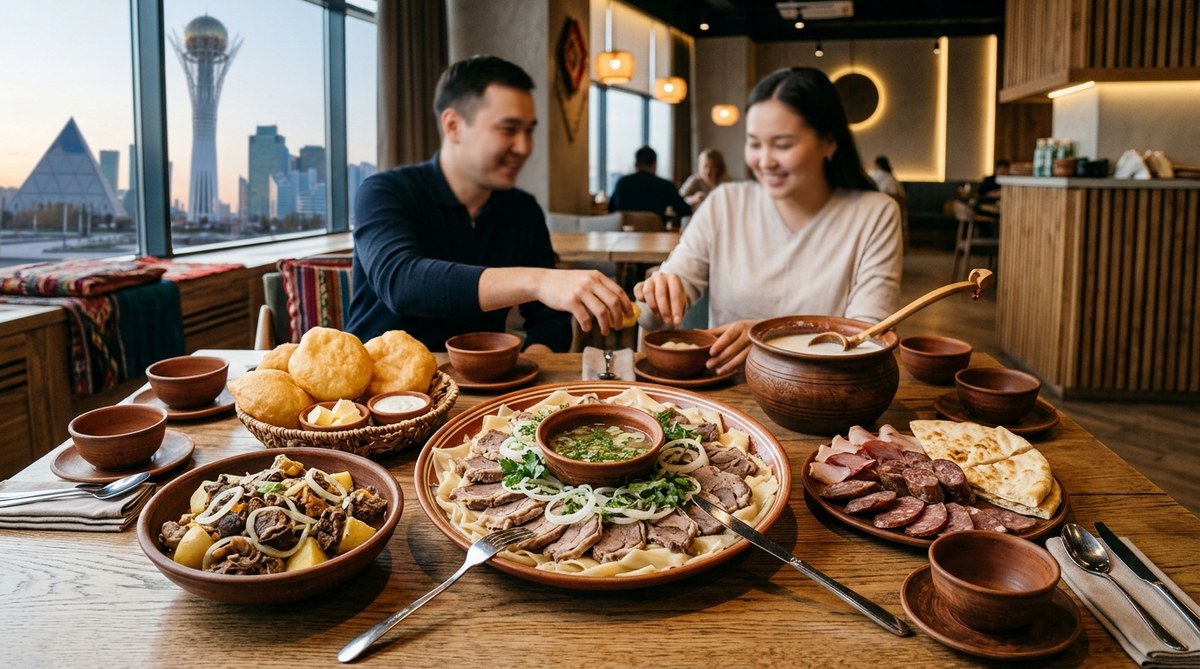
Want to taste what nomads have eaten for centuries on the vast Kazakh steppe? You do not need to camp under the stars or ride a horse across the plains. Astana, the futuristic capital of Kazakhstan, is the best place to sit down for a meal that feels like a journey back in time. The city blends glass towers with old traditions, and its restaurants have become champions of nomadic cuisine. We spent weeks eating our way through the city to find the five spots that deliver the most genuine taste of the steppe. Each one serves food that tells a story of migration, hospitality, and survival.
You can experience authentic nomadic food in Astana without leaving the city. The five eateries covered here serve traditional Kazakh dishes like beshbarmak, kazy (horse meat sausage), and kumis (fermented mare’s milk) in settings that range from yurt-themed dining rooms to modern interpretations of steppe cooking. Each spot respects centuries-old methods while making them accessible to travelers. Book a table at one for a meal that connects you directly to Kazakhstan’s heritage.
What Makes Kazakh Nomadic Food So Unique
Kazakh cuisine was born from necessity. For centuries, nomadic tribes moved across the steppe with their livestock. They needed food that traveled well, required little equipment, and used ingredients from their herds. That is why you see so much meat, dairy, and dough in traditional dishes.
The main ingredients are simple. Mutton and horse meat provide protein. Milk from horses, sheep, goats, and camels gets fermented into drinks like kumis and shubat. Wheat flour turns into flatbreads and noodles. Fat and salt preserve meats for long journeys. There are very few vegetables because the steppe does not grow them easily.
Every meal also follows unwritten rules of hospitality. When you sit at a Kazakh dastarkhan (the traditional low table), you are expected to eat with your hands, share plates, and accept multiple servings. Refusing food can be seen as rude. We cover these customs in detail in our guide on understanding Kazakh hospitality.
1. Auyl: A Yurt Feast in the Middle of the City
Address: 17/1 Kabanbay Batyr Avenue
Average cost per person: 4,500 to 7,000 KZT (about $9 to $14)
Auyl is the most immersive nomadic dining experience in Astana. The restaurant is designed like a traditional Kazakh village. You sit inside a large yurt with felt walls, woven rugs, and low tables. The servers wear traditional clothing, and live dombra music plays in the background.
The menu reads like a textbook of Kazakh cuisine. Start with kumis, a slightly sour and fizzy fermented mare’s milk. It is an acquired taste, but locals swear by its health benefits. Follow that with kuurdak, a hearty dish of fried mutton liver and onions. If you are feeling adventurous, try zhal, the fat from a horse’s neck that is smoked and sliced thin.
For the main course, order beshbarmak. The name means “five fingers” in Kazakh because you eat it with your hand. Boiled horse meat sits on a bed of flat noodles, all topped with onion sauce and broth. You mix everything together and eat it with your fingers. It is messy, communal, and deeply satisfying.
Auyl also serves kazy, a horse meat sausage that is smoked and boiled. It tastes like a rich, gamey salami. Pair it with a side of baursak, fried dough puffs that are light and slightly sweet.
We recommend going with a group. The portions are large, and sharing is part of the experience. If you want to learn more about the foods on the menu, read our list of 10 Kazakh dishes you must try before leaving Astana.
2. Kishkentai: Modern Twists on Steppe Classics
Address: 3/1 Turan Avenue
Average cost per person: 5,000 to 9,000 KZT (about $10 to $18)
Kishkentai takes nomadic food and gives it a modern makeover. The dining room is sleek and contemporary with wooden accents and soft lighting. The presentation is refined, but the ingredients stay true to tradition.
The chef here respects old methods but is not afraid to play. The beshbarmak comes deconstructed with a delicate broth foam. The kazy is served as a terrine with pickled vegetables. The kuurdak appears as a filling inside handmade dumplings.
One standout dish is the horse meat tartare with fermented onion and crispy baursak croutons. It is a bold starter that shows how versatile Kazakh ingredients can be. For the main course, try the lamb shank cooked low and slow until it falls off the bone. It comes with a side of creamy millet porridge, a nod to ancient grain-based dishes.
Kishkentai is perfect for travelers who want to try nomadic food without the heavy, rustic feel of a traditional yurt. The service is polished, and the staff speaks English well. They can explain each dish and its origins.
The restaurant also has an excellent wine list with selections from Georgia, Moldova, and Europe. If you want to know what a full meal costs in Astana in 2026, check our budget guide to eating out in Astana.
3. Darzhana: Home Cooking from a Kazakh Grandma
Address: 19/1 Koshkarbayev Street
Average cost per person: 3,000 to 5,000 KZT (about $6 to $10)
Darzhana feels like eating at your Kazakh grandmother’s house. The decor is simple with floral tablecloths, wooden chairs, and family photos on the walls. There is no pretension here. Just honest, home-style cooking.
The menu changes daily based on what is fresh. But you can always count on a few staples. The sorpa (mutton soup) is a clear broth with chunks of meat and herbs. It is warming and restorative, especially during Astana’s cold winters. The manty (steamed dumplings) are plump and juicy, filled with spiced lamb and onions.
The star at Darzhana is the kuyrdak, a simple but perfect dish of fried mutton liver, heart, and kidneys with potatoes and onions. It sounds intimidating, but the flavor is rich and savory. Locals order it with a side of rice or flatbread.
For dessert, try the zhent, a sweet mixture of millet, butter, and sugar shaped into bars. It is like a soft granola bar with a deep, nutty taste. Pair it with a cup of Kazakh tea served with milk and sugar.
Darzhana is also one of the few places in Astana where you can try shubat (fermented camel milk). It has a thinner consistency than kumis and a sharper, more sour flavor. It is an acquired taste, but you should try it at least once. Read more about where to find shubat in Astana.
Prices are very low by American standards. You can have a full three-course meal for under $10. That makes Darzhana a great spot for budget travelers.
4. Saksaul: Grill and Fire Cooking on the Steppe
Address: 5/2 Saryarka Avenue
Average cost per person: 4,000 to 8,000 KZT (about $8 to $16)
Saksaul celebrates the fire-cooking traditions of the steppe. The restaurant has an open grill where you can watch chefs cook meat over hot coals. The smell of smoke and sizzling fat hits you as soon as you walk in.
The menu focuses on shashlik (skewered and grilled meat). You can choose from lamb, beef, mutton, or horse meat. Each skewer is marinated in a simple mix of vinegar, salt, and spices. The result is tender, charred, and full of flavor.
Order a platter of mixed kebabs to share. It comes with grilled vegetables, fresh herbs, and flatbread. The horse meat shashlik is the most authentic choice. It is leaner than lamb and has a distinct, slightly sweet flavor.
Saksaul also serves kazan kebab, a dish where meat and vegetables are slow-cooked in a large cast-iron pot over an open fire. The meat becomes so tender it falls apart with a fork. The dish is served with a side of fluffy rice or boiled potatoes.
For a drink, try the kompot, a sweet homemade fruit beverage made from dried apples, apricots, and raisins. It is refreshing and non-alcoholic.
The atmosphere at Saksaul is lively and casual. Families come here for Sunday lunches. Groups of friends gather around the grill. It is a social place where food is the center of attention.
If you want to see more of what Astana offers on the left bank, take a walking tour of the city’s futuristic district after your meal.
5. Alasha: Traditional Dastarkhan with a View
Address: 12/1 Kabanbay Batyr Avenue
Average cost per person: 5,000 to 10,000 KZT (about $10 to $20)
Alasha sits on the upper floor of a modern building with large windows that overlook the city’s skyline. The contrast is striking. You sit on cushioned floor seats around a low dastarkhan table while gazing at the Bayterek Tower and the golden domes of the Nur Astana Mosque.
The restaurant takes its name from the Alash movement, a Kazakh political and cultural revival group from the early 20th century. The menu honors that heritage with dishes that are both traditional and refined.
Start with the cold appetizer platter. It includes slices of kazy, zhal, and zaya (smoked horse meat). Each piece has a different texture and flavor. The kazy is firm and smoky. The zhal is fatty and buttery. The zaya is drier and more intense.
For the main course, order the kuyrdak cooked in a clay pot. It arrives at your table still bubbling. The liver and heart are tender, and the potatoes soak up all the juices. It is comfort food at its finest.
Alasha also offers a tasting menu if you want to try multiple dishes. The set menu includes sorpa, beshbarmak, kazy, and a dessert of baursak with honey. It is a great way to get a full introduction to nomadic cuisine in one sitting.
The staff at Alasha can explain each dish and its cultural significance. They will also guide you through the proper way to eat with your hands. For more tips on how to behave at a dastarkhan, read our guide on how to navigate a Kazakh dastarkhan like a local.
What to Order: A Handy Reference Table
| Dish | Main Ingredient | How It Is Served | Best Paired With |
|---|---|---|---|
| Beshbarmak | Horse meat, flat noodles | Boiled, served on a platter with broth and onions | Kumis or hot tea |
| Kazy | Horse meat sausage | Smoked, sliced cold or boiled | Flatbread and fresh herbs |
| Kuurdak | Mutton liver, heart, kidneys | Fried with onions and potatoes | Rice or baursak |
| Manty | Lamb and onion | Steamed dumplings | Sour cream (kaymak) |
| Shashlik | Lamb, beef, or horse meat | Grilled on skewers | Grilled vegetables |
| Kumis | Fermented mare’s milk | Served chilled in a bowl | Any meat dish |
Tips for Eating Nomadic Food in Astana
Eating like a nomad is not just about the food. It is about the experience. Here are a few practical tips to make the most of it.
- Use your hands. Beshbarmak is meant to be eaten with your fingers. Roll the meat and noodles into a ball and pop it in your mouth. It tastes better that way.
- Do not skip the dairy. Fermented milk drinks like kumis and shubat are an essential part of the meal. They help digest the heavy meat and fat.
- Pace yourself. Kazakh meals are served in multiple courses. Start with soup, move to cold meats, then hot dishes, and finish with tea and sweets. It is a marathon, not a sprint.
- Share everything. Nomadic hospitality is about abundance. Dishes are meant to be passed around. Do not be shy about reaching across the table.
- Accept refills. If your host or server offers more food, accept it. Refusing is seen as rejecting their hospitality. Take a small portion if you are full.
“In Kazakh culture, the guest is a gift from God. When you sit at our table, you become family. Eat until your heart is full, and do not worry about the mess. That is what napkins are for.” — A local chef at Alasha
For those with dietary restrictions, it is worth noting that traditional Kazakh food is very meat-heavy. Vegetarians will find limited options at most of these restaurants. Some places offer salads, cheese, and bread-based dishes, but the focus is firmly on animal products. Check our vegetarian survival guide for Astana for alternative suggestions.
How to Build Your Own Nomadic Food Crawl
You can combine visits to these eateries into a single day or spread them across your trip. Here is a practical plan:
- Start at Darzhana for lunch. The prices are low, and the food is light enough for a midday meal. Try the sorpa and manty.
- Visit Saksaul for an early dinner. Watch the grill action and order a mix of shashlik skewers. Save room for the next stop.
- End at Auyl for a full feast. Go with a group if possible. Order beshbarmak, kazy, kumis, and baursak. Enjoy the live music.
- If you want a refined experience, swap Saksaul for Kishkentai on another night.
- Book Alasha for your final night in Astana. The view and the tasting menu make for a memorable send-off.
After your meal, take a stroll through the city to see the illuminated landmarks. Our guide to Astana after dark can help you plan the perfect evening walk.
Why These Eateries Matter for Your Trip
Kazakhstan is still an underrated travel destination. Fewer tourists visit Astana than Paris or Tokyo. But that is exactly why you should come now. The food scene is authentic, affordable, and deeply connected to the land.
These five eateries represent the best of Astana nomadic food. They preserve ancient traditions while making them accessible to modern travelers. You get the full experience without needing to ride a horse across the steppe.
So grab a seat at a low table. Roll up your sleeves. Dig into a plate of beshbarmak with your fingers. Wash it down with a bowl of kumis. Listen to the dombra. That is the taste of Kazakhstan’s nomadic soul. And it is waiting for you right here in Astana.