
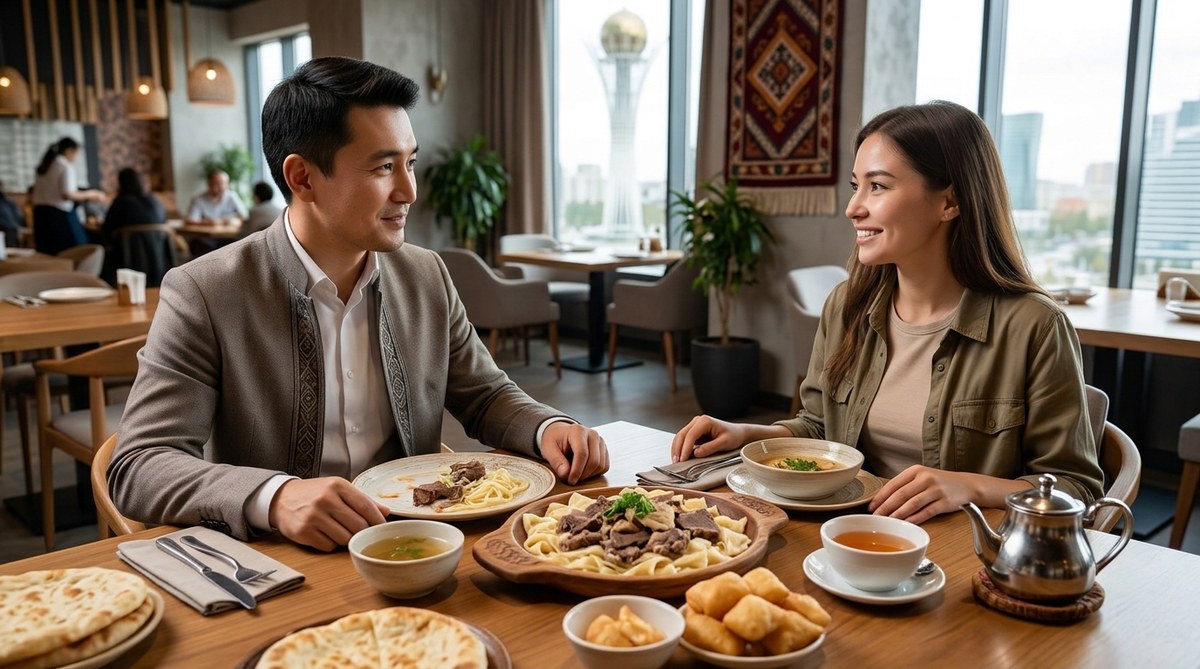
You are invited to a Kazakh home for a feast. The table is piled high with beshbarmak, steaming mutton, fresh bread, and bowls of fragrant tea. Your host, a warm and generous elder, gestures for you to sit. You smile, sit down, and reach for a piece of bread. In that single moment, you might unknowingly break one of the most important Kazakh dining taboos. Kazakh hospitality is legendary, but it comes with a set of unwritten rules that can trip up even the most well-meaning traveler. The good news? These rules are easy to learn. This guide walks you through the ten most common Kazakh dining etiquette taboos so you can enjoy your meal with confidence and respect.
Kazakh dining etiquette centers on respect for elders, communal sharing, and gratitude for the food. Avoid finishing your plate completely, never refuse tea on the first offer, and always accept food with your right hand. These ten taboos cover the most common mistakes tourists make, helping you navigate any dastarkhan with confidence and honor local traditions.
The Spirit Behind Kazakh Dining Customs
Kazakh dining is not just about eating. It is a ritual of connection. The table, or dastarkhan, represents abundance and community. Nomadic traditions taught Kazakhs to share everything, especially food. A guest is seen as a blessing from God. Your host will offer you the best portions, the freshest bread, and endless cups of tea. Turning down this generosity can feel like rejecting the person, not just the food.
Understanding these taboos is not about being perfect. It is about showing that you care. Kazakhs are incredibly forgiving of foreigners who make mistakes. But knowing the rules before you sit down will earn you genuine respect and make your experience far richer.
Taboo 1: Refusing Food or Drink on the First Offer
This is the number one mistake tourists make. Your host offers you tea. You are not thirsty, so you say “no thank you.” In Kazakhstan, this can be seen as a rejection of their hospitality.
The host will ask you to eat or drink at least three times. The first offer is a formality. The second is sincere. The third is an insistence. The polite response is to accept the first offer, even if you only take a small sip or a tiny bite. You can leave food on your plate, but do not refuse the offer outright.
Expert advice: “When a Kazakh host offers you tea, always say yes the first time. Even a symbolic sip shows you respect their home. You can leave the cup full after one sip if you are not thirsty.” — Aigerim, a Kazakh hospitality guide in Astana.
Taboo 2: Finishing Every Last Bite on Your Plate
This one surprises many Americans. In the US, a clean plate signals that you enjoyed the meal. In Kazakhstan, an empty plate can signal that your host did not provide enough food. It implies you are still hungry.
Leave a small amount of food on your plate at the end of the meal. This tells your host that they offered you plenty and you are satisfied. The exception is if you are at a very close friend’s house or a casual restaurant. But in a traditional home or at a formal dastarkhan, always leave a little behind.
Taboo 3: Pouring Your Own Drink
At a Kazakh table, you never pour your own tea or drink. That is the job of the youngest person at the table, usually a woman. She will watch your cup and refill it before it is empty.
If you pour your own drink, you are taking away a role of service and respect. It can be seen as rude or impatient. Instead, wait for the designated pourer. If no one is pouring, you can politely ask the youngest person at the table if they would like tea. Do not pour for yourself.
Taboo 4: Touching Food With Your Left Hand
This rule is rooted in tradition. The left hand is considered unclean in many Central Asian and Islamic cultures. You should always accept food, pass dishes, and eat with your right hand.
This applies to bread, meat, and even utensils. If you are offered a piece of bread, take it with your right hand. If you need to pass a bowl, use your right hand. The left hand can rest in your lap. If you are left-handed, you can still use your left hand to eat, but try to use your right hand for accepting and passing items.
Taboo 5: Refusing the Head of the Sheep
At a very special meal, your host may present you with the head of a sheep. This is the highest honor a guest can receive. It is a sign of deep respect.
Do not refuse it. You do not have to eat the entire head. The tradition is to accept it, cut off a small piece of meat (usually from the cheek or ear), and then pass it back to the host or to the eldest person at the table. This shows humility and respect. If you are vegetarian or cannot eat it, you can still accept it, touch it respectfully, and pass it on with a gesture of thanks.
Taboo 6: Placing Bread Upside Down
Bread is sacred in Kazakh culture. It represents life and prosperity. Never place a piece of bread or a loaf upside down on the table. This is considered a sign of disrespect and is believed to bring bad luck.
Always place bread right side up. If you are served a large round loaf of lepeshka, do not flip it over. If you are cutting bread, keep the pieces with the top facing up. This small gesture shows you understand the value of food.
Taboo 7: Starting to Eat Before the Elders
Age and seniority command deep respect in Kazakhstan. At a meal, the eldest person at the table must begin eating before anyone else. They will usually say a blessing or a few words before starting.
Do not pick up your fork or reach for bread until the eldest person has taken the first bite. Watch their lead. If you are the youngest person at the table, you may be asked to serve the tea or help with serving. This is your role. Accept it gracefully.
Taboo 8: Blowing on Your Food to Cool It Down
In Kazakhstan, blowing on food is considered impolite. It is seen as a sign of impatience or a lack of self-control. Your host has prepared the food with care, and blowing on it can seem like you are criticizing the temperature.
Instead, wait for the food to cool naturally. Take small sips of tea or broth. If the food is too hot, wait a few minutes. The meal is meant to be savored slowly. Rushing through a meal is also a faux pas.
Taboo 9: Standing Up or Leaving the Table Abruptly
A Kazakh meal is an event. It can last for hours. Do not stand up and leave the table without a good reason. If you need to use the restroom or step away, excuse yourself quietly. Do not just get up and walk away.
If you are the guest of honor, your host may expect you to stay until the very end of the meal. Leaving early can be seen as a sign that you are bored or that you did not enjoy yourself. Plan for a long, leisurely evening.
Taboo 10: Refusing a Second or Third Serving
Your host will likely offer you more food multiple times. This is not because they think you are still hungry. It is a way of showing care and generosity. Refusing too firmly can be seen as rejecting their hospitality.
The polite approach is to accept the second serving, even if you only take a small amount. You can say “a little more, please” (biraz zhane) and take a symbolic portion. This satisfies the host’s desire to feed you without overeating. If you are truly full, you can place your hand over your cup or plate and say “thank you, I am full” (rakhmet, totym). Do this gently.
A Handy Reference Table for Kazakh Dining Taboos
| Action | What to Do Instead | Why It Matters |
|---|---|---|
| Refusing tea on first offer | Accept, even a symbolic sip | Shows respect for hospitality |
| Finishing your plate completely | Leave a small amount of food | Signals the host provided enough |
| Pouring your own drink | Let the youngest person pour | Honors the role of service |
| Using your left hand | Use your right hand for food | Follows cultural cleanliness norms |
| Refusing the sheep’s head | Accept, take a symbolic bite | Shows humility and gratitude |
| Placing bread upside down | Keep bread right side up | Bread is sacred |
| Starting before elders | Wait for the eldest to begin | Respects age and seniority |
| Blowing on hot food | Let food cool naturally | Shows patience |
| Leaving the table abruptly | Excuse yourself politely | The meal is a long event |
| Refusing a second serving | Accept a small portion | Demonstrates appreciation |
What to Do If You Make a Mistake
Everyone makes mistakes. Kazakhs are known for their warmth and forgiveness. If you accidentally use your left hand or pour your own tea, do not panic. A simple apology and a smile go a long way.
Here is a simple three-step recovery process:
- Apologize sincerely. Say “keshiriniz” (excuse me) or “rakhmet” (thank you) with a smile.
- Correct your action. If you used your left hand, switch to your right. If you poured your own tea, offer to pour for someone else.
- Show gratitude. Thank your host for the meal and for their hospitality. A warm “thank you” fixes almost any small mistake.
How These Taboos Connect to Larger Kazakh Values
These ten taboos are not random rules. They reflect the core values of Kazakh culture: respect for elders, community over self, and deep gratitude for what you have. When you leave a little food on your plate, you are honoring the host’s abundance. When you wait for the eldest to eat, you are honoring their wisdom. When you accept tea on the first offer, you are honoring the relationship.
Understanding these values transforms your trip. You stop being a tourist who follows rules and start being a guest who understands the culture. For more context on how these dining customs fit into the bigger picture of Kazakh life, read our guide on understanding Kazakh hospitality. It covers the full range of social expectations you will encounter.
Putting It All Into Practice at Your Next Meal
You sit down at a dastarkhan in Astana. The table is full. The eldest person begins the meal. You accept a cup of tea with your right hand. You take a small bite of bread, keeping it right side up. You enjoy the beshbarmak but leave a little on your plate. When the host offers more, you accept a small portion. You stay until the meal winds down. You thank everyone sincerely.
You have just navigated Kazakh dining etiquette like a respectful guest. These small actions will earn you more goodwill than any guidebook tip. They show that you came not just to see the sights, but to understand the people. That is the real reward of traveling to Kazakhstan. Enjoy every bite, every cup of tea, and every moment at the table.