
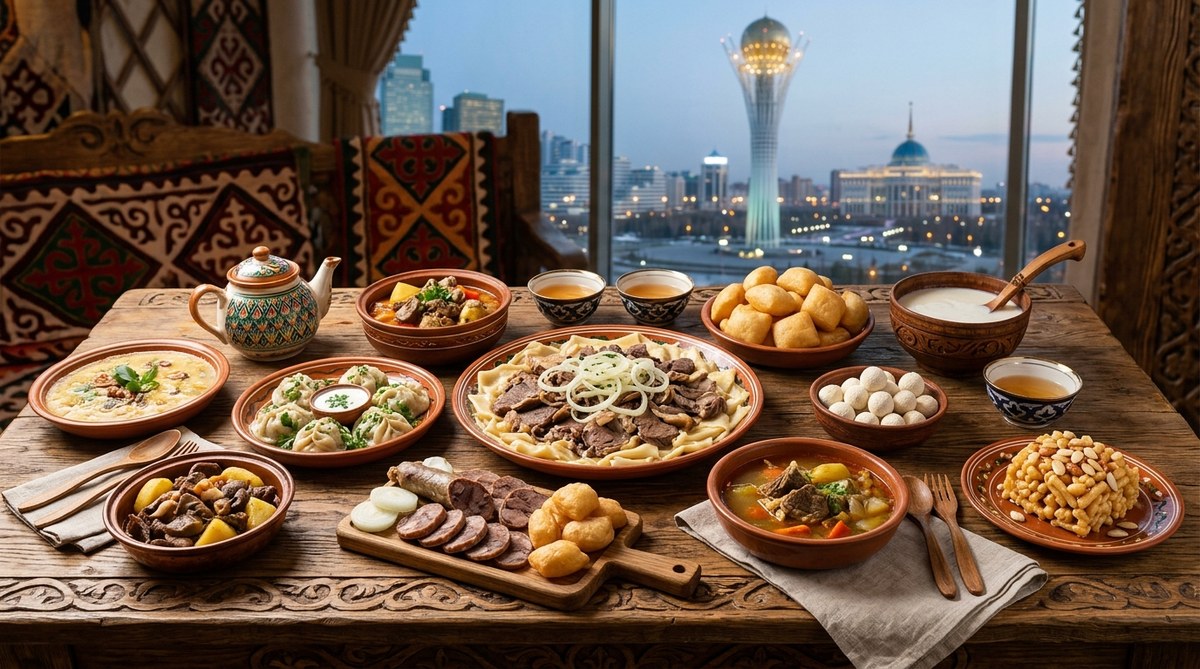
Stepping into a Kazakh restaurant for the first time feels like entering a world where food tells stories. The menu reads like a history lesson written in nomadic tradition, where every dish carries centuries of steppe culture. For travelers landing in Astana, understanding Kazakhstan traditional dishes isn’t just about filling your stomach. It’s about connecting with a culture that has survived harsh winters, vast distances, and the constant movement of nomadic life.
Kazakhstan traditional dishes reflect [nomadic heritage](https://en.wikipedia.org/wiki/Nomad) through meat-heavy meals, fermented dairy products, and hearty breads. Beshbarmak stands as the national dish, while specialties like horse meat sausage and camel milk showcase unique steppe ingredients. Most restaurants in Astana serve authentic versions, though knowing proper eating etiquette enhances the experience. First-time visitors should start with familiar options like plov before trying fermented drinks.
What Makes Kazakh Cuisine Different
Kazakh food emerged from necessity. Nomads needed meals that traveled well, lasted long, and provided energy for days in the saddle. Meat became central because herds moved with families. Dairy products fermented because refrigeration didn’t exist on the steppe. Bread baked in portable ovens because grain was precious.
This practical foundation created a cuisine that surprises modern travelers. You won’t find many vegetables. Fresh produce couldn’t survive nomadic journeys. Instead, you’ll encounter flavors built on lamb, horse, beef, and camel. Dairy appears in forms most Westerners have never seen.
The cooking methods tell their own story. Boiling preserves nutrients when fuel is scarce. Smoking and drying extend shelf life. Fermenting transforms milk into something that lasts months. Every technique served the nomadic lifestyle.
The National Dish You Cannot Skip
Beshbarmak translates to “five fingers” because traditionally, you eat it with your hands. This dish defines Kazakh hospitality. Families serve it at weddings, holidays, and whenever honored guests arrive.
The preparation starts with boiling large cuts of horse meat or lamb for hours. The broth becomes rich and flavorful. Cooks then roll out thin sheets of dough, cut them into squares, and boil them in the same broth. The pasta absorbs the meat flavors.
Serving beshbarmak follows strict tradition. The host places meat on a large platter, arranges the pasta around it, and pours broth over everything. Different cuts go to different guests based on age and status. The eldest receive the choicest pieces.
When you sit down to beshbarmak, expect a communal experience. Everyone eats from the same platter. The pasta tastes nothing like Italian varieties. It’s thicker, chewier, and soaked with meat essence. The meat falls apart at the touch. The broth warms you from the inside.
First-timers often struggle with the richness. The dish is heavy, filling, and unapologetically meat-focused. Pace yourself. Locals eat slowly, savoring each bite between conversation. Where to find the best beshbarmak in Astana covers specific restaurants that nail the traditional preparation.
Horse Meat Specialties That Define the Steppe
Horse meat shocks many Western visitors. But in Kazakhstan, it’s a delicacy that appears in multiple forms. The taste sits somewhere between beef and venison, slightly sweet with a tender texture.
Kazy represents the most prized preparation. Butchers stuff horse rib meat into intestine casings, then smoke and dry the sausage. The result tastes rich, fatty, and intensely flavorful. Locals serve it sliced thin as an appetizer or add it to beshbarmak for special occasions.
Zhaya uses meat from the horse’s hip. Cooks salt and dry it, creating a product similar to prosciutto. Thin slices melt on your tongue, releasing complex flavors developed during the curing process.
Shuzhuk takes a different approach. This sausage combines minced horse meat with garlic and spices, then gets smoked until firm. It’s less intense than kazy but still distinctly horsey.
A Kazakh chef once told me: “We don’t waste any part of the horse. Every cut has its purpose, its dish, its moment. Learning to appreciate each one takes time, but it teaches you about respect for the animal and our heritage.”
Dairy Products That Challenge Western Palates
Fermented milk products dominate Kazakh tables. These aren’t yogurts or cheeses you recognize. They’re living foods with active cultures, strong flavors, and acquired tastes.
Kurt might be the most challenging. Producers drain yogurt until almost no moisture remains, roll it into balls, and dry them hard. The result looks like white stones. Pop one in your mouth and it dissolves slowly, releasing intense salty-sour flavors. Kazakhs snack on kurt during travel because it never spoils.
Kumis comes from fermented mare’s milk. The liquid froths slightly and tastes both sour and slightly alcoholic. Nomads believed it cured everything from tuberculosis to hangovers. Modern Kazakhs drink it for digestive health. The flavor profile includes notes of buttermilk, beer, and something indefinably horsey.
Shubat uses camel milk instead. It’s thicker than kumis, creamier, and less alcoholic. The taste remains challenging for newcomers but locals swear by its nutritional benefits.
Ayran offers the gentlest introduction to Kazakh dairy. This drinkable yogurt mixed with water and salt refreshes on hot days. It’s tangy but familiar enough for most Western palates.
| Fermented Dairy | Base Ingredient | Texture | Difficulty Level |
|---|---|---|---|
| Kurt | Cow/sheep yogurt | Hard, dissolving | Very challenging |
| Kumis | Mare’s milk | Liquid, slightly fizzy | Challenging |
| Shubat | Camel’s milk | Thick, creamy | Moderate |
| Ayran | Cow’s milk yogurt | Liquid, smooth | Easy |
Breads and Pastries Worth Seeking Out
Bread holds sacred status in Kazakh culture. You never place it upside down. You never throw it away. You never step over it. These rules reflect deep respect for sustenance.
Tandyr nan bakes in clay ovens buried in the ground. The round flatbreads emerge with crispy edges and soft centers. Bakers stamp patterns into the dough before baking, creating beautiful designs. The bread tastes slightly smoky and pairs perfectly with tea.
Baursak appears at every celebration. These fried dough balls puff up golden and crispy outside, soft and airy inside. Kazakhs serve them with tea, honey, or jam. Making baursak requires skill. The dough must be just right or they turn greasy or dense.
Shelpek commemorates the dead. Families prepare these thin fried breads on memorial days. Despite the somber association, they taste wonderful. The dough gets rolled paper-thin, fried until spotted brown, and served warm.
Samsa borrows from Uzbek cuisine but appears everywhere in Kazakhstan. These baked pastries hide fillings of spiced meat, pumpkin, or potato. The flaky exterior shatters at first bite, revealing steaming contents.
Rice Dishes With Central Asian Flair
Plov arrived with Silk Road traders and never left. The Kazakh version differs from Uzbek or Persian preparations but shares the same soul. Rice, meat, carrots, and onions combine in a single pot, each ingredient flavoring the others.
Kazakh cooks use more meat than their neighbors. Lamb pieces nearly equal the rice in volume. The carrots get julienned thick, adding sweetness and color. Cumin, coriander, and barberry provide the spice profile.
Proper plov requires patience. The meat browns first, developing deep flavors. Carrots and onions soften in the rendered fat. Rice goes in last, steaming in the accumulated juices. The bottom layer forms a crispy crust called tahdig that everyone fights over.
Restaurants in Astana serve plov daily, but quality varies. The best versions have distinct rice grains, tender meat, and a perfect balance of fat and spice. Poor versions turn mushy or greasy.
Soups That Warm the Kazakh Soul
Shorpa appears in countless variations across Kazakhstan. This clear soup starts with meat bones simmered for hours. Cooks add vegetables, noodles, or dumplings depending on the season and region.
Lagman shurpa combines soup with hand-pulled noodles. The noodles stretch impossibly long, requiring skill to make properly. They swim in rich broth with vegetables and meat. Eating lagman shurpa without splashing takes practice.
Sorpa differs from shorpa only in spelling and regional preference. Both names describe the same category of meat-based soups. The variety keeps meals interesting even when ingredients stay similar.
Kespe involves homemade noodles cut into squares rather than pulled into strands. The soup tastes lighter than lagman but equally satisfying. Grandmothers make the best kespe, rolling dough thin and cutting it with practiced precision.
Street Food and Fast Casual Options
Not every meal requires ceremony. Kazakh street food offers filling options for travelers on the move.
Manti are steamed dumplings the size of tennis balls. Each one contains a generous portion of spiced meat and onion. Bite carefully because hot juice squirts out. Locals dip them in sour cream or vinegar.
Samsa from street vendors costs less than restaurant versions but often tastes better. The pastries come straight from the oven, crackling hot. Vendors sell them from carts near markets and metro stations.
Kuurdak started as a way to preserve meat. Cooks fry organ meats with potatoes and onions until everything browns and crisps. The dish tastes rich and slightly gamey. Not everyone loves it, but those who do order it repeatedly.
How to Order Like a Local
Walking into a traditional Kazakh restaurant can feel intimidating. Menus mix Cyrillic, English translations, and sometimes pictures. Knowing a few strategies helps.
- Start with tea. Kazakhs drink tea before, during, and after meals. Accepting tea shows respect and gives you time to observe.
- Order bread first. Tandyr nan or baursak arrives quickly and helps you gauge portion sizes.
- Choose one main dish per two people. Kazakh portions could feed small armies. Sharing prevents waste and lets you try more items.
- Add a salad for balance. Fresh vegetables provide relief from heavy meat dishes.
- Save fermented dairy for last. Your palate needs preparation before tackling kumis or shubat.
Common Mistakes Tourists Make
Understanding what not to do saves embarrassment and improves your dining experience.
- Refusing food insults your host. Take at least a small portion of everything offered
- Eating bread before the main course arrives shows impatience
- Leaving food on your plate suggests the meal wasn’t good
- Drinking alcohol without toasting first breaks tradition
- Photographing food extensively before eating annoys locals who want to start
- Complaining about meat-heavy menus misses the point of Kazakh cuisine
Where Traditional Meets Modern
Astana’s restaurant scene blends old and new. Some establishments serve grandmother’s recipes in contemporary settings. Others reimagine traditional dishes with modern techniques.
The contrast appears most clearly in presentation. Traditional service means communal platters and shared utensils. Modern restaurants plate individually, adding garnishes that would puzzle steppe nomads. Both approaches have merit.
Young Kazakh chefs study abroad, then return home to experiment. They might sous vide horse meat or turn kurt into a foam. Purists complain, but innovation keeps cuisine alive. After understanding Kazakh hospitality, you’ll appreciate how even modern restaurants maintain core values of generosity and welcome.
Seasonal Variations Worth Noting
Kazakhstan traditional dishes shift with the calendar, though less dramatically than in agricultural societies.
Spring brings fresh dairy. Mares give birth and start producing milk for kumis. The first batches taste lighter and less fermented than summer versions.
Summer allows for more vegetables. Markets fill with tomatoes, cucumbers, and herbs that briefly appear in salads and garnishes.
Fall means slaughter season. Families prepare for winter by making kazy and zhaya. Fresh sausages taste different from aged versions, with brighter flavors and softer textures.
Winter relies on preserved foods. Kurt, dried meat, and stored grains dominate meals. Hot soups appear more frequently.
Dietary Restrictions and Kazakh Food
Vegetarians face challenges in Kazakhstan. The cuisine evolved around meat and dairy. Most traditional dishes contain one or both.
That said, options exist. Tandyr nan, baursak, and shelpek contain no animal products. Plov can be made with chickpeas instead of meat, though finding it requires asking. Salads provide fresh vegetables.
Vegans struggle more. Butter appears in most breads. Dairy accompanies nearly every meal. Restaurants in Astana increasingly offer plant-based options, but traditional establishments rarely accommodate such requests.
Gluten-free travelers can eat meat dishes without the noodles or bread. Grilled meats, salads, and some soups work. Communication becomes essential because wheat flour appears in unexpected places.
Pairing Food With Kazakh Beverages
Tea dominates Kazakh drinking culture. Black tea arrives in small bowls, never filled to the brim. Half-full cups signal hospitality because the host must refill them frequently, showing attentiveness.
Kumis pairs traditionally with heavy meat dishes. The slight acidity cuts through fat. The alcohol content remains low enough for daytime drinking.
Shubat works similarly but tastes richer. Locals drink it for breakfast or as an afternoon pick-me-up.
Vodka appears at celebrations. Toasts follow strict protocols. The tamada (toastmaster) controls the pace and content. Refusing to drink with the group causes offense, though explaining medical or religious reasons earns respect.
Budget Considerations for Food Travelers
Eating in Kazakhstan costs less than most Western countries but more than Southeast Asia. Planning helps stretch your budget.
- Street food costs $2-4 per item
- Casual restaurants charge $8-15 for main dishes
- Traditional establishments run $15-25 per person with drinks
- High-end modern Kazakh cuisine reaches $40-60 per person
Markets sell ingredients cheaply if you have kitchen access. Fresh bread costs pennies. Kurt and dried meats travel well as snacks. Tea costs almost nothing when you buy it by the box.
The real cost of traveling Kazakhstan breaks down daily expenses including meals at different budget levels.
Taking the Taste Home
Several Kazakhstan traditional dishes travel well. Smart packing lets you recreate flavors after returning home.
Kurt lasts indefinitely and weighs almost nothing. Airport security might question the white balls, but they’re legal to transport. Soak them in water to make a tangy spread.
Dried meats like kazy require vacuum sealing and might face customs restrictions depending on your destination country. Check regulations before attempting to bring meat products across borders.
Spice blends from Kazakh markets let you approximate plov and other dishes. Cumin, coriander, and barberry form the foundation.
Tea varieties from Kazakhstan taste different from what you find elsewhere. The strong black teas favored locally stand up to multiple brewings.
Food as Cultural Gateway
Every bite of Kazakhstan traditional dishes connects you to centuries of history. The horse meat recalls nomadic herds crossing endless grasslands. The fermented dairy speaks to preservation techniques developed before refrigeration. The communal serving style reflects values of sharing and hospitality.
Approaching Kazakh food with openness transforms a meal into an education. You might not love every dish. Kurt might remain too salty. Kumis might taste too strange. Horse meat might challenge your comfort zone. But trying each one shows respect for the culture and creates memories that outlast any photograph.
Start with familiar options like plov or manti. Build confidence before tackling fermented dairy. Ask questions. Watch how locals eat. Accept invitations to home meals if offered. The best Kazakhstan traditional dishes often come from family kitchens, not restaurants.
Bringing These Flavors Into Your Journey
Food tells Kazakhstan’s story better than any guidebook. Each dish carries knowledge passed through generations, adapted to harsh climates, and refined through centuries. Tasting your way through the cuisine gives context to everything else you experience in the country.
When you sit down to beshbarmak, you’re participating in the same ritual that welcomed travelers for hundreds of years. When you try kurt, you’re eating what sustained nomads during long migrations. When you share tea, you’re joining a tradition that values conversation and connection above efficiency.
Let your taste buds guide part of your Kazakhstan adventure. Say yes to unfamiliar dishes. Ask about ingredients and preparation. Notice how food brings people together, whether at budget-friendly spots or upscale restaurants. The flavors you discover will become some of your strongest memories of this remarkable country.