
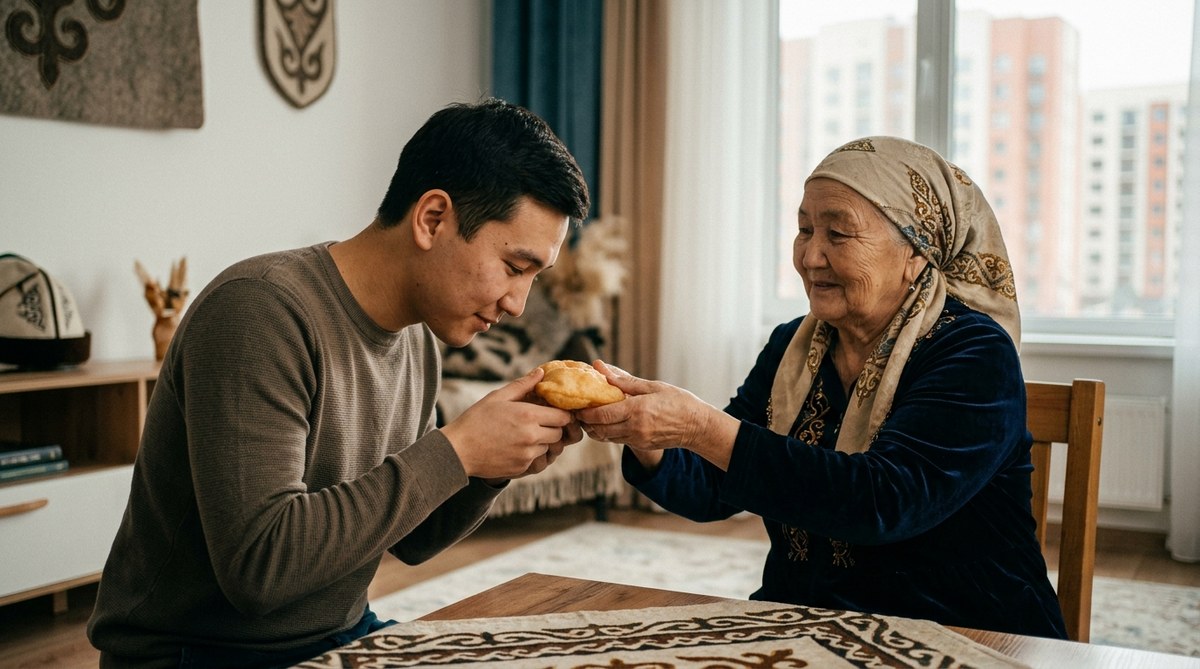
Walking into a Kazakh home, you’ll notice something immediately. The eldest person enters first. They sit at the head of the table. Everyone waits for them to begin eating. This isn’t just politeness. It’s a cultural foundation that has shaped every aspect of Kazakh society for centuries.
Respect for elders in Kazakh culture influences greetings, seating, decision making, and daily interactions. Understanding these customs helps travelers avoid social missteps and shows genuine appreciation for Kazakhstan’s traditions. The practice stems from nomadic heritage where elder wisdom ensured survival. Today, it remains central to family life, business meetings, and public gatherings across the country.
Where This Deep Reverence Comes From
Kazakh culture respect for elders didn’t appear randomly. It grew from practical necessity on the steppes.
Nomadic life was harsh. Survival depended on knowing where to find water, when storms would arrive, and how to navigate vast grasslands. Elders held this knowledge. They had weathered droughts, guided migrations, and resolved conflicts between clans.
Their experience was literally life or death information.
This created a society where age equaled authority. The oldest members made decisions for the family, the clan, and sometimes entire tribes. Their word was final because their judgment had been tested by decades of survival.
Even as Kazakhstan modernized, these values persisted. Families still seek elder approval for major decisions. Communities still defer to older voices during disputes.
The proverb “Үлкеннің сөзі өлкеден озбайды” captures this perfectly. It means “the words of an elder do not stray from the land.” Their advice is grounded, practical, and rooted in reality.
How Respect Shows Up in Daily Greetings
Greetings reveal hierarchy immediately.
Younger people always initiate. They approach the elder, not the other way around. They use formal address forms, even with relatives.
The handshake follows specific rules. The younger person extends their hand first. They may place their left hand over their heart as a sign of sincerity. Some older traditions involve the younger person supporting the elder’s elbow during the handshake.
Verbal greetings include age appropriate honorifics:
- Ata (grandfather) or Apa (grandmother) for elderly people
- Ağa (older brother) or Apa (older sister) for those moderately older
- Täte (auntie) or Ağa (uncle) for middle aged adults
You’ll hear these terms used for non relatives constantly. A 25 year old might call a 40 year old shopkeeper “ağa” even though they just met.
This extends to professional settings. Business meetings in Astana follow the same pattern. Junior employees greet senior staff first. They wait to sit until elders have chosen their seats.
If you’re visiting Kazakhstan for work, watch these dynamics carefully. Ignoring them can damage relationships before negotiations even begin.
The Seating Hierarchy Nobody Talks About
Where you sit matters tremendously.
The tör is the place of honor. It’s typically the spot farthest from the door, often facing the entrance. This position goes to the eldest or most respected guest.
Refusing the tör when offered is insulting. Accept it graciously, even if you feel uncomfortable with the attention.
At a traditional dastarkhan (spread meal), positions radiate outward by age and status:
- Eldest family member or honored guest at the tör
- Other elders or important guests to the right and left
- Middle aged adults along the sides
- Younger adults and teenagers toward the door
- Children often eat separately or at the very end
This arrangement isn’t arbitrary. It reflects the nomadic yurt layout where the tör was warmest and safest, protected from wind and entrance traffic.
Modern Kazakh homes and restaurants maintain this tradition. Even at casual gatherings, you’ll see people naturally organize themselves by age.
During my visit to a family home near understanding Kazakh hospitality, I watched a grandmother quietly redirect a young cousin who had sat in the wrong spot. No one said anything directly, but everyone understood the correction.
Decision Making Flows Through Generations
Major life decisions require elder consultation.
Marriage proposals go through parents and grandparents first. Career changes get discussed with older family members. Even purchasing property often involves seeking an elder’s blessing.
This isn’t about control. It’s about collective wisdom.
Elders have seen economic downturns, political changes, and family crises. Their perspective helps younger people avoid repeatable mistakes.
The process typically follows this pattern:
- Younger person identifies a decision or opportunity
- They informally discuss it with parents or older siblings
- A formal family gathering occurs with grandparents present
- Elders ask questions and share relevant experiences
- The younger person receives guidance (not commands)
- Final decision acknowledges elder input, even if modified
Westerners sometimes misinterpret this as lack of independence. But most Kazakhs view it as accessing valuable resources. Why make decisions in isolation when experienced advisors are available?
Business culture mirrors this. Companies often have advisory boards of retired executives. Their role is consultative, but their opinions carry significant weight.
Practical Etiquette for Visitors
Understanding the theory helps. Applying it correctly matters more.
Here’s how to navigate Kazakh social situations respectfully:
When entering a room:
– Greet the eldest person first
– Use formal pronouns and titles
– Wait for them to extend their hand
– Make eye contact but don’t stare
– Allow them to choose their seat before you sit
During meals:
– Never start eating before elders
– Offer them the best portions
– Refill their tea before your own
– Accept food they offer you
– Thank them specifically when leaving
In conversation:
– Listen more than you speak
– Don’t interrupt older speakers
– Ask for their opinions on topics
– Avoid contradicting them publicly
– Use their advice even if you modify it
Gift giving:
– Present gifts to elders first
– Use both hands when offering
– Choose quality over novelty
– Traditional items (scarves, tea) work well
– Never give alcohol unless you know it’s welcome
Common Mistakes Foreigners Make
Even well meaning visitors stumble. Here are the most frequent errors and how to avoid them.
| Mistake | Why It’s Wrong | Better Approach |
|---|---|---|
| Calling elders by first name | Shows disrespect and unfamiliarity with hierarchy | Use titles like ata, apa, or ask what’s appropriate |
| Sitting before elders choose seats | Violates spatial hierarchy | Stand until elders sit, then follow their lead |
| Refusing offered food from elders | Rejects their generosity and care | Accept at least a small portion with thanks |
| Speaking over older people | Dismisses their authority and wisdom | Wait for pauses, acknowledge their points first |
| Skipping elder greetings in groups | Ignores the most important people present | Always greet oldest person first, even in crowds |
| Offering business cards casually | Treats formal exchange like casual networking | Present with both hands, slight bow, to eldest first |
I’ve seen business deals stall because a foreign executive greeted the youngest person in the room first. The elder Kazakh partner felt dismissed, even though no insult was intended.
Small adjustments prevent these issues. Pay attention to who others defer to. Follow their lead.
How This Tradition Adapts in Modern Kazakhstan
Astana’s gleaming towers might suggest traditional values are fading. They’re not.
Young Kazakhs still practice elder respect, but the expression evolves. A grandson might video call his grandmother for advice instead of visiting in person. A businesswoman might consult her father by text before a major decision.
The medium changes. The principle remains.
Urban families face new challenges. Elders might live in different cities. Work schedules make regular gatherings harder. Some younger people study abroad and absorb different cultural values.
But even cosmopolitan Kazakhs maintain core practices:
- Celebrating elder birthdays with extended family
- Seeking parental approval for major purchases
- Including grandparents in childcare decisions
- Returning to ancestral villages for holidays like Nauryz
- Consulting elders during family crises
The government reinforces these values. October 1st is Day of the Elderly, a national celebration. Public service announcements remind citizens to call their grandparents. Schools teach traditional respect practices.
This isn’t nostalgia. It’s active cultural preservation.
What This Means for Business Travelers
Professional interactions in Kazakhstan require cultural fluency.
If you’re meeting with Kazakh partners, identify the senior decision maker early. They might not speak first, but everyone will defer to their judgment eventually.
Structure presentations to acknowledge experience. Reference how your proposal aligns with proven methods. Show respect for established practices before suggesting innovations.
Negotiations move slower than Western expectations. This isn’t inefficiency. It’s consultation. Your Kazakh counterparts are likely checking with senior advisors, retired founders, or family elders who understand the industry.
Patience signals respect. Rushing signals arrogance.
A Kazakh business consultant once told me: “We don’t just buy your product. We invite you into relationship. Relationships require trust. Trust requires time. And time reveals whether you respect not just us, but our entire way of being.”
This perspective explains why some deals take months to close. The technical details matter less than whether you understand and honor Kazakh values.
Teaching Children to Honor Elders
Elder respect isn’t genetic. It’s taught deliberately.
Kazakh parents start early. Toddlers learn to greet grandparents with special affection. Preschoolers practice offering the best food to older relatives. School age children help elders with tasks and listen to their stories.
The teaching methods include:
- Modeling: Parents demonstrate respectful behavior constantly
- Correction: Gentle reminders when children forget protocols
- Stories: Folk tales emphasizing wisdom and consequences
- Responsibility: Assigning children to care for elder needs
- Celebration: Praising children who show exceptional respect
Grandparents play active roles in raising children. They teach language, share history, and transmit cultural knowledge. This creates emotional bonds that reinforce respect naturally.
Children who grow up with involved elders don’t see respect as obligation. They see it as honoring people they love who invested in them.
This multi generational approach strengthens families. It also ensures cultural continuity as Kazakhstan continues developing.
Regional Variations Across Kazakhstan
While core principles remain consistent, expressions vary by region.
Southern Kazakhstan, closer to Uzbekistan and Kyrgyzstan, shows stronger Persian and Islamic influences. Elder respect intertwines with religious deference. Greetings might include Arabic phrases. Seating follows mosque protocols.
Northern regions, influenced by Russian culture, blend Kazakh traditions with Soviet era practices. Elder respect persists but might feel less formal in daily interactions.
Western Kazakhstan, near the Caspian Sea, maintains strong nomadic traditions. Elder consultation on practical matters like livestock and land use remains central.
Eastern regions preserve ancient customs most strictly. Some families still practice traditional greeting rituals that urban Kazakhs have simplified.
These differences matter less than the underlying principle. Everywhere in Kazakhstan, age commands respect.
Travelers notice this consistency. Whether you’re exploring Almaty or visiting rural villages, the same patterns appear.
Connecting Respect to Other Cultural Practices
Elder reverence doesn’t exist in isolation. It connects to broader Kazakh values.
Hospitality: Elders receive the best treatment as guests. This reinforces their status while demonstrating proper hosting.
Collectivism: Individual desires yield to family and community needs. Elders represent collective wisdom and continuity.
Oral tradition: Before widespread literacy, elders preserved history through storytelling. Respecting them meant preserving culture.
Resource sharing: Nomadic life required pooling resources. Elders managed distribution fairly based on experience.
Conflict resolution: Disputes went to elder councils called “aqsaqals” (white beards). Their decisions maintained social harmony.
Understanding these connections helps visitors grasp why elder respect matters so deeply. It’s not arbitrary tradition. It’s the thread holding social fabric together.
When you honor an elder, you acknowledge this entire system. When you dismiss them, you challenge the foundation of Kazakh society.
How Respect Shapes Language Itself
Kazakh language encodes respect structurally.
The formal “you” (сіз) versus informal “you” (сен) creates immediate distinction. Using informal address with elders is jarring, like calling your boss by a nickname in English.
Verb forms change based on who you’re addressing. Requests to elders use softening particles that don’t exist in commands to peers or children.
Honorific titles attach to names automatically. You rarely hear an elder’s bare first name. It’s always “Askar ata” or “Gülnara apa.”
This linguistic structure makes disrespect grammatically difficult. The language itself enforces hierarchy.
Russian speakers in Kazakhstan adapt these patterns. Even when conversing in Russian, they use formal address and titles with Kazakh elders.
This matters for visitors learning basic phrases. A simple “hello” (сәлеметсіз бе) changes to a more formal version (сәлеметсіз бе, ата) when addressing elders.
Language learning apps rarely teach these nuances. But Kazakhs notice and appreciate when foreigners make the effort.
Why This Matters Beyond Kazakhstan
Understanding Kazakh elder respect illuminates broader Central Asian culture.
Similar practices exist throughout the region. Uzbekistan, Kyrgyzstan, Turkmenistan, and Tajikistan all maintain comparable traditions. The specifics differ, but the principle remains.
This knowledge helps travelers navigate the entire Silk Road region. It also provides context for diaspora communities maintaining these values abroad.
For researchers studying gerontology or family structures, Kazakhstan offers a living example of elder integration. Unlike Western societies that often isolate older people, Kazakh culture keeps them central.
This has measurable effects. Elder Kazakhs report higher life satisfaction than counterparts in age segregated societies. Multigenerational households remain common and functional.
The model isn’t perfect. Some elders abuse their authority. Some young people chafe under expectations. But the system provides social stability and continuity that purely individualistic cultures lack.
Bringing These Lessons Home
You don’t need to be in Kazakhstan to apply these principles.
Observing how Kazakhs honor elders offers lessons for any culture. Simple practices translate universally:
- Greeting older people with genuine attention
- Seeking advice from experienced individuals
- Including elders in family decisions
- Creating space for them to contribute wisdom
- Acknowledging their experiences publicly
These actions cost nothing. They enrich relationships and preserve valuable knowledge.
Many visitors return from Kazakhstan reconsidering how they treat their own parents and grandparents. The contrast between Kazakh reverence and Western neglect becomes uncomfortably clear.
Cultural exchange works both ways. While learning Kazakh customs, you might discover ways to strengthen your own family bonds.
Making Respect Real During Your Visit
Theory becomes meaningful through practice.
When you visit Kazakhstan, whether for 24 hours in Astana or an extended stay, you’ll encounter elders everywhere. Markets, restaurants, museums, and streets all provide opportunities to demonstrate respect.
Start small. Let an elderly person board the bus first. Offer your seat on public transport. Hold doors. Make eye contact and nod respectfully.
These gestures communicate more than words. They show you understand what matters in Kazakh culture.
If you’re invited to a home, the stakes rise. Follow the protocols outlined here. Watch your hosts for cues. When uncertain, err toward formality.
Kazakhs forgive mistakes from foreigners who try. They appreciate effort more than perfection. But they remember visitors who showed genuine respect for their elders.
That memory opens doors. It transforms you from tourist to honored guest. It creates relationships that extend beyond your trip.
Elder respect isn’t just cultural trivia. It’s the key to authentic connection in Kazakhstan. Master it, and you’ll experience the country in ways most visitors never reach.