
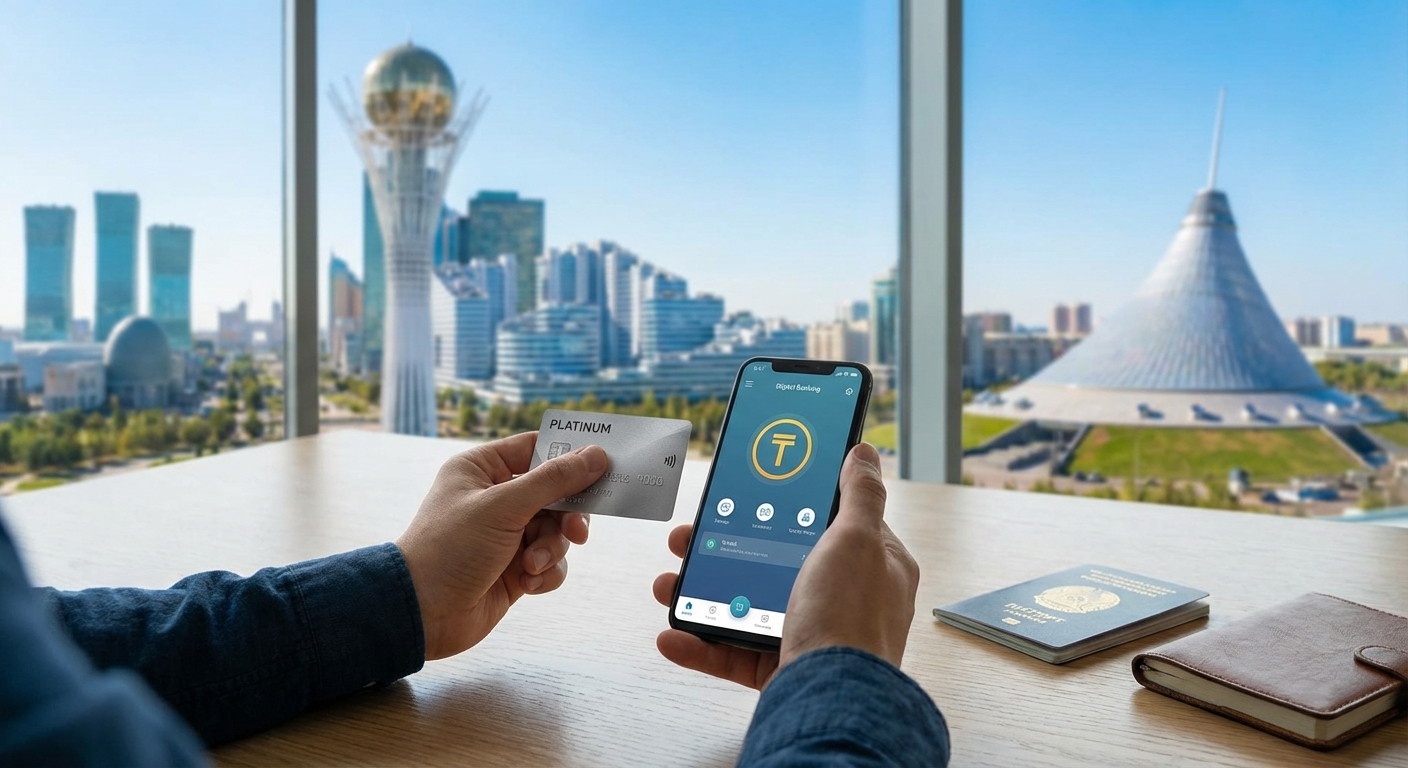
Moving to Astana means setting up your financial life from scratch in a country where banking works differently than you’re used to. The good news? Kazakhstan’s banking sector is surprisingly modern, with digital services that rival Western banks. The challenge? Navigating the paperwork, understanding local requirements, and choosing the right bank for your needs as a foreigner.
Expat banking in Astana requires a residence permit, IIN number, and passport. Major banks like Halyk, Kaspi, and ForteBank offer English services and mobile apps. Account opening takes one to three days. Most expats use multi-currency accounts to avoid conversion fees. Digital banking is advanced, but branches still matter for initial setup and complex transactions involving foreign currency transfers.
Understanding the Astana Banking Landscape
Astana’s banking sector serves as Kazakhstan’s financial hub alongside Almaty. The city hosts headquarters and major branches of the country’s largest banks, many concentrated in the modern left bank district where most expats work and live.
The National Bank of Kazakhstan regulates the sector strictly. This means robust consumer protections but also rigorous documentation requirements. Banks must verify your identity, residency status, and source of income before opening accounts.
Three types of banks operate here: state-owned institutions, private Kazakh banks, and subsidiaries of international banks. Each category serves different expat needs.
State banks like Halyk Bank offer stability and widespread branch networks. Private banks such as Kaspi Bank provide cutting-edge digital services. International bank subsidiaries, including Citibank Kazakhstan, cater to corporate clients and high-net-worth individuals.
Most banks offer services in Russian, Kazakh, and increasingly English. However, English proficiency varies dramatically between central Astana branches and neighborhood offices.
What You Need Before Opening an Account

Kazakhstan’s anti-money laundering regulations require specific documentation from foreign nationals. Missing even one document means your application gets rejected, wasting hours at the bank.
Here’s what every expat needs:
- Valid passport with current Kazakhstan visa or residence permit
- IIN (Individual Identification Number) issued by local authorities
- Proof of Astana address (rental agreement, utility bill, or residence registration)
- Employment contract or proof of income source
- Migration card stamped at entry (keep this safe)
The IIN proves particularly important. This 12-digit number functions like a social security number, required for everything from banking to buying SIM cards. You obtain it from the Public Service Center after receiving your residence permit.
Some banks request additional documents: reference letters from your employer, tax registration certificates, or even proof of your home country address. Call ahead to confirm exact requirements, as policies change frequently.
“The biggest mistake expats make is showing up at the bank without an IIN. No IIN means no account, period. Get your residence permit sorted first, then your IIN, then start the banking process.” — Financial advisor for expats in Astana
Step-by-Step Process for Opening Your First Account
The account opening process follows a predictable pattern across major banks, though timing and specific requirements vary.
Step 1: Choose Your Bank
Research banks based on your needs. Kaspi Bank dominates for everyday banking with its powerful app. Halyk Bank offers the most ATMs nationwide. ForteBank provides excellent English support and international transfer services.
Visit bank websites to compare account types, fees, and required minimum balances. Many banks waive monthly fees if you maintain minimum deposits or set up salary transfers.
Step 2: Visit a Branch in Person
Online account opening exists for Kazakh citizens but rarely works for foreigners. Plan to visit a central branch where staff handle expat applications regularly.
Bring original documents plus photocopies. Branches near business districts like the Bayterek Tower area see more foreign clients and process applications faster.
Arrive early. Banks get crowded after 11 AM and during lunch hours. Morning appointments move fastest.
Step 3: Complete the Application
Bank staff will guide you through forms, typically in Russian with English translations available. You’ll specify account currency (tenge, USD, EUR, or multi-currency), select card types, and set up mobile banking.
Applications ask about your employment, income sources, and intended account usage. Answer honestly. Discrepancies between your application and supporting documents trigger delays.
Step 4: Wait for Approval
Most banks approve expat accounts within one to three business days. Some issue temporary cards immediately while your permanent card gets produced.
You’ll receive SMS notifications about approval status. Check spam folders for emails from the bank, as some systems flag Kazakh bank emails as suspicious.
Step 5: Activate Mobile Banking
Download your bank’s app immediately. Kazakh banks invest heavily in mobile platforms, often superior to their websites. You’ll need mobile banking for everything from transfers to utility payments.
Activation requires your passport number, IIN, and phone number registered with the bank. Enable biometric login for convenience.
Comparing Major Banks for Expat Needs

Different banks serve different expat priorities. This table breaks down the key players:
| Bank | Best For | English Support | Digital Banking | International Transfers | Monthly Fee |
|---|---|---|---|---|---|
| Kaspi Bank | Daily transactions, bill payments | Limited | Excellent | Basic | Free with activity |
| Halyk Bank | Nationwide coverage, stability | Moderate | Good | Good | 500-1000 KZT |
| ForteBank | International transfers, USD accounts | Strong | Good | Excellent | 1000-2000 KZT |
| Eurasian Bank | Multi-currency accounts | Moderate | Good | Very good | 1500 KZT |
| Citibank Kazakhstan | Corporate clients, premium services | Excellent | Excellent | Excellent | High (premium) |
Kaspi Bank dominates the local market with its super-app combining banking, marketplace, and payment services. Nearly every Kazakh uses Kaspi for daily transactions. The app’s interface recently added English, making it more accessible for foreigners.
However, Kaspi’s international transfer fees run high. If you regularly send money abroad or receive foreign currency, ForteBank or Eurasian Bank offer better rates and SWIFT connectivity.
Managing Multiple Currencies as an Expat
Most expats maintain accounts in both tenge and foreign currencies. This strategy minimizes conversion losses and provides flexibility.
The tenge (KZT) fluctuates against major currencies. Keeping salary deposits in USD or EUR protects against devaluation, while maintaining a tenge account covers daily expenses without conversion fees.
Multi-currency accounts let you hold several currencies under one account number. You can switch between currencies through mobile banking at rates better than exchange offices.
Consider this approach:
- Receive salary in USD/EUR account
- Transfer monthly living expenses to tenge account
- Keep emergency funds in USD
- Use tenge for all local transactions
Banks charge 0.5% to 2% for currency conversion within your accounts. Exchange offices charge 2% to 5%. Converting through your bank always wins.
ATMs dispense only tenge, so maintain adequate tenge balances. Running out means converting at whatever rate is available, often unfavorable.
Digital Banking and Mobile Payment Systems
Kazakhstan leapfrogged traditional banking infrastructure straight to mobile-first services. This benefits expats who can manage finances entirely through smartphones.
Kaspi, Halyk, and ForteBank apps let you:
- Transfer money instantly between any Kazakh bank accounts
- Pay utilities, internet, and phone bills
- Buy train and plane tickets
- Order food delivery
- Pay at restaurants and shops via QR codes
- Set up recurring payments
- Request digital receipts for tax purposes
Transfers between Kazakh banks process in seconds, not days. There’s no concept of “processing time” for domestic transfers. Money moves instantly, 24/7.
QR code payments dominate Astana. Restaurants, shops, and even street vendors display QR codes for payment. Scan with your banking app, confirm the amount, done. No physical card needed.
The Kaspi QR system works everywhere. Even if you bank elsewhere, getting a Kaspi card for its payment network makes sense. Many expats maintain a primary account at ForteBank for international features plus a Kaspi account for local convenience.
Sending Money Internationally
International transfers from Kazakhstan require patience and proper documentation. Banks scrutinize foreign transfers heavily due to anti-money laundering regulations.
SWIFT Transfers
Most banks offer SWIFT transfers for major currencies. You’ll need:
- Recipient’s full name exactly as it appears on their account
- Complete bank details including SWIFT/BIC code
- Purpose of transfer with supporting documents
- Source of funds documentation
Transfers to the US, EU, or UK take three to five business days. Transfers to less common destinations can take two weeks.
Banks charge flat fees (typically $10-$30) plus percentage fees (0.5%-1.5%). ForteBank and Eurasian Bank offer the most competitive international transfer rates.
Transfer Services
Wise (formerly TransferWise), Remitly, and Western Union operate in Kazakhstan with better rates than banks for smaller amounts. However, these services require separate registration and have lower transfer limits.
Receiving Money from Abroad
Provide your sender with your full account details in English. Halyk Bank and ForteBank provide English-language account information sheets specifically for international transfers.
Incoming transfers typically arrive within three to five business days. The bank may contact you to verify the transfer purpose and source, especially for amounts over $10,000.
Common Banking Mistakes Expats Make
Learning from others’ errors saves time and money.
Opening Too Many Accounts Too Fast
New expats sometimes open accounts at multiple banks immediately. This creates confusion tracking balances, managing multiple apps, and remembering different PINs.
Start with one bank. Learn its systems thoroughly. Add a second bank only after you understand your actual needs.
Ignoring Minimum Balance Requirements
Some accounts charge hefty fees if your balance drops below minimums. A “free” account can cost 5,000 KZT monthly if you don’t maintain the required balance.
Read fee schedules carefully. Set up alerts when balances approach minimums.
Using ATMs Incorrectly
ATMs from your bank are free. Other banks’ ATMs charge 200-500 KZT per withdrawal. International cards face even higher fees.
Plan withdrawals to minimize trips to non-network ATMs. The Halyk network is largest, with ATMs throughout Astana and Kazakhstan.
Forgetting About Dormant Account Fees
Accounts with no activity for six months may incur dormant account fees. If you travel frequently, set up a tiny recurring transfer to keep accounts active.
Not Registering Your Phone Number
Banks send critical alerts via SMS: transaction confirmations, security codes, balance alerts. An unregistered or incorrect phone number means missing important notifications.
Update your phone number immediately if you change numbers. This requires an in-person branch visit with your passport.
Tax Implications and Reporting Requirements
Banking in Kazakhstan creates tax obligations both locally and potentially in your home country.
Kazakhstan taxes residents on worldwide income. If you spend 183 days or more in Kazakhstan during a calendar year, you’re a tax resident. This affects how you report foreign accounts and income.
The US requires citizens to report foreign bank accounts exceeding $10,000 total value via FBAR (FinCEN Form 114). Other countries have similar requirements. Consult a tax professional familiar with expat taxation.
Kazakhstan and many countries have tax treaties preventing double taxation. Keep records of:
- All account statements
- Transfer receipts
- Currency conversion records
- Source of funds documentation
Banks provide annual statements for tax purposes. Request these in January for the previous year.
Banking Fees You Should Know About
Transparency about costs helps you budget accurately.
Common Fees:
- Monthly account maintenance: 0-2,000 KZT
- Debit card annual fee: 0-3,000 KZT
- ATM withdrawals (other banks): 200-500 KZT
- International transfers: $10-30 plus percentage
- Currency conversion: 0.5%-2%
- SMS banking: 200-500 KZT monthly
- Checkbook (rare): 1,000-2,000 KZT
- Account closure: 0-1,000 KZT
Many banks waive fees if you maintain minimum balances, set up direct deposit, or use the account actively. Negotiate fee waivers when opening accounts, especially if you’re transferring significant funds.
Premium accounts cost more but include benefits like airport lounge access, travel insurance, and higher withdrawal limits. These rarely make sense unless your employer covers banking fees.
Credit Cards and Building Credit History
Credit cards work differently in Kazakhstan than in Western countries. Banks issue cards more cautiously, and credit building takes time.
As a new expat, you’ll likely start with debit cards only. After six months of account history, you can apply for credit cards with modest limits (100,000-500,000 KZT).
Credit cards require:
- Six months of account history with the bank
- Proof of stable income
- Good transaction history
- Sometimes a deposit as collateral
Interest rates run high, typically 18%-24% annually. Late payment penalties are severe. Use credit cards only if you pay full balances monthly.
Building credit history in Kazakhstan doesn’t transfer to other countries. Your Kazakh credit score stays in Kazakhstan. Conversely, your home country credit history means nothing here.
Some expats skip credit cards entirely, using debit cards for everything. This works fine for daily life but limits your ability to book hotels or rent cars internationally, as some services require credit cards.
Protecting Your Banking Information
Kazakhstan has low financial crime rates, but standard security practices still apply.
Essential Security Measures:
- Never share SMS codes or passwords
- Enable biometric login on banking apps
- Set up transaction alerts
- Use different passwords for each bank
- Avoid public WiFi for banking
- Check statements weekly for unauthorized transactions
- Register your phone number with the bank for alerts
Phishing attempts targeting expats do occur. Banks never call requesting your full password or SMS codes. If someone claims to be from your bank requesting sensitive information, hang up and call the bank directly using the number on their official website.
Card skimming is rare but possible. Inspect ATMs before use. Cover the keypad when entering PINs. Use ATMs inside bank branches when possible.
If your card gets lost or stolen, most banks offer 24/7 hotlines to freeze accounts immediately. Save these numbers in your phone before you need them.
When Banking Gets Complicated
Some situations require extra attention and possibly professional help.
Large Fund Transfers
Moving significant money into or out of Kazakhstan triggers enhanced scrutiny. Transfers over $10,000 require detailed documentation of source and purpose.
If you’re relocating substantial savings, work with the bank’s international department. They’ll guide you through compliance requirements and help structure transfers to minimize delays and fees.
Business Banking
Self-employed expats and business owners need business accounts separate from personal banking. Business account requirements are more complex, requiring business registration, tax certificates, and sometimes minimum deposits.
Starting a business in Kazakhstan involves different banking procedures than personal accounts. Consider hiring a local accountant familiar with expat business banking.
Investment Accounts
Kazakh banks offer limited investment products compared to Western banks. Most expats maintain investment accounts in their home countries while using Kazakh banks only for daily banking.
If you want to invest locally, the Astana International Financial Center (AIFC) operates under English common law and offers more familiar investment structures.
Banking Resources for Long-Term Expats
As you settle into Astana, these resources help optimize your banking:
Bank Contact Information
Save customer service numbers for your banks. English-speaking support lines often have different numbers than general customer service.
Expat Communities
Online expat groups share real-time information about banking changes, fee updates, and problem-solving strategies. Facebook groups and expat forums prove invaluable for specific banking questions.
Financial Advisors
Several firms in Astana specialize in expat financial planning, helping with tax optimization, international transfers, and long-term financial planning across multiple countries.
Embassy Resources
Your embassy may maintain lists of recommended banks and financial service providers. Some embassies host financial literacy sessions for their citizens living in Kazakhstan.
Making Banking Work for Your Astana Life
Setting up banking takes effort upfront but becomes routine quickly. Most expats report that after the initial setup period, Kazakh banking actually works better than expected, especially the mobile payment systems that make daily life convenient.
Your banking needs will evolve. Start simple with one account at a foreigner-friendly bank. Add services and accounts as you understand your actual patterns. Within a few months, you’ll navigate the system as smoothly as any local, paying bills with QR codes and transferring money instantly through your phone.
The key is getting started properly: documents in order, right bank chosen, and realistic expectations about the process. Take it step by step, ask questions, and don’t hesitate to visit the branch when something seems unclear. Banking staff in central Astana branches see expats regularly and genuinely want to help you get set up successfully.