
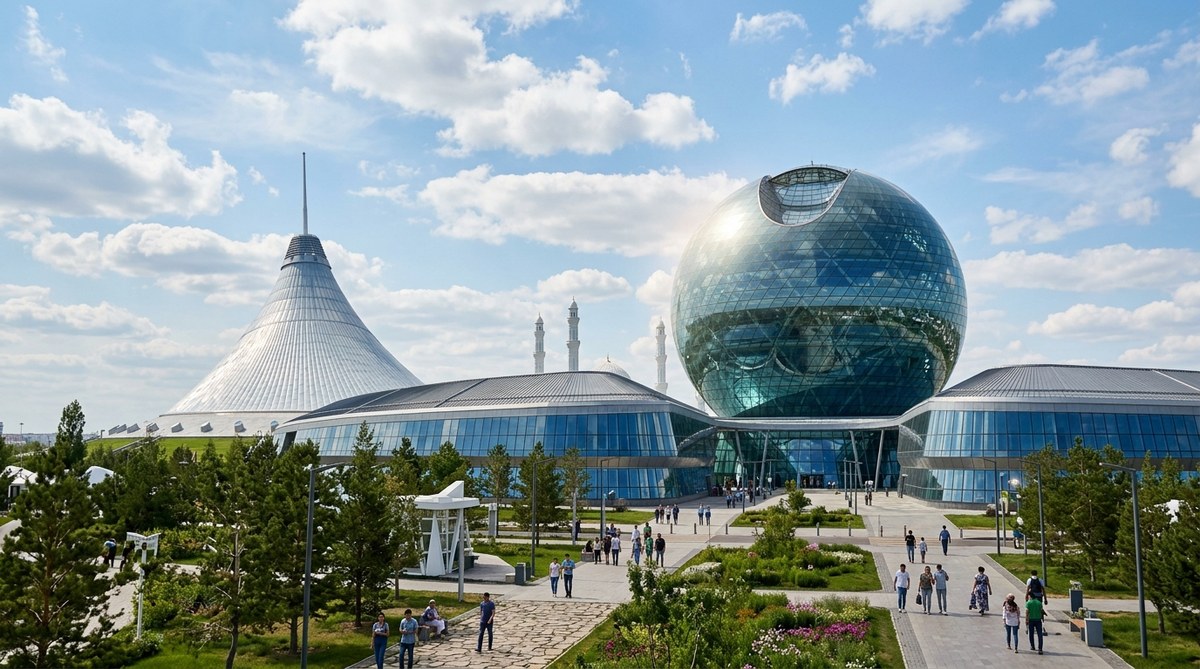
When Kazakhstan won the bid to host the 2017 World Expo, the country set out to build more than just a fairground. Astana, already famous for its futuristic skyline, became a construction site for ambitious pavilions, sculptures, and gathering spaces. Most visitors know about the giant Nur Alem sphere, but three other monuments tied directly to Expo 2017 often slip under the radar. These structures are not just leftover decorations. They carry deep symbolism, serve the city daily, and offer architecture lovers a richer understanding of Astana's rapid transformation. If you want to see the city like a local who remembers the Expo, these are the landmarks to seek out.
Three lesser-known Astana monuments built for the 2017 World Expo are the Shabyt Art Center, the Kazakhstan Pavilion (now the Museum of Future Energy), and the Expo Plaza sculptures. Each serves a distinct purpose today, from hosting concerts to educating visitors about renewable energy. Knowing their backstory turns a simple walk through the Left Bank into a meaningful cultural experience.
The Shabyt Art Center: A Piano on the Water
One of the most photographed yet misunderstood buildings in Astana sits on the edge of the Ishim River. The Shabyt Art Center looks like a grand piano floating on water. Most tourists snap a photo from the bridge and move on, unaware that this structure was built specifically for the 2017 World Expo.
The building was designed as the cultural heart of the Expo site. Its name, Shabyt, comes from a Kazakh word meaning "inspiration" or "creative impulse." The glass and steel piano shape was intentional. The lid of the piano rises like a sail, and at night, lighting effects make the keys appear to play themselves.
Inside, the center hosts classical concerts, art exhibitions, and theater performances. It was not meant to be a temporary pavilion. The designers built it as a permanent legacy for the city. In 2026, the Shabyt Art Center remains one of Astana's most active cultural venues. Check their schedule before your visit. You might catch a performance by the Kazakh State Philharmonic Orchestra.
For those who want to capture the building at its best, visit just before sunset. The golden light reflects off the river and onto the glass facade. For photography tips, read our guide on how to photograph Astana's golden towers like a professional.
The Museum of Future Energy: More Than a Sphere
Everyone notices the giant glass sphere at the Expo site. That is the Nur Alem pavilion, the centerpiece of the 2017 Expo. But what many do not realize is that the sphere itself was built as a monument to future energy, and it now operates as a museum dedicated entirely to renewable power.
The building stands 100 meters tall and is covered in photovoltaic panels. It generates a portion of its own electricity. Inside, eight floors take visitors through different forms of sustainable energy: solar, wind, biomass, and hydro. Each floor uses interactive exhibits, and the top level offers a panoramic view of the entire Left Bank district.
This is not just a museum. It is a working example of what the Expo theme "Future Energy" was all about. The structure was designed by the British firm Atelier Ten and built using materials sourced from across Kazakhstan. The sphere's outer skin is made of ethylene tetrafluoroethylene, the same material used in the Eden Project in Cornwall.
If you are short on time, prioritize the top floor viewpoint and the solar energy exhibit on floor four. For a deeper look into the building's design, check out our article on what makes the Nur Alem sphere the most unique building in Central Asia.
The Expo Plaza Sculptures: Stories in Steel
Most visitors walk straight through Expo Plaza without looking up. That is a mistake. The plaza, which served as the main pedestrian spine of the 2017 Expo, is lined with a series of steel sculptures commissioned specifically for the event. Each one represents a different aspect of Kazakhstan's relationship with energy and nature.
The sculptures were created by Kazakh artists and international designers. One piece, called "Wind of the Steppe," uses rotating metal blades that spin in the breeze. Another, "Solar Bloom," opens its petals when the sun is strongest. These are not static decorations. They are kinetic artworks designed to respond to the environment.
The plaza itself was built on a massive scale. It stretches for nearly a kilometer and connects the Nur Alem sphere to the congress center. During the Expo, it hosted daily parades and cultural performances. Today, it is a public space where locals jog, skateboard, and picnic. The sculptures remain as permanent reminders of the event.
For a self-guided tour of the area, start at the Shabyt Art Center, walk south along the river, cross into the Expo site, and end at the Nur Alem sphere. This route takes about 45 minutes at a relaxed pace and covers all three monuments.
How to Visit These Monuments in One Afternoon
You can see all three of these Astana monuments built for the 2017 World Expo in a single afternoon. Here is a practical plan:
- Start at the Shabyt Art Center around 2:00 PM. Spend 30 minutes photographing the exterior and checking the event schedule inside.
- Walk south along the Ishim River for 10 minutes. You will cross a pedestrian bridge that offers a great view of the Expo site.
- Enter the Expo grounds and head to the Expo Plaza. Walk the full length of the plaza, stopping at each sculpture. Allow 20 minutes.
- End at the Nur Alem sphere. Buy your ticket for the Museum of Future Energy. The full visit takes about 90 minutes.
- Finish at the top floor observation deck just as the sun starts to set. The view of the Left Bank skyline is unforgettable.
If you are staying in a hotel near the Left Bank, many are within walking distance. For accommodation recommendations, see our guide to 5 Astana hotels with the best views of the city's futuristic skyline.
A Quick Reference Table for Your Visit
| Monument | Built For | Current Use | Best Time to Visit | Entry Fee |
|---|---|---|---|---|
| Shabyt Art Center | Expo 2017 cultural venue | Concert hall and gallery | Late afternoon for light | Free (ticketed events) |
| Nur Alem Sphere | Expo 2017 centerpiece | Museum of Future Energy | Before sunset for views | 2,000 KZT (approx) |
| Expo Plaza Sculptures | Expo 2017 public art | Open-air park | Morning or evening light | Free |
Why These Monuments Matter for Architecture Lovers
Astana is a city built on ambitious ideas. The 2017 World Expo gave the government a reason to accelerate construction on the Left Bank, and these three monuments represent the best of that era. They are not just souvenirs from a world fair. They are functional buildings and artworks that continue to shape how the city looks and feels.
For architecture enthusiasts, the Shabyt Art Center offers a rare example of programmatic architecture in Central Asia. The Nur Alem sphere is a technical achievement in sustainable construction. And the Expo Plaza sculptures show how public art can engage with natural elements like wind and sunlight.
If you are planning a trip to Astana in 2026, make time for these sites. They are easy to reach on foot or by taxi from the city center. Combine them with a walk through the Left Bank district to see how the Expo transformed this part of the city. For a full day itinerary, read our ultimate walking tour of Astana's futuristic Left Bank district.
The Legacy of Expo 2017 Lives On
Many world expos leave behind empty pavilions and abandoned lots. Astana did the opposite. The city used the event as a catalyst for long-term development. The monuments built for the 2017 World Expo are now woven into the fabric of daily life. School groups visit the Museum of Future Energy. Couples take photos by the Shabyt Art Center. Families picnic on the Expo Plaza.
This is what makes Astana different. The city does not treat its landmarks as museum pieces. They are living spaces. When you stand on the Expo Plaza and watch children chase each other around the "Wind of the Steppe" sculpture, you understand that the Expo was not just a moment. It was a foundation.
As you plan your trip, remember that the best way to experience these monuments is slowly. Do not rush. Sit on a bench in the plaza. Watch the light change on the sphere. Listen for music drifting from the piano-shaped art center. That is how you connect with the real Astana.
For more hidden spots in the city, check out our list of 7 hidden architectural gems in Astana that most tourists miss. And if you want to understand the deeper meaning behind the city's skyline, read about the symbolism behind Astana's most famous monuments explained.
Whether you are a first-time visitor or a returning architecture enthusiast, these three monuments will change how you see Astana. They tell a story of ambition, creativity, and a nation looking toward the future.