
<>
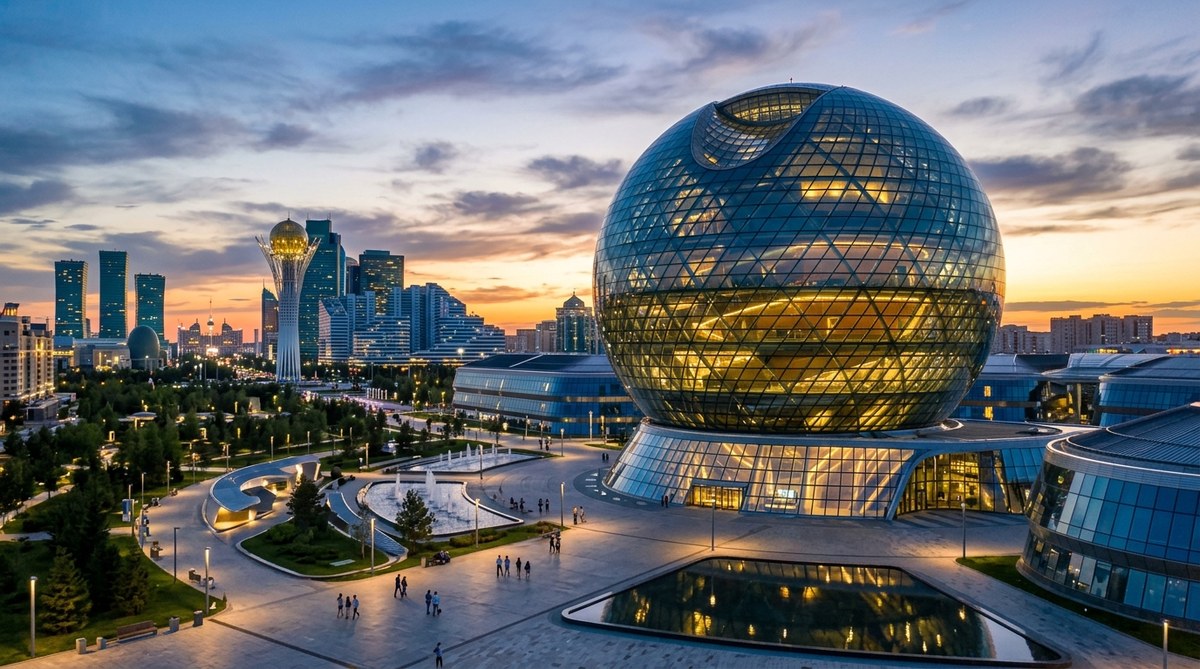
Picture a perfect sphere rising from the flat Kazakh steppe. A giant glass bubble that catches the sky and reflects the ambition of a young capital city. The Nur Alem Sphere is exactly that. It is the largest spherical building on Earth, standing 100 meters tall with a diameter of 80 meters. But size alone does not explain why this structure matters so deeply to Kazakhstan and to anyone who visits Astana. The sphere tells a story about energy, innovation, and a nation that refuses to be overlooked. Built as the centerpiece of EXPO 2017, it has become the defining symbol of a city known for its futuristic skyline. If you are planning a trip to Central Asia, this building deserves a top spot on your itinerary.
The Nur Alem Sphere is not just a striking architectural landmark. It is the world’s largest spherical building and the heart of the EXPO 2017 site. Inside, eight floors of interactive exhibits explain the past, present, and future of energy. From solar power to wind, from traditional Kazakh energy sources to tomorrow’s breakthroughs, every level offers hands-on learning. The observation deck at the top gives you a 360 degree view of Astana’s modern skyline. Plan at least two to three hours to see everything properly.
What Makes the Nur Alem Sphere an Engineering Feat
The numbers alone are staggering. The sphere’s steel frame weighs about 1,500 tons. The glass facade covers more than 15,000 square meters. And the entire structure sits on just six columns, giving it a floating appearance from certain angles. Engineers from around the world worked on this project, and they faced a serious challenge: how do you build a perfect sphere on the steppe, where winter temperatures drop to minus 40 degrees and summer winds can reach gale force?
The answer lies in a clever double layer system. The outer shell uses high performance glass that reflects heat in summer and traps warmth in winter. A secondary inner layer provides insulation and houses the museum exhibits. Between the two layers, air circulates naturally, reducing the need for mechanical heating and cooling. This passive design approach earned the building recognition as one of the most energy efficient large structures in the region.
The sphere also sits on a seismically isolated base. Kazakhstan experiences occasional earthquakes, so the engineers designed a system of bearings that allow the building to sway slightly without damage. It is a hidden piece of technology that most visitors never see, but it is one of the reasons this building will stand for generations.
Inside the Museum of Future Energy
Entering the Nur Alem Sphere feels like stepping into a different world. The ground floor lobby is bright and spacious, with a huge digital globe that shows real time energy data from around the planet. From there, you take a winding path upward through eight distinct floors, each dedicated to a different energy source.
A Tour of the Eight Floors
Every floor uses interactive displays, models, and videos to explain complex topics in simple terms. Here is what you will find:
-
Floor One: The Story of Kazakhstan This level covers traditional Kazakh energy culture, including the use of animal fat for lamps and dried dung for cooking fires. It sets the stage by showing how people lived before modern energy arrived.
-
Floor Two: Solar Energy Large scale models of solar panels and a walk through simulation of a solar farm. You can see how Kazakhstan’s sunny climate makes it a natural home for solar power.
-
Floor Three: Wind Energy This floor features a working wind turbine model. You can adjust the blade angle and see how much electricity the turbine generates at different wind speeds. It is surprisingly fun for adults and kids alike.
-
Floor Four: Water and Hydroelectric Energy Kazakhstan has major rivers like the Irtysh and the Ili. This exhibit shows how dams and turbines turn moving water into electricity. A hands on water channel lets you experiment with flow rates.
-
Floor Five: Biomass and Geothermal Energy Here you learn about energy from organic materials and heat from deep underground. Models show how geothermal plants work and how agricultural waste can be turned into fuel.
-
Floor Six: Nuclear Energy This floor covers the science of nuclear fission and fusion. It includes a display about Kazakhstan’s role as a major uranium producer. The exhibits are balanced and informative without being overly technical.
-
Floor Seven: The Future of Energy This is the most forward looking floor. It shows experimental technologies like fusion reactors, hydrogen fuel cells, and space based solar power. You can vote on which technology you think will dominate by 2050.
-
Floor Eight: The Observation Deck At the very top, a circular viewing platform gives you a panoramic view of Astana. You can see the Bayterek Tower, the Khan Shatyr Entertainment Center, and the Ishim River winding through the city. This is the best place for photos, especially at sunset.
Each floor connects to the next via a gently sloping ramp. The design encourages you to keep moving upward, and the exhibits are spaced so you never feel crowded. Allow at least 90 minutes for the full circuit, and plan for more if you like to read every display.
Insider tip from a regular visitor: Go on a weekday morning if you can. The museum is less crowded, and you will have the observation deck almost to yourself. The light is also better for photography before noon.
How the Sphere Became the Heart of EXPO 2017
Kazakhstan won the bid to host EXPO 2017 in 2012, beating out Belgium. The theme was “Future Energy,” a natural choice for a country that sits on massive oil and gas reserves but wants to diversify its economy. The Nur Alem Sphere was designed as the pavilion for Kazakhstan itself. It was meant to be the showpiece, the building that would appear on postcards and news broadcasts around the world.
Architect Adrian Smith, the same designer behind the Burj Khalifa in Dubai, was not involved directly. Instead, a consortium of Kazakh and international architects collaborated under the guidance of the local firm BI Group. They drew inspiration from the traditional Kazakh yurt, which is round and portable. The sphere is a permanent, high tech version of that ancient form.
During the three months of EXPO 2017, the sphere welcomed more than 4 million visitors. Countries from all over the world set up their own pavilions on the surrounding grounds. But the sphere was always the star. After the EXPO ended, the building was converted into the Museum of Future Energy, which remains open to the public year round.
Practical Information for Your Visit
Before you go, here are the details you need to know.
| Category | Details |
|---|---|
| Address | EXPO 2017 Grounds, Astana, Kazakhstan |
| Hours | Tuesday through Sunday, 10:00 AM to 7:00 PM (closed Monday) |
| Ticket Price | Adults: 1,500 KZT (about $3.50 USD). Students: 800 KZT. Children under 7: free |
| Best Time to Visit | May through September for the best weather. Winter visits are fine but expect cold winds between buildings |
| Time Needed | Plan for 2 to 3 hours to see all exhibits and the observation deck |
| Photography | Allowed everywhere. No flash on some exhibits. Tripods require a permit |
The EXPO grounds themselves are worth a walk. The surrounding pavilions have been repurposed as office buildings, restaurants, and a shopping center. You can grab lunch at one of the cafes on site. Try the manti, which are steamed dumplings filled with spiced meat. They are a local favorite.
Getting to the sphere is simple. Take a taxi or a bus from the city center. Most rideshare apps work in Astana, and the fare from the center to the EXPO site is usually under 2,000 KZT. You can also reach the site by taking the light rail from the Nurly Zhol station. It is a short walk from the stop to the main entrance of the sphere.
If you are staying in Astana for a few days, consider booking a hotel near the left bank of the Ishim River. The walk from the river to the EXPO grounds takes about 20 minutes and passes several other architectural landmarks. The futuristic Left Bank district is home to many of the city’s most striking buildings.
Why the Sphere Stands Out Among Central Asian Architecture
Central Asia has no shortage of impressive buildings. Samarkand has its turquoise mosques. Tashkent has its Soviet era metro stations. Almaty has its mountain backed skyline. But nothing matches the sheer audacity of the Nur Alem Sphere. It is a perfect geometric form in a part of the world where most historic architecture relies on arches, domes, and minarets. The sphere is a statement: Kazakhstan is looking forward, not backward.
The building also serves a practical purpose. It is a museum that teaches energy literacy to a population that is increasingly aware of climate change and sustainability. Kazakhstan is one of the largest carbon emitters per capita in the world, largely because of its coal fired power plants. The government hopes that by educating the public about renewable energy, it can build support for a greener future.
For travelers, the sphere offers something rare: a genuinely world class attraction in a country that most Americans have never considered visiting. Kazakhstan is safe, affordable, and welcoming. English is not widely spoken outside hotels and museums, but the sphere’s exhibits include English translations. You will have no trouble navigating the building on your own.
If you have a longer stay in Astana, you can combine a visit to the sphere with other nearby sites. The Khan Shatyr Entertainment Center is a giant transparent tent that houses a shopping mall and a beach resort. The Bayterek Tower offers another observation deck and a golden monument to Kazakh folklore. Both are within walking distance of the EXPO grounds.
The Best Photo Spots and Angles
You will want to capture the sphere from multiple angles. Here are the best spots:
-
The main approach from the south. This is the classic postcard view. Stand at the center of the plaza and shoot straight on. The sphere fills the frame nicely.
-
The reflection pool on the east side. On calm days, the water creates a perfect mirror image. Go in the morning when the wind is light.
-
The pedestrian bridge to the west. This elevated walkway gives you a slight downward angle, which makes the sphere look even more massive.
-
The observation deck at sunset. From inside the sphere, looking out, you get golden light on the city skyline. Arrive about 45 minutes before sunset to claim a good spot.
-
Night shots from the surrounding streets. The sphere is illuminated from within at night. A long exposure shot with the lights reflecting on the wet pavement looks stunning after rain.
Bring a wide angle lens if you have one. The sphere is so large that a standard lens will force you to stand too far back to capture the details. A 16mm to 24mm lens is ideal.
For more photography tips around the city, check out this guide on how to photograph Astana’s golden towers. Many of the same techniques apply to the sphere.
What Other Travelers Say About Their Experience
Visitors consistently praise the building’s design and the museum’s interactivity. Many say that the sphere exceeded their expectations. One common comment is that the exhibits are more hands on than they anticipated. Adults and children both enjoy the wind turbine experiment and the solar panel simulation.
Some visitors note that the museum can feel a bit sparse on quiet days. A few of the interactive screens may be turned off or under repair. But overall, the experience is positive. The observation deck is almost always mentioned as a highlight. The view of Astana from 100 meters up is genuinely impressive.
A small number of travelers wish there were more English language materials. The exhibits do have English translations, but some of the video content is only available in Russian or Kazakh. If you do not speak those languages, you will still understand the main ideas from the graphics and models.
How the Sphere Fits Into a Larger Astana Itinerary
Astana is a city that rewards curious travelers. You can see the main landmarks in one full day, but two days gives you a more relaxed pace. Start at the Bayterek Tower in the morning. Walk north along the river to the EXPO grounds. Spend the middle of the day at the Nur Alem Sphere. Then cross the river to visit the Khan Shatyr in the late afternoon. End your day with dinner at a restaurant on the left bank.
If you have extra time, consider a day trip outside the city. The Burabay National Park is about a three hour drive north. It offers pine forests, clear lakes, and rock formations that contrast sharply with the steppe. Another option is the Korgalzhyn Nature Reserve, which is home to flamingos and other migratory birds. Both trips require a car or a tour.
For a budget friendly day, the sphere itself is affordable. The ticket price is low even by local standards. You can spend several hours inside without spending any additional money. The EXPO grounds are free to walk through, and the surrounding architecture is worth a leisurely stroll.
Final Thoughts on Visiting the Nur Alem Sphere
The Nur Alem Sphere is more than a building. It is a symbol of Kazakhstan’s ambition, a museum that teaches important lessons about energy, and a genuinely fun place to spend an afternoon. Whether you are an architecture enthusiast, a science lover, or just a curious traveler, the sphere delivers something memorable.
Astana itself is a city that surprises most first time visitors. It is clean, safe, and filled with unusual buildings. The sphere is the crown jewel of that collection. If you are planning a trip to Kazakhstan, make sure this giant glass globe is near the top of your list. You will leave with a deeper understanding of energy, a camera full of photos, and a story to tell your friends back home.
For more ideas on what to see in the capital, take a look at our guide to what to see in Astana when you only have 24 hours. And if you want to go deeper into the city’s architectural scene, our article on hidden architectural gems in Astana will point you toward lesser known treasures. The sphere may be the most famous building in Central Asia, but it is far from the only one worth your time.
</>