
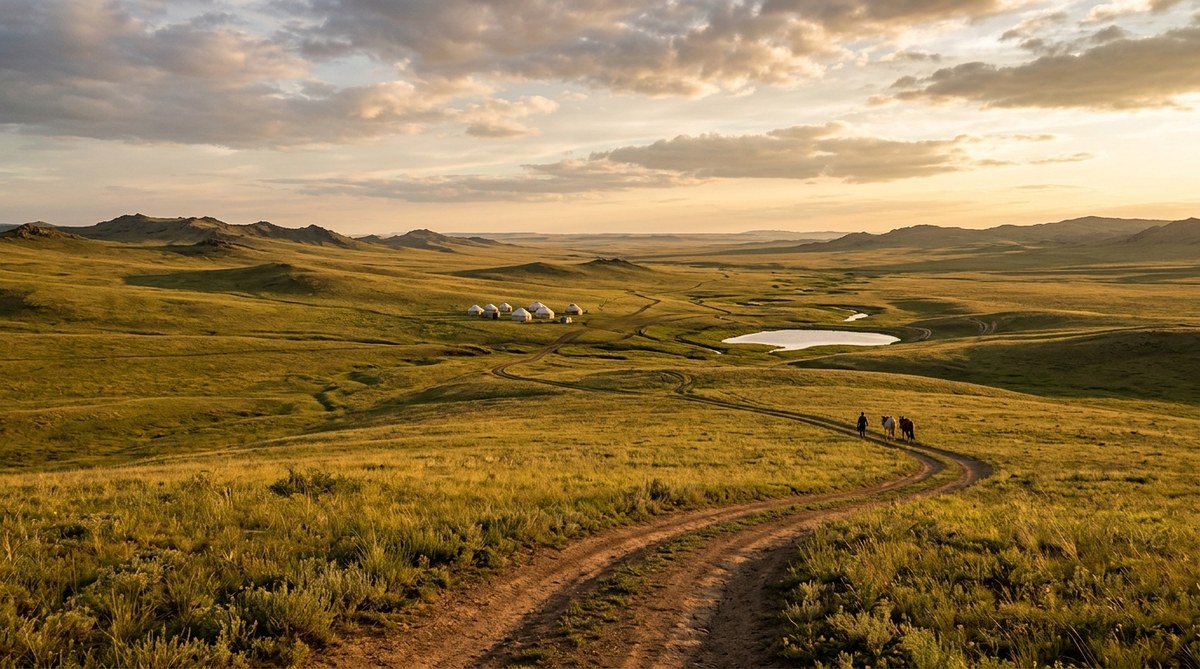
Imagine a landscape that stretches further than the eye can see, a sea of feather grass rippling under a sky so big it feels like you are standing on the edge of the world. This is the Kazakh Steppe, and at its heart lies Saryarka, a UNESCO World Heritage site that protects one of the last great grasslands on Earth. For adventure travelers who crave wide open spaces and rare wildlife, this region offers an experience that feels completely untamed. Let me show you exactly how to plan your journey into this incredible part of Kazakhstan.
Saryarka is a UNESCO site made of two protected areas: Naurzum and Korgalzhyn. It is the best place in Central Asia to see the endangered saiga antelope, flamingos, and over 300 bird species. The ideal travel window is May through September. You can base yourself in Astana and take a guided tour, or stay in a guesthouse near the reserve for a deeper connection.
Why Saryarka Belongs on Your Bucket List
Most travelers head to Kazakhstan for the futuristic skyline of Astana or the alpine lakes around Almaty. But the true soul of this country lives on the steppe. Saryarka, which translates to “Yellow Ridge” in Kazakh, is not a single park. It is a cluster of protected areas that include the Naurzum State Nature Reserve and the Korgalzhyn State Nature Reserve. Together, they cover over 450,000 hectares of pristine grassland, wetland, and lake systems.
This landscape is a critical stopover for migratory birds. Every year, millions of birds travel from Africa, the Middle East, and Europe to nest here. That includes the greater flamingo, the Dalmatian pelican, and the Siberian crane. If you have ever wanted to see flamingos in the wild without traveling to the tropics, this is your spot.
The steppe is also home to the saiga antelope, a prehistoric looking creature with a bulbous nose that filters dust. Their numbers have fluctuated dramatically due to poaching and disease, but conservation efforts have brought them back. Seeing a herd of saiga gallop across the horizon is a wildlife moment that rivals anything in the Serengeti.
When to Plan Your Saryarka Trip
Timing is everything on the steppe. The weather here is extreme. Winters are brutally cold, with temperatures dropping to minus 40 degrees Fahrenheit. Summers are hot and dry. You want to aim for the shoulder seasons when the wildlife is active and the temperatures are manageable.
Here is a breakdown of the seasons:
- May to June: This is the peak breeding season for birds. The steppe turns green, and wild tulips bloom. Saiga calves are born in May. This is the most photogenic time of year.
- July to August: It gets hot, often above 95 degrees Fahrenheit. Bird activity slows during midday heat, but early mornings and evenings are excellent. Flamingos are usually present at Korgalzhyn.
- September: Autumn migration begins. The weather cools down, and the landscape shifts to golden browns. This is a great time for photography and avoiding crowds.
- October to April: Most reserves are closed or very difficult to access. Roads become impassable. Unless you are an extreme winter traveler, skip this period.
For your first visit, I recommend the last two weeks of May. The weather is warm but not scorching, the baby animals are out, and the birdlife is at its most active.
How to Get to Saryarka from Astana
Korgalzhyn is the more accessible of the two reserves. It sits about 130 kilometers southwest of Astana. That is roughly a two hour drive on good roads. You can rent a car, hire a private driver, or join an organized tour. Public transport is very limited, so do not rely on buses.
Naurzum is further away, about 500 kilometers from Astana near the city of Kostanay. It requires a longer road trip or a domestic flight to Kostanay followed by a car ride. For most travelers, Korgalzhyn is the better first stop.
If you are driving yourself, use a vehicle with high ground clearance. The last stretch of road into the reserve can be unpaved and rough after rain. GPS works on the main highways, but once you enter the steppe, cell service disappears. Download offline maps before you leave Astana.
What to See and Do at Korgalzhyn
Korgalzhyn is a wetland paradise. The reserve centers around Lake Tengiz, a massive saline lake that is a Ramsar site of international importance. The lake is shallow, salty, and teeming with brine shrimp, which is exactly what the flamingos love.
Your day will usually start early. Most tours pick you up from Astana around 6:00 AM. You drive south through endless steppe, passing small villages and grazing horses. By 8:30 AM you reach the visitor center, where a ranger will brief you on the rules.
From there, you take a guided vehicle into the reserve. You cannot walk freely because the terrain is fragile and the wildlife is sensitive. The rangers know exactly where the birds are feeding. You will stop at observation points and use binoculars or a spotting scope.
Bird species you are likely to see:
- Greater flamingo
- Whooper swan
- White-headed duck
- Steppe eagle
- Demoiselle crane
- Black-winged stilt
If you are lucky, you might spot a saiga antelope herd grazing near the lakeshore. They are shy, so keep your voice down and stay inside the vehicle.
A Practical Step by Step Plan for Visiting Korgalzhyn
Here is a numbered list to help you organize your trip without stress.
- Book a tour in Astana. Do this at least three days in advance. Many hotels can arrange it, or you can contact a local agency. A full day tour costs between $80 and $120 per person, including transport, guide, and park fees.
- Pack a day bag. Bring sunscreen, a hat, sunglasses, and a light jacket. The wind on the steppe is constant and can be chilly even in summer. Binoculars are essential. A camera with a zoom lens of 300mm or more will help you capture distant birds.
- Bring your own food and water. There are no restaurants or shops near the reserve. Most tours provide a simple packed lunch, but it is smart to carry extra snacks and at least two liters of water per person.
- Wear neutral colors. Bright clothing scares the wildlife. Stick to khaki, green, brown, or gray. Avoid white and neon shades.
- Respect the silence. The reserve is a place of quiet. Loud talking, music, or slamming car doors will send the birds flying. Follow your guide’s instructions at all times.
Wildlife Watching Tips for the Steppe
Seeing animals on the open steppe requires patience. The landscape looks empty at first glance. But if you slow down and look carefully, life reveals itself.
| Mistake to Avoid | Better Approach |
|---|---|
| Standing up in the vehicle | Stay seated and low. Animals spot human shapes easily. |
| Using flash photography | Turn off your flash. It startles birds and ruins the shot. |
| Getting out of the car | Only exit at designated stops. The ground can have hidden nests. |
| Talking loudly | Whisper or use hand signals. Sound carries far on flat land. |
| Expecting a zoo experience | This is wild terrain. You may drive for an hour without seeing a single animal. That is part of the magic. |
“The steppe teaches you to wait. You sit, you watch, and eventually the landscape gives you a gift. It might be a flock of cranes lifting off the water, or a saiga mother with her calf. That moment is worth every hour of silence.” — A ranger at Korgalzhyn Reserve
Where to Stay Near Saryarka
Most visitors base themselves in Astana and do a day trip. That is the most comfortable option. You get a hot shower, a good meal, and a soft bed after a day in the dust. If you want to stay closer to the reserve, there are a few guesthouses in the village of Korgalzhyn, about 30 kilometers from the park entrance.
These guesthouses are basic. Think shared bathrooms, simple meals, and no Wi-Fi. But they offer something special: the chance to watch the sunset over the steppe and wake up to the sound of larks. If you are a serious birder or photographer, staying overnight gives you access to the golden hours of dawn and dusk when the light is best.
For a deeper look at what Astana offers, check out our guide on free things to do in Astana to balance your trip between city and nature.
Other Adventures in the Saryarka Region
While Korgalzhyn is the main draw, the broader Saryarka region has more to offer.
- Naurzum Reserve: This is the other half of the UNESCO site. It protects a mix of pine forests, sand dunes, and lakes. It is home to the rare black stork and the imperial eagle. Naurzum is less visited than Korgalzhyn, which means you will have even more solitude. Plan a dedicated two day trip if you want to include it.
- Saiga Antelope Viewing: The best chance to see large herds is in the remote areas between the two reserves. Specialized conservation tours sometimes offer multi day expeditions. These are not cheap, but they are unforgettable.
- Steppe Photography: The landscape itself is a subject. The play of light and shadow on the grass, the dramatic storm clouds rolling in, the lone horse grazing by a yurt. Bring a wide angle lens for sweeping vistas.
If you are interested in more natural wonders, read about 5 underrated national parks in Kazakhstan that deserve your attention. They pair well with a Saryarka itinerary.
What to Pack for the Steppe
The steppe demands practical gear. Here is a bulleted list of essentials:
- Sturdy walking shoes or hiking boots
- Lightweight long pants (protect against sun and insects)
- Long sleeved shirt in a light color
- Wide brim hat with a chin strap
- High SPF sunscreen
- Lip balm with SPF
- Insect repellent (mosquitoes can be thick near water)
- Polarized sunglasses
- Binoculars (8×42 or 10×42 is ideal)
- Camera with a telephoto lens
- Power bank (no charging options in the field)
- Reusable water bottle
- Snacks (nuts, dried fruit, granola bars)
- Small notebook and pen for recording sightings
Do not forget a copy of your passport. The reserve requires registration, and the rangers will ask to see your documents.
How This Trip Connects to Kazakh Culture
The steppe is not just a landscape. It is the foundation of Kazakh identity. For centuries, nomadic herders moved across these grasslands with their horses, sheep, and camels. They lived in yurts, followed the seasons, and developed a deep respect for the land.
When you visit Saryarka, you are stepping into that heritage. The saiga antelope, for example, appears in Kazakh folklore as a symbol of endurance. The flamingo is seen as a messenger of spring. Local guides often share stories that connect the wildlife to ancient traditions.
If you want to understand this culture more, consider reading about understanding Kazakh hospitality. It will enrich your interactions with the people you meet on the road.
Your Steppe Adventure Awaits
Saryarka is not a destination for everyone. It is for travelers who find beauty in emptiness, who are patient enough to wait for a rare bird to appear, and who feel a thrill when they stand in a place that has not changed for thousands of years. If that sounds like you, then this UNESCO site will leave a mark on your soul.
Start planning your trip for late May. Book a tour from Astana. Pack your binoculars and your curiosity. The Kazakh steppe is ready to share its secrets with you.