
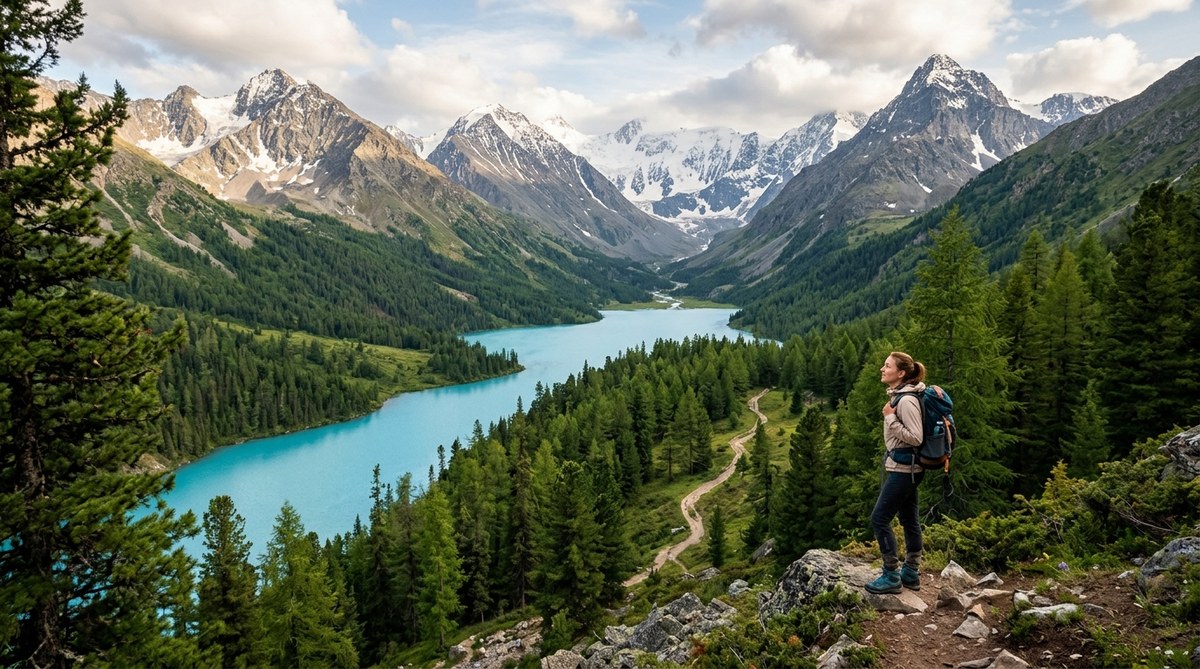
You have seen the futuristic towers of Astana. You have hiked the red cliffs of Charyn Canyon. You have even tasted beshbarmak in a traditional yurt. But Kazakhstan still holds one wild card that most travelers miss. Tucked into the far eastern corner of the country, where the Altai Mountains rise like a fortress against the Siberian sky, Katon-Karagay National Park offers a brand of raw, untouched wilderness that feels a world away from the capital’s glass and steel. This is the Kazakhstan you dream about when you close your eyes: endless alpine meadows, rivers the color of jade, and hot springs that have been soothing nomads for centuries.
Katon-Karagay National Park is Kazakhstan’s largest national park and arguably its most spectacular. Larger than Yellowstone, it protects the Altai’s pristine ecosystems. Most international tourists skip it, making it a true hidden gem for 2026. You will find world-class hiking, thermal springs, and a chance to see wildlife like the snow leopard and Altai argali sheep in their natural habitat.
What Makes Katon-Karagay National Park So Special?
Size alone sets it apart. At over 1.6 million acres, Katon-Karagay is the largest national park in Kazakhstan. That makes it bigger than the entire state of Delaware. But numbers do not capture the feeling of standing on a ridge where the Kazakh, Russian, Mongolian, and Chinese borders nearly touch.
The park sits in the heart of the Altai Mountains, a UNESCO World Heritage site. This region is one of the last truly wild places in Central Asia. You will not find souvenir stalls or paved overlooks here. Instead, you get:
- Alpine meadows bursting with edelweiss and wild geraniums in summer
- Glacial lakes that shift from turquoise to deep blue as the sun moves
- Ancient cedar forests where the silence is so deep you can hear your own heartbeat
- Hot springs that bubble up at natural temperatures around 100 degrees Fahrenheit
- A genuine chance to spot rare wildlife including the snow leopard, manul (Pallas’s cat), and the magnificent golden eagle
For an adventure traveler who has grown tired of crowded national parks elsewhere, Katon-Karagay offers something increasingly rare: true solitude.
How to Get to Katon-Karagay National Park
Getting there is part of the adventure. The park is remote, and that is exactly why it remains so unspoiled. Here is the most practical route for 2026 travelers.
- Fly to Oskemen (Ust-Kamenogorsk). This city in eastern Kazakhstan has an airport with regular flights from Astana and Almaty. The flight from Astana takes about 90 minutes.
- Drive or take a shared taxi from Oskemen to the village of Katon-Karagay. The distance is roughly 200 miles and takes 4 to 5 hours depending on road conditions. The road is paved for most of the route but gets rougher as you approach the park.
- Arrange your park entry and accommodation in advance. The park has a small administrative office in the village where you pay the entry fee. You can also organize a local guide here, which is strongly recommended for first-time visitors.
The total travel time from Astana to the park boundaries is roughly one full day. Plan accordingly.
Best Time to Visit Katon-Karagay National Park
Timing matters in a place where winter lasts six months. The park is accessible from June through September. July and August offer the warmest weather and the most accessible trails. September brings crisp air and spectacular autumn colors, but some high passes may close early.
| Season | Conditions | What to Expect |
|---|---|---|
| June | Snow melt, rivers high, some trails muddy | Lush green meadows, fewer crowds, cool temps 50-70°F |
| July – August | Peak season, best weather | Warm days 65-80°F, all trails open, wildflowers at peak |
| September | Cool, stable, autumn colors | Crisp air 45-65°F, golden larch forests, hunting season begins |
| October – May | Heavy snow, park largely closed | Only for experienced winter expeditions with special permits |
What to Do Inside the Park
The park rewards those who take their time. A single day will give you a taste, but three to five days lets you truly connect with the landscape.
Hiking and Trekking
The trail network is not as marked as in national parks in the United States, but local guides know the routes intimately. The most popular trek follows the Bukhtarma River valley, passing through cedar forests and emerging into high alpine meadows. You can hike for several days without seeing another person.
Hot Springs
Rakhmanovskie Springs is the most famous thermal site in the park. The water emerges at about 104 degrees Fahrenheit and feeds a series of pools. Locals swear by the healing properties. After a long day of hiking, soaking in these mineral-rich waters under a canopy of stars feels like a reward you have earned.
Wildlife Watching
Bring binoculars. The park is home to the Altai argali, the largest species of wild sheep on earth. You might also spot Siberian roe deer, moose, and if you are extremely lucky, the elusive snow leopard. Birders will find golden eagles, bearded vultures, and the striking Altai snowcock.
Fishing and Horseback Riding
The rivers hold grayling and lenok trout. Local families offer horseback rides that follow old nomadic trails. Riding through the park gives you a new perspective on how the Kazakh people moved through these mountains for centuries.
Where to Stay in and Around the Park
Accommodation is basic but comfortable. Most visitors stay in guesthouses in the village of Katon-Karagay. These are family-run homes with simple rooms, home-cooked meals, and warm hospitality. A few offer yurt stays for a more traditional experience.
Inside the park, there are basic cordons (ranger stations) that can provide shelter. Some have bunk beds and a wood stove. Bring your own sleeping bag. Camping is allowed with a permit, and it is the best way to experience the park’s profound silence at night.
For those coming from Astana, you will want to read our guide on what to pack for Kazakhstan to make sure you have the right gear for this remote environment.
A Practical Check for Your Visit
Before you go, run through this list to avoid common mistakes.
- Register at the park office. It is a legal requirement and helps the rangers know who is in the backcountry.
- Hire a local guide. The trails are not well marked, and mobile reception is unreliable. A guide adds safety and cultural context.
- Bring all your supplies. There are no shops inside the park. Stock up on food, water purification tablets, and fuel for stoves in Oskemen.
- Respect the wildlife. These animals are not habituated to humans. Keep a safe distance and store food properly.
- Get travel insurance that covers helicopter evacuation. In an emergency, the nearest hospital is hours away.
The Kazakh people have a saying: “The more you travel, the more you learn.” In Katon-Karagay, that lesson comes with every step. Take your time. Let the mountains teach you their pace.
Is Katon-Karagay National Park Right for You?
This park is not for everyone. If you want five-star hotels, restaurant menus in English, and clearly marked trails with kilometer posts, you will find those things easier in other parts of Kazakhstan. But if you crave the kind of travel that makes you feel like a true explorer, where the path ahead is yours to discover, Katon-Karagay delivers in ways few places can.
It works best for:
– Experienced hikers comfortable with backcountry conditions
– Photographers seeking landscapes without crowds
– Wildlife enthusiasts willing to work for their sightings
– Anyone who has seen the main sights of Kazakhstan and wants to go deeper
It is less ideal for:
– Families with very young children (the access road is rough)
– Travelers on a tight schedule (you need at least three full days)
– Those who prefer guided tours with fixed itineraries
How to Plan Your Trip from Astana
Most travelers visit Kazakhstan’s capital first. After you have seen the Bayterek Tower and walked the Left Bank, consider extending your trip east. Our planning a Kazakhstan trip from Astana to the steppe and beyond guide can help you connect the dots between the capital and the Altai region.
A typical itinerary looks like this:
– Day 1: Fly from Astana to Oskemen. Drive to Katon-Karagay village.
– Day 2: Explore the lower valleys and visit the hot springs.
– Day 3: Full day trek into the alpine zone.
– Day 4: Horseback ride or wildlife watching. Return to Oskemen.
– Day 5: Fly back to Astana.
You can also combine Katon-Karagay with a visit to the Kolsai Lakes for a two-week nature-focused trip across the country.
The Road Less Traveled
Katon-Karagay National Park remains Kazakhstan’s best kept secret because it asks something of you. It asks for effort, preparation, and a willingness to step away from comfort. In return, it gives you mountain ranges that stretch to every horizon, rivers that sing over ancient stones, and nights so quiet you can hear the stars.
This is the Kazakhstan that most tourists never see. It is wild. It is raw. It is waiting for you.
Pack your hiking boots, book your flight to Oskemen, and give yourself the gift of a place that still feels like a discovery. The Altai Mountains have been here for millions of years. In 2026, they are ready to share their secrets with those brave enough to come looking.