
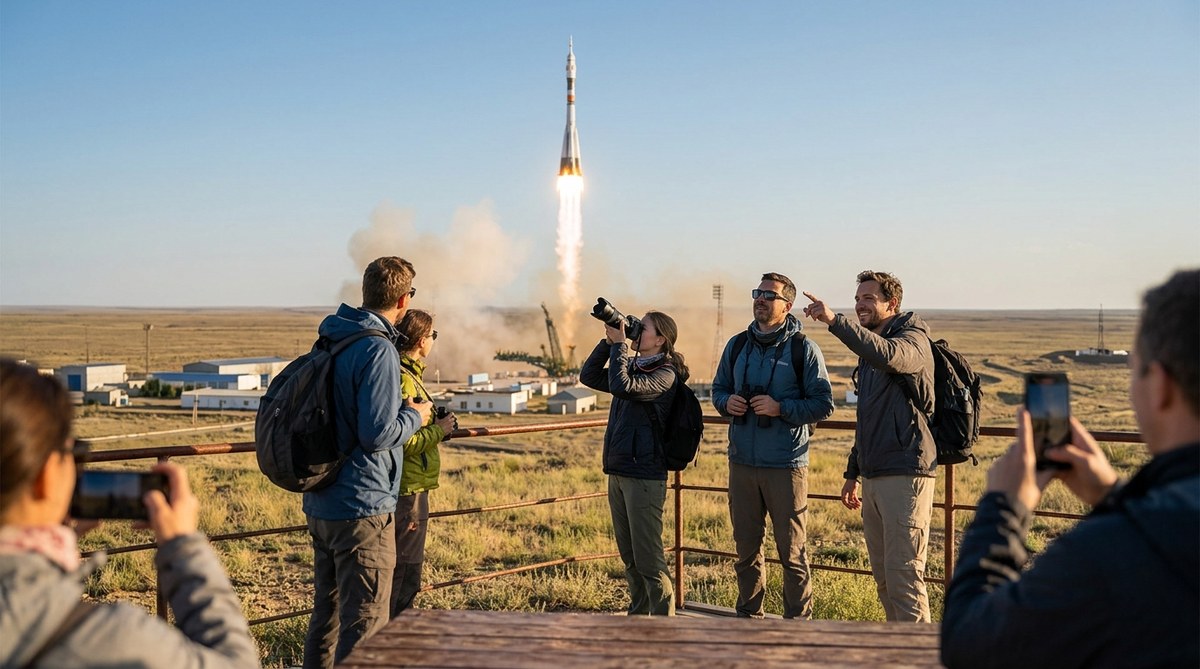
The first time you see a rocket launch in person, something shifts inside you. The ground shakes. The air turns to thunder. And that distant speck of fire climbs fast, piercing the sky with a roar you feel in your chest. Baikonur Cosmodrome in Kazakhstan is the only place on Earth where you can stand a mile from a Soyuz rocket as it carries astronauts to the International Space Station. It is raw, historic, and surprisingly accessible. In 2026, more tourists than ever are making the journey to the Kazakh steppe to witness human spaceflight up close.
Watching a launch at Baikonur requires planning, permits, and patience. You will need a tour operator or a special invitation from Roscosmos. The best option is booking an organized tour that handles visas, transport, and accommodation. Viewing areas are strictly controlled, but you can get as close as 1.1 kilometers from the pad. The experience is unforgettable and surprisingly affordable compared to watching launches from Cape Canaveral.
Why Baikonur Is Unlike Any Other Spaceport
Baikonur isn’t just a launch site. It is the birthplace of human spaceflight. Yuri Gagarin launched from here in 1961. Every Soyuz mission that ferries crews to the ISS still uses these pads. The cosmodrome sits in a remote area of Kyzylorda Region, about 200 kilometers east of the Aral Sea. The climate is extreme: baking summers, freezing winters, and constant wind. But the lack of light pollution and flat horizon means you see the rocket’s contrail from the moment it leaves the tower.
Most launch viewing happens at designated sites around the cosmodrome. You cannot wander freely. Security is tight, and the area is a restricted military zone. But with the right arrangements, you can stand at the official viewing platform, visit the assembly buildings, and even touch the Gagarin launch pad. It is a pilgrimage for space fans.
Step by Step: How to Plan Your Baikonur Launch Viewing
Follow this numbered list to turn the dream into a real trip.
-
Pick your launch date. Check the ISS mission schedule. Crewed launches (Soyuz MS) happen roughly every six months. Cargo missions (Progress) are more frequent. Book at least four to six months ahead for a crewed launch because permits are limited.
-
Choose a tour operator. You cannot visit Baikonur independently without a formal invitation. Reputable operators like BaikonurTours, Star City Tours, and MZ Travel handle all paperwork. They secure your permission to enter the closed city of Baikonur and the cosmodrome itself.
-
Apply for a Russian visa. Even though Baikonur is in Kazakhstan, the cosmodrome is leased by Russia. Tour operators usually require you to obtain a Russian tourist visa. Some also need a Kazakh visa if you plan to enter Kazakhstan separately. Check the latest rules at our Kazakhstan Visa Guide.
-
Book flights and accommodation. Fly into Moscow or Nur-Sultan (Astana). From Moscow, take a train or charter flight to Baikonur. From Astana, you can fly to Kyzylorda and then drive. Tours often include accommodation in the Baikonur town hotels like the Kurultay or the Sputnik.
-
Pack for the weather and the rules. Expect temperatures from 30 degrees Celsius in summer to minus 20 in winter. Bring ear protection for the launch. Do not bring drones, large camera tripods, or satellite phones without prior approval.
Viewing Spots and What You Will See
There are three main ways to watch a launch at Baikonur. Each offers a different experience.
| Viewing Option | Distance from Launch Pad | Pros | Cons |
|---|---|---|---|
| Official viewing platform (the “dike”) | 1.1 km | Closest allowed site; incredible sound and vibration | Extremely limited capacity; requires top-tier tour booking |
| Observation point near the museum | 2.5 km | Easier access; includes museum visit afterward | Less dramatic; rocket appears smaller |
| Town of Baikonur rooftops | 15 km | Free; good view of the rising rocket | Cannot see the pad; distant rumble only |
For most travelers, the official platform is the goal. Tour operators usually include a seat there for crewed launches. You stand behind a fence, watching the gantry fall away. Then the engines ignite. The ground pulses. The roar hits you a few seconds later, building to a crescendo that shakes your bones.
“When I stood at Baikonur for the Soyuz MS-22 launch, I thought I knew what to expect. I had watched dozens of livestreams. Nothing prepared me for the physical force of sound. It was like standing inside a thundercloud.” — Mike D., space journalist and tour participant.
What to Know Before You Go
Permits and Red Tape
You cannot book a permit on your own. Tour operators handle the “propiska” (registration) for the closed town of Baikonur. Without it, guards will turn you away at the checkpoint 30 kilometers from the city. The operator also arranges your cosmodrome access pass. These passes are tied to specific dates and times.
Health and Safety
The launch is loud. Bring industrial earplugs or earmuffs. The viewing area is an open field with no shade. In summer, the sun is brutal. Bring water, sunscreen, and a hat. In winter, the cold is biting. Dress in layers. The launch countdown can be delayed by hours, so you may stand outside for a long time.
Photography Tips
Most tours allow standard cameras with lenses up to 200mm. Longer lenses may require special permission. Do not bring a drone. Do not take photos of military installations or security personnel. Some operators offer a photographer guide. If you want pro-level shots, consider the tips in our guide on How to Photograph Astana’s Golden Towers, though Baikonur requires its own technique.
Costs
A typical three-day Baikonur tour for a crewed launch costs between $2,500 and $4,000 per person. This covers permits, accommodation, meals, and transport. Cargo launches are cheaper, around $1,500. Compare this to a seat at a SpaceX launch viewing in Florida, which can exceed $5,000 with fewer inclusions.
Building Your Kazakhstan Itinerary Around Baikonur
Many travelers combine a Baikonur trip with time in Astana or Almaty. The cosmodrome is far from major cities, but you can fly into Nur-Sultan (Astana) and take a domestic flight to Kyzylorda. Then it’s a two-hour drive to Baikonur town.
Consider extending your stay. Kazakhstan has incredible landscapes and culture. After the launch, head back to Astana and enjoy the Ultimate Walking Tour of Astana’s Futuristic Left Bank District. Or if you have more time, the Kolsai Lakes Trek offers a peaceful contrast to the roaring engines.
Bulleted List: Essentials to Bring
- Passport with valid Russian visa (and Kazakh visa if needed)
- Printed tour confirmation and permits
- Ear protection (foam plugs + over-ear muffs)
- Reusable water bottle and snacks
- Sun protection: hat, sunglasses, SPF 50
- Warm jacket even in summer (nights are cold)
- Camera with spare batteries and memory cards
- Backpack that meets security size rules (usually under 20 liters)
- Cash in rubles or tenge (credit cards rarely work in town)
Why 2026 Is a Great Year to Visit
The ISS program continues, with regular Soyuz launches scheduled. In 2026, there are at least two crewed missions planned, plus several cargo flights. The political situation allows tourists to visit without major restrictions. Tour operators have refined their packages and now include English speaking guides, behind the scenes access to the astronaut hotel, and visits to the Buran shuttle hangar. The infrastructure in Baikonur town has improved, with renovated hotels and new cafes.
Your Trip from Start to Finish
Here is a typical timeline for a Baikonur launch tour.
Day 1: Arrive in Astana. Meet your tour group. Flight to Kyzylorda. Drive to Baikonur town. Check in to hotel. Evening briefing.
Day 2: Morning visit to the Baikonur Cosmodrome museum. See the Gagarin launch pad. Afternoon free. Late evening departure for launch viewing (most launches happen at night or early morning to align with ISS orbit).
Day 3: Launch! Gather at designated spot. Watch the countdown. After launch, return to hotel for breakfast. Transfer back to Kyzylorda. Fly to Astana. Optional overnight in Astana.
Final Preparations for the Main Event
No matter how much you read, the real thing will overwhelm you. That is a good thing. The steppe is silent before the countdown. The wind carries a faint smell of dust and rocket fuel. Then the sound comes. You will feel the vibration in your ribs. The rocket becomes a bright star, shrinking into the black sky.
Baikonur is not a casual trip. It requires paperwork, flexibility, and a sense of adventure. But it rewards you with something rare: a direct connection to humanity’s reach for the stars. If you have ever gazed up at the night sky and wondered what it feels like to touch space, this is your chance.
Pack your passport, book your tour, and get ready for a launch that will stay with you forever.