
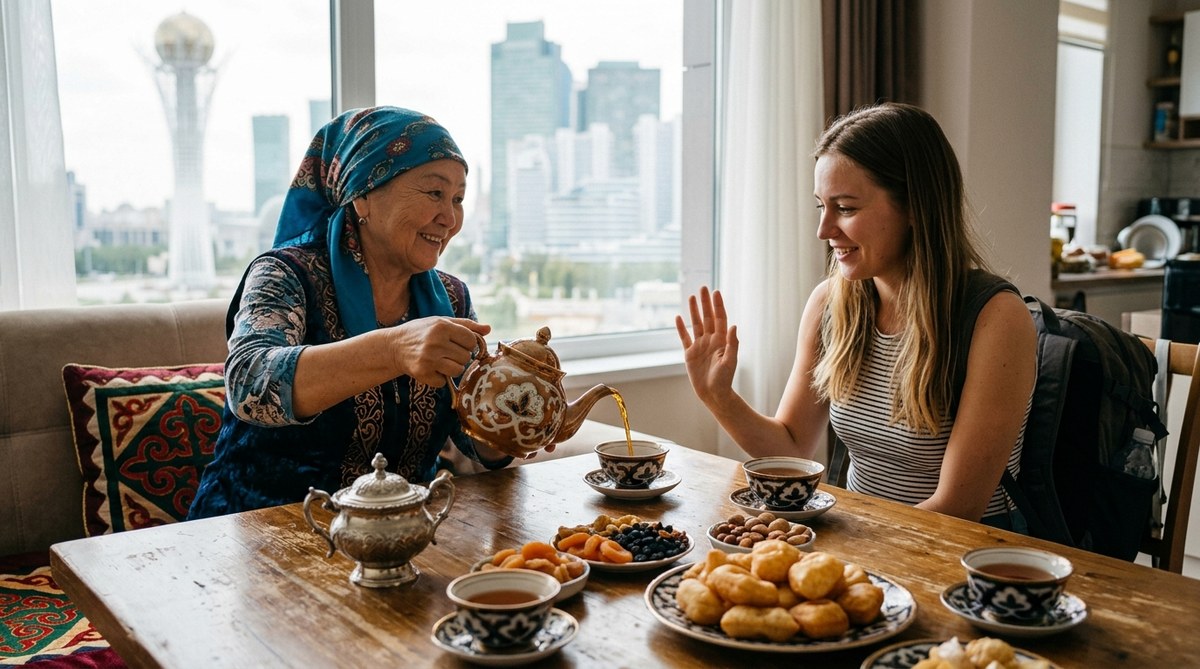
You step through the door of a Kazakh home, and before you can even find a seat, a small bowl of steaming tea appears in front of you. You politely say “no thank you” because you just had coffee at the airport. But the host smiles and pours anyway. This scene plays out daily for travelers in Kazakhstan, and it almost always leaves visitors confused. Is your host not listening? Did you offend them? The truth is far more layered than simple persistence. The Kazakh tea tradition is a language of its own. It speaks in hospitality, in respect, and in centuries of nomadic wisdom that have shaped how people connect across the Central Asian steppe. Understanding this ritual will transform how you experience every home, every office, and every restaurant in this beautiful country.
When a Kazakh offers you tea after you decline, they are not ignoring you. They are showing you the highest form of respect. Tea in Kazakhstan symbolizes trust, friendship, and kinship. Refusing once or even twice is expected. The third offer is where the real hospitality lives. Accepting that cup means accepting the relationship. This tradition traces back to nomadic life, where sharing tea meant sharing survival. To understand Kazakhstan, you must first understand the bowl of tea.
What the Tea Bowl Really Says
The Kazakh tea tradition is not about the drink. It is about the bond. When you receive a bowl of tea, you are being told “you belong here.” This message matters deeply in a culture shaped by the open steppe. For centuries, a stranger arriving at a yurt was a potential friend, a source of news, or someone in need of shelter. Offering tea was the first act of trust.
Today the setting has changed. The yurt has become a modern apartment in Astana, and the traveler might be a business consultant from New York. But the meaning has not shifted. Tea remains the universal connector. When you sit down in a Kazakh home, the tea comes first. Conversation follows. This order is important. Tea sets the stage for everything else.
The host will usually pour the tea themselves. They will fill the bowl only halfway. This is not stinginess. A full bowl signals that the host wants you to leave quickly, while a half bowl means “stay, relax, let us talk.” The guest can always ask for more, and the host will happily refill. The dance of pouring, refilling, and drinking together creates a rhythm that builds connection over time.
Why Your First “No” Does Not Count
You say no. Your host pours anyway. You say no again. She smiles and pushes the bowl closer. This moment confuses many foreigners. In Western etiquette, a refusal is usually accepted. In Kazakhstan, the first refusal is just a formality. It is part of the script.
Here is what is really happening. By refusing, you are being polite and not wanting to burden the host. By insisting, the host is showing that you are not a burden at all. Your comfort and welcome are her responsibility. If she accepted your first no, she would be failing in her duty as a host.
The third offer is the key. Accepting on the third offer shows that you understand the game. You have shown humility by refusing initially. The host has shown generosity by insisting. The third cup seals the deal. This pattern mirrors many Kazakh social rituals. Respect is demonstrated through a back and forth dance, not through direct acceptance.
“In Kazakh culture, tea is not a beverage you consume. It is a relationship you enter. The host who pours for you is saying ‘your well being matters to me.’ The guest who drinks is saying ‘I trust you.’ That exchange is sacred.” Aitbek Nurzhanov, cultural historian based in Astana
The Practical Guide to Tea Etiquette
If you plan to visit Kazakhstan, you will face a tea offering within your first few hours. Knowing the steps will help you feel confident and respectful.
How to Accept Tea the Right Way
- Wait for the host to pour your tea. Do not pour for yourself. The host controls the pot.
- Receive the bowl with your right hand and support your right wrist with your left hand. This gesture shows respect.
- Take your first sip slowly. The tea is usually black and strong, sometimes mixed with milk or cream.
- Leave a little tea in the bowl when you are finished. An empty bowl signals “more please,” and the host will refill.
- When you truly want no more, cover the bowl with your palm or place your hand over it as the host reaches for the pot.
Common Mistakes Travelers Make
| Mistake | Why It Happens | What to Do Instead |
|---|---|---|
| Refusing more than three times | Guest thinks they are being polite | Accept on the third offer to honor the host |
| Pouring your own tea | Habit from home etiquette | Let the host pour every refill |
| Drinking the bowl dry fast | Thirst or habit | Sip slowly and leave a small amount |
| Placing the bowl upside down | Used in some cultures to mean “done” | This can confuse the host; just cover the bowl |
| Not accepting sweets with tea | Dietary restriction | A small nibble is fine; the gesture matters more |
The table above covers the most common pitfalls. The golden rule is this: watch your host and mirror their behavior. Kazakhs are gracious with guests who try their best, even if you make a small mistake. The effort to learn the custom is itself a form of respect.
What Kind of Tea Do Kazakhs Drink?
The drink itself is simple but distinct. Kazakh tea is almost always black tea. Loose leaf is preferred, though tea bags are common in cities. The tea is brewed strong in a teapot, then poured into bowls and topped with hot water. Each person can adjust the strength to their liking.
Milk or cream is often added. In the countryside, you might find camel milk or sheep milk used instead of cow milk. The result is a smooth, rich drink that cuts through the heavy foods of the Kazakh diet. Meat, fat, and bread are staples. The tea helps digestion and provides warmth in the cold months.
Sugar is served on the side. Some Kazakhs take their tea sweet, others prefer it plain. You will also be offered small treats like baursaky (fried dough), dried fruit, or candies. These are not snacks. They are part of the tea ceremony. The sweet and savory combination keeps the conversation going.
If you travel to different regions of Kazakhstan, you will notice variations. In the south near Shymkent and Almaty, the tea is often lighter and served with fresh herbs. In the north and in Astana, the brew is stronger and the meal is heartier. Every home has its own style. The constant is the ritual itself.
When Tea Becomes a Meal
Kazakhs do not just drink tea. They build meals around it. A tea spread called “shai” can take the place of breakfast, lunch, or dinner. The table fills with bread, butter, jam, cheese, sausages, dried fruit, nuts, and sweets. The host keeps pouring tea for as long as anyone is willing to eat.
This style of eating is deeply social. There is no rush. People sit for an hour or two, talking and sipping. The tea pot stays warm on a small burner. Guests come and go. The meal stretches to fit the company.
If you are invited for tea in Astana, do not eat beforehand. The spread will be generous, and refusing food can feel like rejecting the host’s care. Eat what you can, compliment the host, and keep your bowl ready for refills. This is the rhythm of Kazakh hospitality at its best.
For a deeper look at how food and hospitality connect in this culture, read our guide on what happens at a traditional Kazakh dastarkhan feast. The principles of generosity and community apply across the table.
Tea in Modern Kazakhstan
Some visitors worry that the younger generation in Astana has moved away from these traditions. That is not the case. While the setting may have changed, the heart of the custom remains strong. You will see office workers sharing tea during a meeting. You will find friends sipping bowls at a trendy Astana coffee shop. The vessel might be a ceramic cup instead of a traditional bowl, but the gesture is the same.
Even in business settings, tea plays a role. Meetings often begin with tea. The first ten minutes of conversation are a warm up. Rushing straight to business feels rude. The tea ritual gives everyone time to settle in and read each other. For Western professionals visiting Kazakhstan, accepting the tea is a signal that you respect the local style of doing business.
The tradition also appears at public events. Weddings, funerals, and holidays all feature tea. At Nauryz Meyrami, the Persian New Year celebration, tea flows freely alongside traditional dishes. The drink is a bridge between the everyday and the sacred.
The Deeper Meaning of Persistent Hospitality
Let us return to the central question. Why do Kazakhs keep offering tea even after you refuse? The answer goes beyond etiquette. It goes to the core of what it means to be Kazakh.
The steppe is vast and harsh. For centuries, survival depended on community. A traveler could die without shelter. A family could lose their livestock and depend on neighbors. In that world, hospitality was not a nicety. It was a lifeline. Offering food and tea to a stranger was the moral thing to do. It still is.
When a Kazakh host pushes a bowl of tea toward you for the third time, they are acting out of a deep cultural memory. They are saying “you are safe here. You are cared for. You are not alone.” That message is more powerful than any drink could ever be.
This same ethos carries into other areas of Kazakh life. You can see it in how elders are treated with reverence, as covered in our article on why respect for elders shapes every Kazakh interaction. The values of care and community show up again and again.
How to Bring the Tradition Home
You do not have to leave this custom in Kazakhstan. The spirit of the tea ritual can travel with you. When you return home, consider how you welcome people into your space. Do you rush to the main topic, or do you take time to connect first? The Kazakh approach is a reminder that the relationship matters more than the agenda.
You can also adopt the practice of the third offer. Next time a friend says no to something, offer once more. They might be waiting for that second or third invitation to feel truly wanted. This small shift can strengthen your connections in a way that feels natural and warm.
If you want to recreate the experience at home, buy loose leaf black tea and a small pot. Serve it in bowls rather than cups. Put out some bread and jam. Invite friends over and let the tea flow. You will be surprised how the pace of conversation slows down and deepens. That is the magic of the Kazakh tea tradition.
A Final Sip
You will be offered tea many times during your stay in Kazakhstan. In homes, in offices, in restaurants, and even in shops. Each offer is a tiny invitation to connect. Say yes. Let the host pour. Sip slowly. Talk about where you are from and where you are going. This is how friendships begin on the steppe.
For a great starting point to your journey, check out our 24 hour guide to Astana to see where the city will welcome you. And if you want to dig deeper into the unwritten rules of Kazakh social life, our guide on understanding Kazakh hospitality will prepare you for every interaction.
The next time someone pushes a warm bowl toward you after you have already said no, smile. Pick up the bowl. Take a sip. You are no longer a guest. You are part of the family. That is the whole point.