
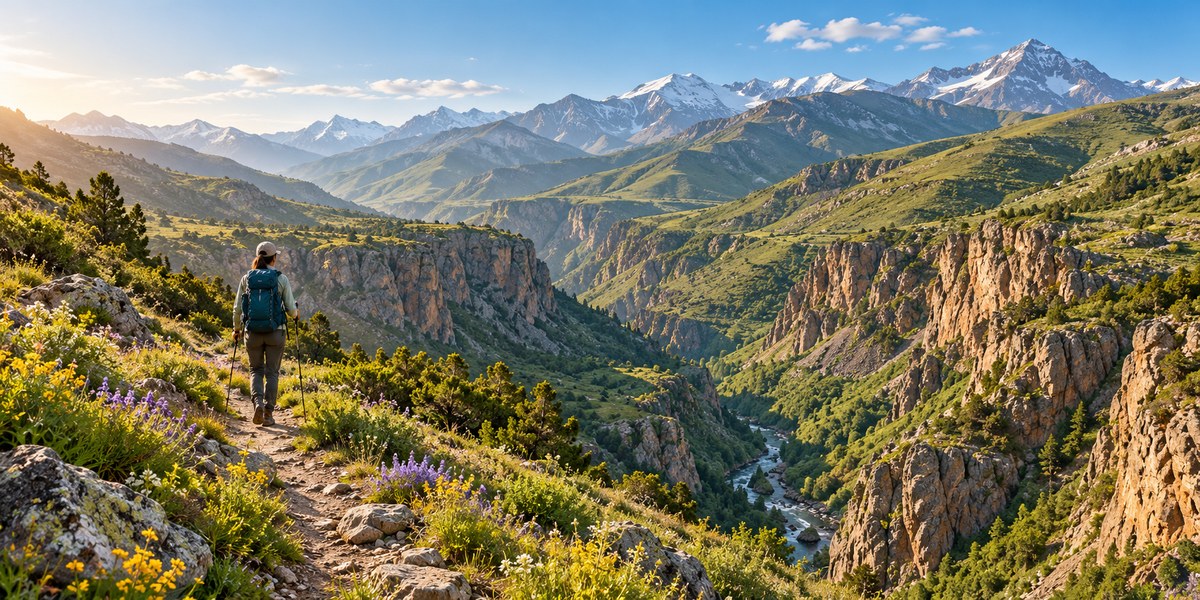
The air smells of wild thyme and ancient earth. A lammergeier glides overhead, its nine-foot wingspan casting a shadow on the red sandstone cliffs below. You are standing in the Aksu-Zhabagly Reserve, the oldest protected area in Central Asia, and you are about to step onto a trail that has seen the footsteps of snow leopards, wild tulips, and Soviet-era botanists. This is not a hike you do for a social media badge. This is a hike you do because you want to feel what it means to walk through a landscape that has been sacred for millennia.
Aksu-Zhabagly offers some of the most rewarding hiking in Central Asia, with trails ranging from half-day canyon walks to multi-day mountain crossings. You will need a permit, a guide, and solid fitness for the longer routes. The best time to visit is May through October, with wildflowers peaking in late spring and autumn colors at their finest in late September.
Why This Reserve Matters More Than Any Other
Established in 1926, the Aksu-Zhabagly Reserve turned 100 years old in 2026. That century of protection has preserved ecosystems that have vanished elsewhere across the region. The reserve spans over 1,300 square kilometers in the Talas Alatau range, straddling the border between Kazakhstan and Kyrgyzstan.
What makes it special for hikers is the variety. You get high alpine meadows, deep river canyons, juniper forests, and peaks that push past 4,000 meters. The Aksu River has carved a gorge that drops nearly 500 meters straight down in places. Standing at the rim is enough to make your knees wobble.
The wildlife here is the real draw for many visitors. The reserve is one of the last strongholds for the Menzbier’s marmot, a species found nowhere else on Earth. You might also spot ibex, argali sheep, and if you are extremely lucky, a snow leopard. Birdwatchers come for the Himalayan griffon vultures and golden eagles.
Choosing Your Aksu-Zhabagly Reserve Hiking Route
Not all trails in the reserve are created equal. Some are gentle walks through flower-filled meadows. Others require scrambling over loose scree and crossing cold streams. Here is a breakdown of the most popular routes.
| Trail Name | Distance | Elevation Gain | Difficulty | Best For |
|---|---|---|---|---|
| Aksu Gorge Rim Walk | 8 km round trip | 300 meters | Easy to Moderate | Canyon views, photography |
| Kshi-Kaindy Waterfall | 12 km round trip | 500 meters | Moderate | Waterfall swimming, picnics |
| Zhabagly to Terekty Pass | 18 km one way | 900 meters | Strenuous | Panoramic ridge views, alpine lakes |
| Three-Day Transect | 45 km point to point | 1,800 meters total | Very Strenuous | Full wilderness immersion, wildlife spotting |
For first-time visitors to the reserve, the Aksu Gorge Rim Walk is the perfect introduction. The trail follows the edge of the canyon, giving you views down into the turquoise river below. You will pass ancient petroglyphs carved into the rock faces by Scythian nomads thousands of years ago.
The hike to Kshi-Kaindy Waterfall is the most popular overnight trip. You camp near the base of the falls, where the water plunges into a deep pool surrounded by wild rose bushes. The swimming is cold but refreshing after a day of walking.
Experienced hikers should consider the three-day transect. This route takes you from the Zhabagly village side of the reserve, over the Terekty Pass at 3,200 meters, and down into the Aksu River valley. You will cross high plateaus where herds of ibex graze, and you will sleep under stars so bright they look artificial.
How to Get a Permit for the Reserve
You cannot just show up at the Aksu-Zhabagly Reserve and start walking. The reserve is strictly protected, and all visitors must register. Here is the step-by-step process.
- Contact the reserve’s visitor center in the village of Zhabagly at least two weeks before your planned hike. You can email them or call. English is not widely spoken, so consider having a Russian-speaking contact help you.
- Tell them how many people are in your group, which dates you plan to visit, and which trails you want to hike. They will confirm availability and quote you a price for the permit and guide fee.
- Pay the fee in advance via bank transfer or in cash when you arrive. The permit costs around 2,000 tenge per person per day (about $4.50 USD in 2026). The mandatory guide costs extra, typically 5,000 to 10,000 tenge per day depending on the route.
- Meet your guide at the reserve entrance on the morning of your hike. They will check your gear, give you a safety briefing, and sign you into the register.
- Follow your guide. Do not deviate from the trail. The reserve rangers take violations seriously, and fines can be steep.
If you are booking through a tour company, they will handle the permit process for you. This is the easiest option for most international travelers. Several operators in Almaty run multi-day trips to the reserve, and they include transport, food, and camping gear in the price. For more details on planning your journey from the capital, check out our guide on planning a Kazakhstan trip from Astana to the steppe and beyond.
What to Pack for Your Hike
The weather in the Aksu-Zhabagly Reserve can change faster than a teenager’s mood. You might start a morning hike in shorts and a t-shirt, then find yourself shivering in a hailstorm by lunchtime. Packing smart is not optional. It is survival.
- Sturdy hiking boots with ankle support. The trails are rocky and uneven. Trail runners will not cut it.
- A waterproof shell jacket and pants. Afternoon thunderstorms are common from June through August.
- Layers. A merino wool base layer, a fleece mid-layer, and a lightweight puffy jacket for evenings at altitude.
- Sun protection. Sunscreen, a wide-brimmed hat, and sunglasses. The UV at 3,000 meters is intense.
- At least two liters of water. Streams are plentiful, but you should treat or filter the water before drinking. Bring a SteriPen or chlorine tablets.
- High-energy snacks. Nuts, dried fruit, chocolate bars, and electrolyte powder. You will burn through calories fast.
- A headlamp with fresh batteries. If you get delayed, you do not want to navigate a scree field in the dark.
- A basic first-aid kit. Include blister treatment, antiseptic wipes, pain relievers, and any personal medications.
- A printed copy of your permit. Rangers may ask to see it at checkpoints along the trail.
Expert advice: “The biggest mistake I see hikers make in the Aksu-Zhabagly Reserve is underestimating the sun exposure. People think because it is not a desert, they do not need to worry. But at this elevation, you can get a serious burn in under an hour. Wear sunscreen even on cloudy days.” * Aisulu, a guide with 12 years of experience in the reserve.
Safety and Etiquette on the Trail
The reserve is wild, and you need to treat it with respect. Here are the key rules every hiker should follow.
- Stay with your guide at all times. Getting lost in this terrain is not a minor inconvenience. It can be life-threatening.
- Do not feed or approach any wild animals. Marmots may look cute, but they carry diseases. Ibex are unpredictable when startled.
- Pack out all of your trash. There are no garbage bins on the trail. Everything you bring in must leave with you.
- Do not pick flowers or plants. Many species in the reserve are endemic and endangered. The wild tulips, in particular, are protected by law.
- Keep noise levels down. Loud voices scare away wildlife and disturb other hikers. The reserve is a place for quiet observation.
- Use established campsites. Do not pitch your tent in the middle of a meadow. The fragile alpine soil takes years to recover from trampling.
If you are hiking in a group of more than eight people, you may need to split into smaller parties. The reserve limits group sizes to reduce environmental impact.
When to Visit for the Best Experience
Timing your trip matters a lot in the Aksu-Zhabagly Reserve. Each season offers a completely different experience.
Late May through June is wildflower season. The meadows explode with color. Red poppies, yellow buttercups, and purple irises carpet the lower slopes. The weather is generally mild, but the streams are running high with snowmelt, so some crossings can be tricky.
July and August are the warmest months. Daytime temperatures in the valleys reach the mid-80s Fahrenheit. This is the best time for high-altitude routes, as the passes are mostly free of snow. Thunderstorms are common in the afternoons, so start your hikes early in the morning.
September and October bring autumn colors and cooler temperatures. The juniper forests take on a golden hue, and the air is crisp. This is the best time for wildlife viewing, as animals are more active before winter sets in. By late October, snow can fall at higher elevations, closing some trails.
November through April is winter. The reserve is still open to visitors, but hiking is limited to the lower valleys. Snowshoeing and cross-country skiing are possible if you have the gear and experience. Most casual hikers should stick to the warmer months.
If you are combining your trip with a visit to the capital, you might enjoy our guide on what to see in Astana when you only have 24 hours to make the most of your layover.
Getting to the Reserve from Almaty or Astana
The Aksu-Zhabagly Reserve is located in southern Kazakhstan, about a six-hour drive from Almaty. From Astana, you will need to fly to Shymkent first, then drive another two hours to the village of Zhabagly.
From Almaty: You can rent a car and drive yourself, or take a shared taxi from the Sayakhat bus station. The road is paved all the way to the reserve entrance. The drive takes you through the town of Shymkent, which is worth a stop for its bazaar and mausoleum. If you are curious about the city, read our honest review on whether Shymkent is worth visiting.
From Shymkent: Take a marshrutka (minibus) from the main bus station to the village of Zhabagly. The ride costs about 500 tenge and takes two hours. From the village, it is a 20-minute walk to the reserve entrance.
From Astana: Book a flight on Air Astana to Shymkent. The flight takes about two hours. From there, follow the instructions above. You can also take an overnight train, but the journey takes 18 hours and is not recommended for time-pressed travelers.
Accommodation Options Near the Reserve
You have three main choices for where to sleep during your Aksu-Zhabagly Reserve hiking trip.
Homestays in Zhabagly village. Local families rent out rooms for around 3,000 tenge per night. You get a bed, a home-cooked dinner, and a chance to experience Kazakh hospitality firsthand. Breakfast usually includes homemade bread, jam, and strong black tea. This is the most affordable option and the best for cultural immersion.
The reserve’s guesthouse. Located just inside the entrance, this simple guesthouse has dormitory-style rooms and a shared kitchen. It costs about 5,000 tenge per person per night. Book ahead, as it only has 20 beds.
Camping on the trail. You can camp at designated sites along the main routes. The reserve charges a small fee for camping, usually included in your permit. You need to bring your own tent, sleeping bag, and stove. Fires are not allowed, so pack a camp stove for cooking.
For those who prefer more comfort before or after their hike, consider staying in Shymkent. The city has several hotels ranging from budget to mid-range. The Rixos Shymkent is the most upscale option, but the Shym Hotel offers good value for around $40 USD per night.
A Final Word on the Aksu-Zhabagly Experience
Walking through the Aksu-Zhabagly Reserve is not like hiking in a national park in the United States. There are no gift shops. There are no marked trails with mileposts. There is no cell reception for most of the route. What you get instead is a raw, unfiltered connection to a landscape that has remained largely unchanged for thousands of years.
The silence is the first thing you notice. Then the scale. Then the feeling that you are a very small creature in a very big world.
That is the point.
Respect the Land, and It Will Reward You
The Aksu-Zhabagly Reserve exists because someone, a century ago, decided that this place was worth protecting. That decision gives you the chance to walk through ancient juniper forests, to drink from streams that taste like snow, and to see a lammergeier soar overhead without worrying about a cell tower ruining the shot.
Treat the reserve with the same care that the rangers and guides show every day. Pack out your trash. Stay on the trail. Listen to your guide. And when you get home, tell someone about it. The best thing you can do for a place like this is to send more respectful visitors its way.
Now go book that permit. The mountains are waiting.