
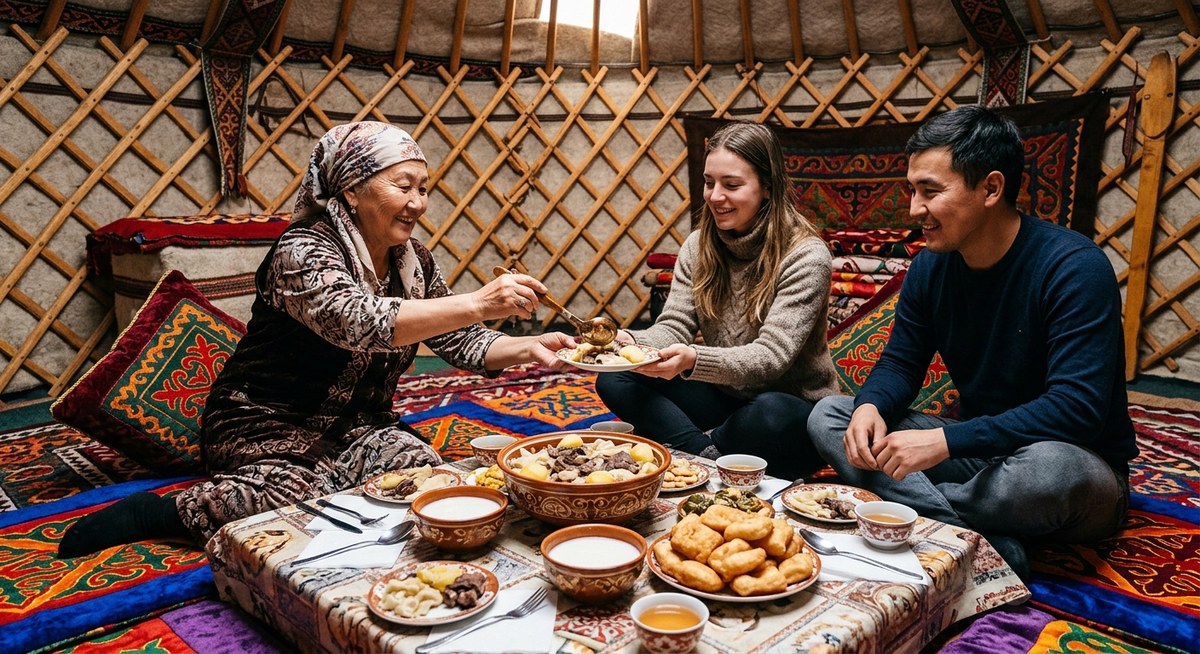
You step into a home in Astana and the first thing you notice is the low table covered in a cloth. It’s piled with steaming bowls of meat, flatbreads, dried fruits, and a kettle of tea that never seems to empty. This is a Kazakh dastarkhan. And if you’re a traveler eager to understand the soul of this country, sitting at one is your most important stop. It’s not just a meal. It’s a ceremony of hospitality, a show of respect, and a chance to connect with people who will treat you like family. But there are unspoken rules. Sitting at the wrong spot, refusing food, or eating with the wrong hand can break the flow. This guide will show you exactly how to walk into a dastarkhan, sit down, eat, and leave with grace.
The Kazakh dastarkhan is a living tradition of hospitality, generosity, and shared food. To navigate it like a local, you need to understand seat hierarchy, accept food with both hands, eat with your right hand, never refuse tea entirely, and respect elders who lead the meal. Follow these customs and you will earn genuine warmth and friendship.
What Exactly Is a Dastarkhan?
The word dastarkhan originally refers to the low tablecloth spread on the floor or on a low table. But over time it came to mean the entire feast. In Kazakh culture, the dastarkhan is the heart of every celebration, every visit, and every act of welcome. When you are invited to a Kazakh home, you are not just offered food. You are offered a place in the circle.
The spread usually covers many small plates and one large centerpiece dish. Expect meat, bread, dairy, sweets, and endless tea. The meal can last for hours. Conversation flows, toasts are made, and the host keeps refilling your bowl until you physically block your cup with your hand.
The Seating and Hierarchy at the Dastarkhan
Kazakh society is deeply respectful of age and status. The seating arrangement at a dastarkhan reflects that. If you are a guest, you will likely be guided to the most honored spot. Here is a simple numbered list of what typically happens.
- Wait to be seated. Do not just sit down anywhere. Stand near the table until the host or the eldest person gestures where you should go.
- The eldest sits first. The person with the most seniority takes the place farthest from the door, often called the tor. They are served first.
- Guests sit next to the elders. If you are a foreign visitor, you may be placed next to the host or the eldest. This is a sign of respect.
- Hands are washed. Someone may pour water over your hands over a basin. Do not refuse. Hold your hands palms up, let the water run, then dry them on the towel offered.
- The host says a blessing. A short prayer or a wish for good health may be spoken. Keep quiet and lower your head lightly.
- Start eating only after the eldest begins. Watch for the cue. It is polite to wait until the senior person takes the first bite or breaks the bread.
I have seen travelers accidentally sit in the tor spot and cause confusion. If you are unsure, simply ask “Kai zherge oturu kerek?” (Where should I sit?) or let the host guide you.
What You Will Find on the Table
A typical dastarkhan features a wide variety of dishes. Not all of them will be central, but you should recognize the main ones.
- Beshbarmak (the national dish: boiled horse meat or lamb over flat noodles, topped with onion sauce)
- Kuyrdak (fried liver, heart, and kidney with potatoes and onions)
- Baursak (deep-fried dough puffs, slightly sweet)
- Kazakh flatbread (called nan or lepyoshka, always broken by hand)
- Kurt (salty dried cheese balls)
- Kazy (horse meat sausage, often sliced thin)
- Kumis (fermented mare’s milk, slightly sour and alcoholic)
- Shubat (fermented camel’s milk, creamier than kumis)
- Tea (usually black tea with milk, but sometimes green)
- Dried fruits and sweets (raisins, apricots, zhane candies)
The host will constantly urge you to eat more. A common phrase is “Zheniz, zheniz” (Eat, eat). Do not feel pressured to finish everything. But do try at least a bite of each offered dish. Refusing entirely can seem rude.
How to Eat Properly: Techniques and Mistakes
Eating with your hands is common at a dastarkhan, especially for beshbarmak and bread. But there are right and wrong ways to do it. The table below summarizes key do’s and don’ts.
| Do This | Avoid This |
|---|---|
| Use your right hand for eating, even if you are left-handed. | Never use your left hand to handle food. |
| Break bread with your fingers. | Do not cut bread with a knife at the table. |
| Take food from the common dish using your right hand, using your thumb, index, and middle finger. | Do not grab food with your whole palm or touch the shared bowl with your left hand. |
| Accept tea with both hands when the host pours. | Do not set your empty cup down without the host’s gesture. |
| Place your hand over your heart or nod slightly when thanking. | Do not loudly slurp or belch; it is not considered a compliment. |
| Leave a little tea in your cup to signal you are done. | Do not turn your cup upside down; that signals you never want tea again. |
One traveler I hosted in 2025 accidentally used his left hand to pick up a piece of kazy. He noticed everyone’s eyes widen for a second. His Kazakh friend gently said, “In our home, we use the right hand for food. No worries, you are learning.” The key is: locals are very forgiving of foreigners, but making the effort earns you huge points.
Tea, Toasts, and the Rhythm of the Meal
Tea is the glue of the dastarkhan. The host or the youngest daughter will pour tea from a pot into small bowls. The first pour is often a very small amount, just to warm the bowl. Then they fill it halfway. You are expected to drink at least one bowl. When you have had enough, leave a small amount in the bowl. If you want more, let the host see your empty bowl.
Toasts happen frequently, especially if vodka or kumis is on the table. The eldest will make a toast. Everyone raises their bowls or cups, and you say “Sau bol!” (Cheers, literally “Be healthy”). Drink or sip. Do not drink until after the toast is finished.
“At a dastarkhan, tea is never just tea. It is a conversation. The host uses it to check on your comfort. If your bowl is full, you are being cared for. If you hide your bowl, you are saying you are full. It is a silent language of care.”
— Aigerim, a Kazakh home cook in Astana since 1998
Toasts can be short wishes for peace, health, or success. It is polite to acknowledge each toast by looking at the speaker and nodding.
Common Pitfalls and How to Handle Them
Even the most prepared traveler can slip. Here are frequent mistakes and how to recover.
- Refusing food outright. Instead of saying no, say “Rakhmet, men toqpyzyn” (Thank you, I am full). Or take a very small portion.
- Asking for a different meal. Never ask for pizza or a burger. Eat what is offered. If you have allergies, tell the host beforehand through your friend or guide.
- Standing up during the meal. Stay seated until the host rises or the meal ends. Excusing yourself to the restroom is fine, but do not just leave the room without a quiet word.
- Leaving your phone on the table. It is seen as disengaged. Keep your phone away and focus on the people.
- Complimenting a specific dish too much. If you say “This kazy is amazing,” the host will insist you eat the entire plate. Instead, praise the whole table.
I once complimented the baursak so enthusiastically that my host’s mother wrapped up the entire basket for me to take home. It was incredibly generous, but I had to accept because refusing a gift is also rude.
Why the Dastarkhan Experience Matters
Understanding the dastarkhan is not just about food. It is about connecting to a culture that values generosity above all. When you sit at that low table, you become part of a circle that stretches back centuries. In 2026, as more travelers discover Kazakhstan, those who understand these traditions leave with richer memories and deeper friendships.
If you are planning a trip to Astana, consider booking a meal experience at a local home. Many tour operators now offer home dining visits. You can also find authentic dastarkhan settings at restaurants like Kazakh Auyl or ShashlykMaster. For a deeper look at the customs that shape every interaction, read our guide on understanding Kazakh hospitality. And if you want to know where to taste the best beshbarmak, check out this local’s guide to beshbarmak in Astana.
Your Next Step Toward the Dastarkhan
The best way to learn is to go. Accept the first invitation you get. Trust the process. Let the host guide you. Eat with your right hand, drink tea with gratitude, and listen to the stories. The dastarkhan will teach you more about Kazakhstan than any museum. So when you step into that room, greet everyone with “Assalamu aleikum” or simply a smile and a nod. Sit where you are told. And let the feast begin.